
Key Takeaways
- Solar on your roof in Thousand Oaks is a strong investment because the area receives approximately 280 sunny days per year, producing significantly more energy than the national average.
- Your roof should have at least 15 to 20 years of remaining life before installing solar panels. If it does not, combining a roof replacement and solar installation in Thousand Oaks saves money and avoids costly panel removal later.
- The federal solar Investment Tax Credit (ITC) currently covers 30% of total system costs, and California’s NEM 3.0 net metering policy still allows Thousand Oaks homeowners to offset electricity bills by exporting excess power to Southern California Edison.
- A properly sized residential solar system in Southern California typically pays for itself in 6 to 10 years, depending on energy usage, roof orientation, and shading.
- Evaluating your energy consumption, roof condition, and local incentives before committing is the most reliable way to determine whether solar is the right choice for your home.
Quick Links
- Why This Decision Matters for Thousand Oaks Homeowners
- Is Your Roof in Thousand Oaks Suitable for Solar Panels?
- How Much Energy Does Your Household Use?
- How Much Life Is Left on Your Current Roof?
- Why Roof Replacement and Solar Thousand Oaks Projects Work Best Together
- Cost of Solar on Your Roof in Thousand Oaks and Available Incentives
- Solar Payback Period and Long-Term Savings
- People Also Ask
- Frequently Asked Questions
- Next Steps for Thousand Oaks Homeowners
Why This Decision Matters for Thousand Oaks Homeowners
If you are a homeowner in Thousand Oaks weighing whether solar on your roof is worth the investment, you are not alone. Electricity rates from Southern California Edison have risen steadily, and many homeowners in the Conejo Valley are looking for a way to lock in predictable energy costs while taking advantage of the region’s abundant sunshine.
The challenge is that solar is not a one-size-fits-all solution. Your roof’s age, orientation, and structural condition all play a role. So does your household energy consumption and your willingness to pair solar with efficiency upgrades. Making this decision without understanding these variables can lead to an undersized system, unexpected roof repairs, or missed financial incentives.
This guide walks through every factor that matters so you can make a confident, informed choice about going solar in Thousand Oaks.
Is Your Roof in Thousand Oaks Suitable for Solar Panels?
Not every roof is equally suited for solar energy production. The three primary factors are orientation, tilt angle, and shading. In Thousand Oaks and the broader Southern California region, south-facing roof planes produce the most energy. Southwest- and west-facing planes are the next best options, and they can actually be advantageous under California’s NEM 3.0 net metering policy because they generate more electricity during late-afternoon peak rate hours.
The ideal tilt angle for solar panels in Southern California is between 15 and 30 degrees. Most residential roofs in Thousand Oaks have a pitch within this range, which means they are naturally well-suited for efficient solar production without additional racking or ground-mount systems.
Shading from mature oak trees, neighboring structures, or hillside terrain common in areas like Thousand Oaks, Westlake Village, and Newbury Park can reduce panel output significantly. Even partial shading on a single panel can lower the production of an entire string of panels unless the system uses microinverters or power optimizers. A microinverter is a small device attached to each individual panel that converts DC electricity to AC independently, so shading on one panel does not drag down the rest.
Roof Material Considerations
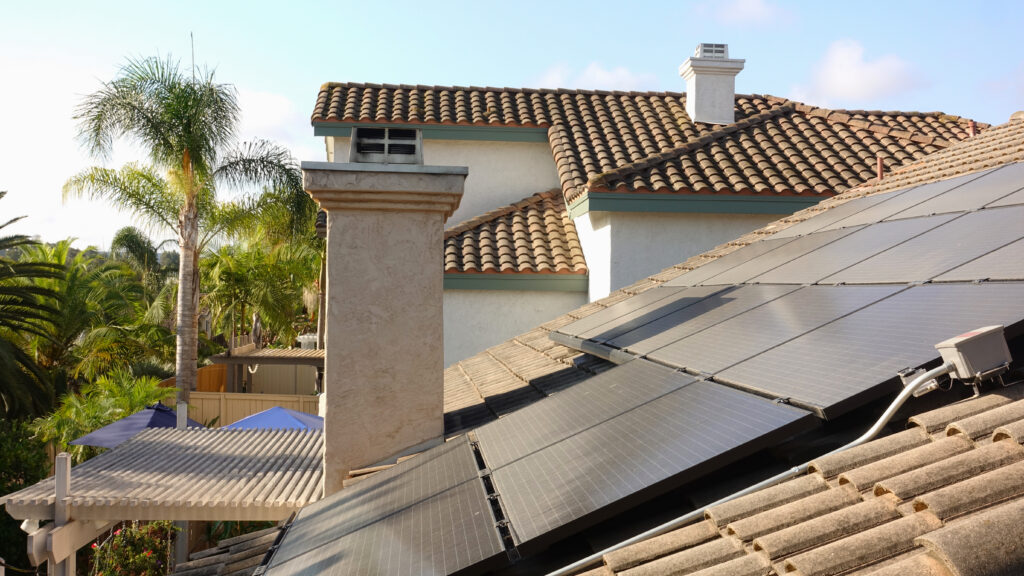
Composition shingle and standing-seam metal roofs are the easiest and least expensive surfaces to mount solar panels on. Concrete and clay tile roofs, which are common throughout Thousand Oaks and neighboring Agoura Hills, require specialized mounting hardware. Tiles must be carefully removed, flashing installed, and tiles replaced or trimmed around the mounts. This adds labor and cost, but it is a routine procedure for experienced installers.
Q: Can I install solar panels on a flat roof in Thousand Oaks?
A: Yes. Flat or low-slope roofs use tilt-up racking systems to angle the panels for optimal sun exposure. However, the added racking increases wind load, so a structural assessment is recommended before installation.
Q: Will solar panels damage my tile roof?
A: When installed correctly with tile-compatible mounting brackets and proper flashing, solar panels should not damage a tile roof. Improper installation is where problems arise, which is why choosing a licensed contractor with both roofing and solar experience matters.
How Much Energy Does Your Household Use?
Sizing a solar system correctly starts with understanding your electricity consumption. Pull your last 12 months of Southern California Edison statements and look at your total kilowatt-hour (kWh) usage. The average California household uses roughly 7,000 to 8,000 kWh per year, but homes in the inland valleys of Thousand Oaks and Moorpark often use more due to higher summer cooling demands.
Heating and cooling typically account for the largest share of residential energy consumption. Air conditioning during Thousand Oaks summers, when temperatures regularly exceed 95 degrees, can push monthly usage well above baseline tiers and into SCE’s most expensive rate brackets.
Reducing Consumption Before Going Solar
Lowering your energy usage before installing solar panels means you can purchase a smaller, less expensive system. Several upgrades deliver meaningful savings:
- Ductless mini-split heat pumps operate at higher SEER ratings than traditional central air systems and allow zone-by-zone cooling, so you are not conditioning empty rooms.
- Hybrid electric water heaters (heat pump water heaters) use up to 70% less electricity than standard electric tank models.
- Induction cooktops transfer approximately 90% of energy directly to cookware, compared to about 74% for conventional electric and 40% for gas.
- LED lighting draws roughly 15 watts for a 100-watt equivalent bulb, reducing lighting loads by 75% or more.
Understanding your energy profile helps a solar consultant design a system that matches your actual needs rather than relying on generic estimates.
How Much Life Is Left on Your Current Roof?
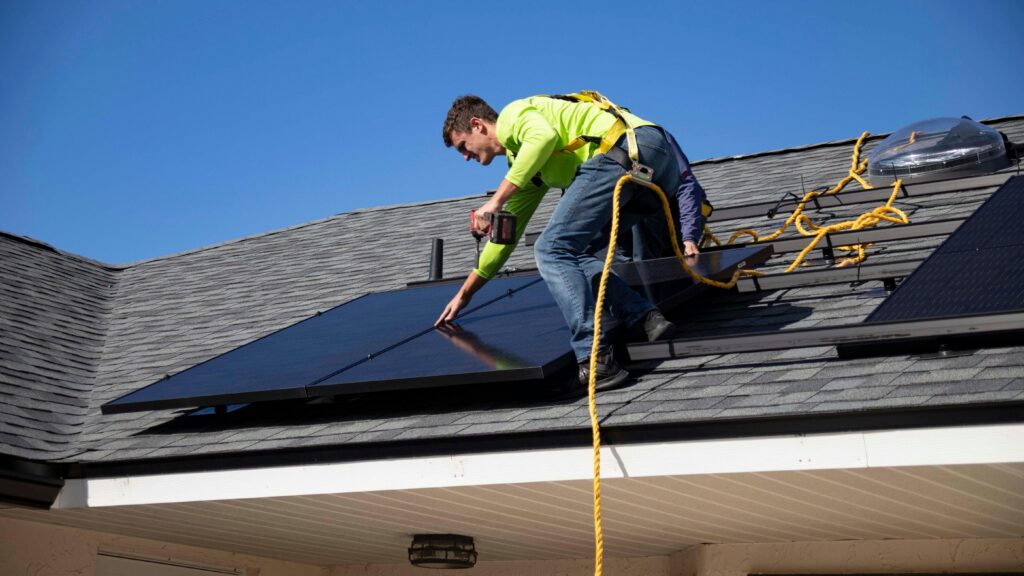
This is one of the most important questions to answer before committing to a solar installation. Solar panel systems are designed to produce electricity for 25 to 30 years. If your roof only has 5 to 10 years of life remaining, you will eventually need to remove the panels, replace the roof, and reinstall the panels. That added cost typically ranges from $2,000 to $5,000 or more depending on system size and roof type.
Most composition shingle roofs in Southern California last 20 to 30 years, depending on quality and exposure. Concrete tile roofs can last 40 to 50 years, though the underlayment beneath the tiles may need replacement sooner. Factors that accelerate roof aging in Thousand Oaks include high UV exposure during long summer days, Santa Ana wind events that can lift or crack tiles, and occasional wildfire-related ember exposure in hillside neighborhoods adjacent to open space.
Signs Your Roof May Need Replacement
- Curling, cracking, or missing shingles
- Granule loss visible in gutters or downspouts
- Daylight visible through the attic decking
- Sagging sections indicating potential structural issues
- Water stains on interior ceilings or walls
A professional roof inspection can determine remaining useful life and identify any structural concerns before panels are mounted.
Q: How do I know if my roof is strong enough for solar panels?
A: A qualified inspector checks the roof decking, rafters, and trusses for signs of rot, termite damage, or inadequate load capacity. Standard residential solar panels add approximately 2.5 to 4 pounds per square foot, which most properly built roofs can handle without modification.
Why Roof Replacement and Solar Thousand Oaks Projects Work Best Together
Combining a roof replacement and solar installation into a single project is one of the most cost-effective approaches for Thousand Oaks homeowners whose roofs are nearing the end of their lifespan. When both are done at the same time, the contractor can install solar mounting hardware directly during the roofing process, ensuring watertight flashing integration and reducing overall labor costs.
There are several practical advantages to this approach. First, you avoid paying for panel removal and reinstallation when the roof eventually needs replacement. Second, the new roof and solar system will have aligned lifespans, meaning both reach their expected service life around the same time. Third, a single contractor handling both scopes can ensure the roofing materials, underlayment, and flashing are fully compatible with the solar mounting system.
August Roofing and Solar has provided roofing and solar services across Southern California for over 30 years. Because the company performs both roof replacement and solar installation, homeowners in Thousand Oaks, Westlake Village, Newbury Park, and Camarillo can coordinate both projects through one contractor, which simplifies scheduling, reduces miscommunication, and often lowers the combined cost. August Roofing requires no deposit to begin work, which removes a common barrier for homeowners managing a larger combined project.
California’s Title 24 building energy code requires solar on most new residential construction. While this mandate does not apply to roof replacements on existing homes, many homeowners choose to add solar during a reroof because the economics are compelling and the roof is already exposed.
Cost of Solar on Your Roof in Thousand Oaks and Available Incentives
The cost of a residential solar system depends on system size, panel type, inverter configuration, and installation complexity. As of 2024, the average cost of a residential solar installation in California ranges from $2.50 to $3.50 per watt before incentives. For a typical 8 kW system, that translates to approximately $20,000 to $28,000 before tax credits.
Federal Solar Investment Tax Credit (ITC)
The federal ITC allows homeowners to deduct 30% of the total solar installation cost from their federal income taxes. For a $24,000 system, that amounts to a $7,200 tax credit. This credit applies to both the solar panels and associated equipment, including battery storage if installed at the same time. The 30% rate is available through 2032, after which it begins to step down. Details are available from the U.S. Department of Energy.
California NEM 3.0 Net Metering
Under NEM 3.0 (Net Billing Tariff), which took effect in April 2023, the value of exported solar electricity to Southern California Edison is lower than under the previous NEM 2.0 policy. However, solar still provides significant savings by offsetting electricity that would otherwise be purchased at retail rates. The shift in export compensation makes battery storage more financially attractive because it allows homeowners to store daytime solar production and use it during expensive evening peak hours rather than exporting it at reduced rates.
Additional Incentives
- SGIP (Self-Generation Incentive Program): California offers rebates for battery storage systems, particularly for homeowners in high fire-threat districts. Many hillside neighborhoods in Thousand Oaks qualify.
- Property tax exemption: California excludes the added value of a solar energy system from property tax reassessment, so going solar does not increase your property taxes.
- Increased home value: Studies from the Lawrence Berkeley National Laboratory show that homes with owned solar systems sell for approximately $15,000 more on average than comparable homes without solar.
Q: Is battery storage worth it in Thousand Oaks?
A: Under NEM 3.0, battery storage significantly improves the financial return of a solar system by allowing you to use stored energy during peak SCE rate hours instead of exporting it at lower compensation rates. It also provides backup power during Public Safety Power Shutoffs (PSPS), which affect parts of Thousand Oaks near wildland-urban interface zones.
Solar Payback Period and Long-Term Savings
The payback period for solar on your roof in Thousand Oaks typically ranges from 6 to 10 years. This depends on system cost after incentives, your electricity usage, the rate plan you are on with Southern California Edison, and how much of your solar production you consume directly versus exporting to the grid.
After the system is paid off, the electricity it produces is essentially free for the remaining 15 to 20 years of the panel warranty. Most Tier 1 solar panels carry a 25-year performance warranty guaranteeing at least 80% to 85% of original output at the end of that period.
Example Scenario
A Thousand Oaks homeowner using 10,000 kWh per year installs an 8 kW system at $24,000 before incentives. After the 30% federal ITC, the net cost is $16,800. If the system offsets $2,400 per year in electricity costs, the payback period is approximately 7 years. Over the 25-year system life, total savings could exceed $40,000, assuming modest annual electricity rate increases of 3% to 4%.
These numbers are estimates. An accurate projection requires a site-specific assessment that accounts for your roof’s orientation, shading, energy usage patterns, and rate plan. A solar consultation with an experienced provider can produce a customized analysis for your home.
People Also Ask
How many solar panels do I need for my house in Thousand Oaks?
The number depends on your annual electricity usage, roof space, and panel wattage. A typical Thousand Oaks home using 8,000 to 10,000 kWh per year usually needs 18 to 24 panels rated between 370 and 420 watts each. A site evaluation determines the exact number based on available roof area and shading.
Does solar increase home value in Thousand Oaks?
Yes. Research from Lawrence Berkeley National Laboratory indicates that owned solar systems add an average of approximately $15,000 to home resale value. In a competitive housing market like Thousand Oaks, energy-efficient features are increasingly attractive to buyers.
What happens to solar panels during Santa Ana winds?
Properly installed solar panels are rated to withstand winds of 90 mph or higher. Santa Ana wind events in the Conejo Valley typically produce gusts of 40 to 60 mph, well within panel design tolerances. Correct mounting and flashing are critical to preventing uplift or roof damage during high-wind events.
Is it better to lease or buy solar panels in Thousand Oaks?
Purchasing (either outright or through a solar loan) generally provides a better long-term return because you own the system, claim the federal tax credit, and benefit from increased home value. Leasing eliminates upfront costs but typically results in lower total savings and can complicate home sales.
Frequently Asked Questions
Is solar on your roof in Thousand Oaks worth the investment?
For most homeowners in Thousand Oaks, yes. The combination of roughly 280 sunny days per year, high SCE electricity rates, the 30% federal tax credit, and California’s property tax exemption for solar makes the financial case strong. Most systems pay for themselves within 6 to 10 years and deliver savings for 15 to 20 additional years beyond that.
How long does it take to install solar on your roof in Thousand Oaks?
A typical residential solar installation takes 1 to 3 days of on-roof work. However, the full timeline from contract signing to system activation usually spans 6 to 12 weeks due to permitting, utility interconnection approval, and inspection scheduling with the City of Thousand Oaks building department.
Do I need to replace my roof before going solar?
If your roof has fewer than 15 years of remaining useful life, replacing it before or during the solar installation is recommended. This avoids the future expense of removing and reinstalling panels for a mid-life roof replacement. A professional roof inspection can assess your roof’s current condition.
What is the best roof orientation for solar panels in Southern California?
South-facing roof planes produce the most total energy. West- and southwest-facing planes are also effective and can be financially advantageous under NEM 3.0 because they generate more electricity during late-afternoon peak pricing periods when SCE rates are highest.
Can August Roofing and Solar handle both my roof and solar installation in Thousand Oaks?
Yes. August Roofing and Solar is a licensed roofing and solar contractor with over 30 years of experience serving Thousand Oaks and surrounding communities including Westlake Village, Newbury Park, Moorpark, and Camarillo. Handling both scopes under one contract ensures proper integration, simplifies the process, and often reduces the combined project cost. Contact August Roofing and Solar to learn more.
Next Steps for Thousand Oaks Homeowners
Deciding whether to install solar on your roof in Thousand Oaks comes down to a few concrete factors: your roof’s condition and orientation, your electricity usage, your budget, and your timeline. When those factors align, solar is one of the most reliable ways to reduce energy costs and add long-term value to your home in the Conejo Valley.
If you are ready to explore whether solar is the right fit for your home, the most useful first step is a professional roof and solar assessment. August Roofing and Solar offers free inspections with no deposit required. Call (805) 519-8099 or request a consultation online to get a site-specific evaluation tailored to your home in Thousand Oaks.