
Key Takeaways
- A solar battery in Altadena stores excess energy your panels produce during the day so you can use it at night or during a Southern California Edison outage, reducing your reliance on the grid.
- Altadena homeowners can take advantage of the federal Investment Tax Credit and California’s SGIP rebate to significantly lower the upfront cost of solar energy storage.
- Solar batteries help you avoid expensive peak-rate electricity charges from SCE, which typically apply between 4 p.m. and 9 p.m. when solar panels are no longer producing power.
- With wildfire risk and Public Safety Power Shutoffs common in the Altadena foothills, a solar battery provides reliable backup power when the grid goes down.
- Pairing solar panels with a battery is the most effective path to energy independence for Southern California homeowners.
Quick Links
- Why a Solar Battery Matters for Altadena Homeowners
- How Solar Batteries Work at a System Level
- How a Solar Battery in Altadena Leads to Energy Independence
- How Solar Energy Storage Lowers Your Electric Bills in Southern California
- Backup Power During Outages and PSPS Events
- California Rebates and Incentives for Solar Batteries
- How a Solar Battery Reduces Your Carbon Footprint
- Choosing the Right Solar Battery for Your Altadena Home
- People Also Ask
- Frequently Asked Questions
Why a Solar Battery Matters for Altadena Homeowners
If you have solar panels on your Altadena home, you may have noticed something frustrating. Your panels produce the most energy during the middle of the day, but your household uses the most electricity in the evening, after the sun has dropped behind the San Gabriel Mountains. Without a solar battery in Altadena, that midday surplus flows back to Southern California Edison at a reduced credit rate under the current NEM 3.0 policy, and then you buy that same energy back at peak prices after 4 p.m.
This mismatch between production and consumption is the core problem a solar battery solves. It stores your surplus energy on-site so you can use it when your panels are no longer generating. For homeowners in the Altadena foothills, where wildfire-related Public Safety Power Shutoffs are a real concern, battery storage adds another layer of value: reliable backup power when the grid is intentionally shut down.
This guide breaks down exactly how solar batteries work, what they cost, what incentives are available in California, and how to decide whether adding one to your system makes sense for your home and budget.
How Solar Batteries Work at a System Level
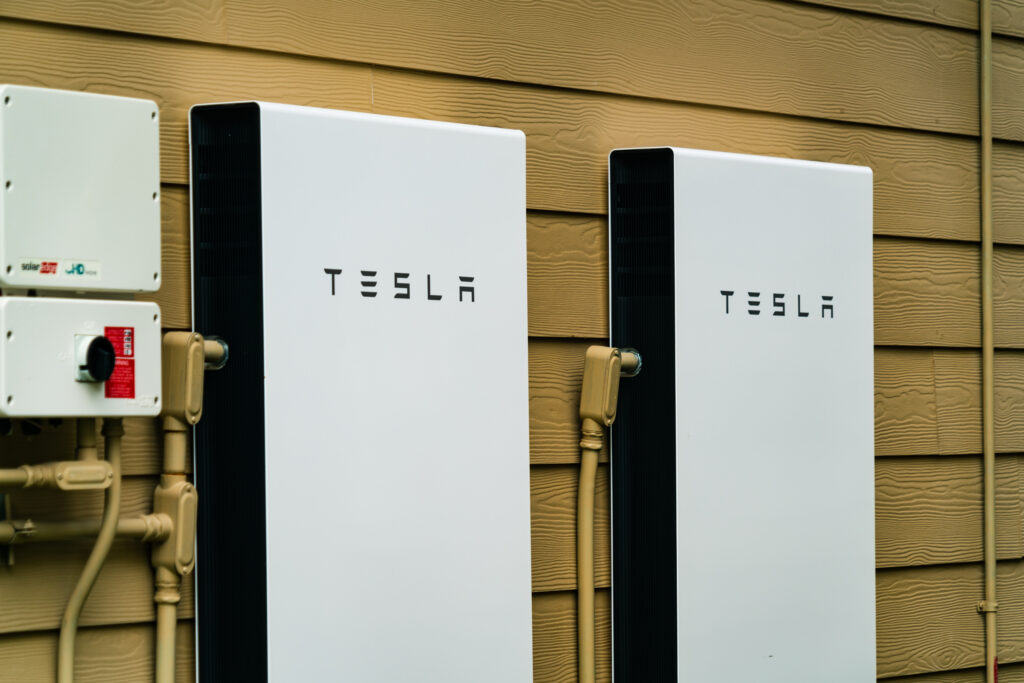
A solar battery is a rechargeable energy storage unit that connects to your solar panel system through an inverter. During daylight hours, your solar panels convert sunlight into direct current (DC) electricity. If your panels produce more electricity than your home is consuming at that moment, the excess energy charges the battery instead of being exported to the grid.
When the sun sets or your panels are underproducing, such as on overcast days or during evening hours, the battery discharges its stored energy. That stored DC power passes through an inverter, which converts it into alternating current (AC) electricity your home appliances can use. The entire cycle repeats each day automatically.
Most modern residential batteries use lithium-ion chemistry, which is the same fundamental technology used in electric vehicles. A typical home battery stores between 10 and 15 kilowatt-hours (kWh) of usable energy. For context, 13 kWh is enough to run essential circuits, including your refrigerator, Wi-Fi router, lighting, and phone chargers, for roughly 10 to 12 hours during an outage.
Q: Do I need a special inverter for a solar battery?
A: It depends on your existing system. Some batteries, like the Tesla Powerwall, include an integrated inverter. Others require a hybrid inverter that can manage both solar panel input and battery charging simultaneously. A qualified installer can assess your current setup and recommend the most cost-effective path.
Q: Can I add a battery to my existing solar panel system?
A: Yes. Most solar panel systems in Altadena can be retrofitted with a battery. The process typically involves installing the battery unit, updating the inverter if necessary, and filing an interconnection agreement with Southern California Edison.
How a Solar Battery in Altadena Leads to Energy Independence
Energy independence means your home can generate, store, and consume its own electricity with minimal reliance on the utility grid. A solar battery is the component that makes this possible. Without storage, your solar panel system is entirely grid-dependent after sunset.
With a properly sized solar battery in Altadena, you can cover most or all of your nighttime energy consumption using power your panels generated earlier that day. During months with long daylight hours, typically April through September in Southern California, many homeowners with battery systems draw almost nothing from the grid.
True off-grid living requires a significantly larger battery bank and is not practical for most urban and suburban homes. However, a single battery paired with a well-sized solar array can reduce your grid dependence by 70 to 90 percent. For Altadena homeowners interested in resilience, especially those in higher-elevation neighborhoods near Eaton Canyon or the Angeles National Forest boundary, this level of independence provides meaningful protection against both planned and unplanned outages.
August Roofing and Solar has been helping Southern California homeowners design integrated roofing and solar systems for over 30 years. Our team evaluates your roof condition, energy consumption, and sun exposure to recommend a solar battery configuration that matches your specific goals.
How Solar Energy Storage Lowers Your Electric Bills in Southern California
Southern California Edison uses a time-of-use (TOU) rate structure. Electricity is cheapest during midday, when solar production is highest and grid demand is lowest. It becomes most expensive during peak hours, which run from 4 p.m. to 9 p.m. on weekdays. This is exactly when your solar panels start producing less or stop producing entirely.
A solar battery lets you shift your energy use strategically. Instead of buying expensive peak-rate electricity from SCE, you draw from stored solar energy your panels generated earlier. This strategy is called peak shaving, and it can reduce your monthly electric bill substantially.
Under California’s NEM 3.0 policy, which took effect in April 2023, the credit you receive for exporting surplus solar energy to the grid has been reduced significantly compared to the previous NEM 2.0 structure. This policy change makes solar energy storage in Southern California more financially valuable than ever. Instead of exporting energy at a low credit and buying it back at a high rate, you store it and use it yourself.
A typical Altadena household on SCE’s TOU-D-Prime rate plan pays around $0.40 to $0.55 per kWh during peak hours. If your battery covers 8 to 10 kWh of peak consumption daily, that translates to $3.20 to $5.50 in avoided peak charges per day, or roughly $96 to $165 per month in savings.
Q: Will a solar battery eliminate my electric bill completely?
A: In most cases, no. SCE charges a minimum monthly connection fee regardless of usage. However, a well-designed solar and battery system can reduce your net energy charges to near zero, leaving only the fixed monthly charge of approximately $12 to $15.
Backup Power During Outages and PSPS Events in Altadena
Altadena sits at the base of the San Gabriel Mountains, in an area classified as a high fire-risk zone by CAL FIRE. During periods of extreme Santa Ana wind events, Southern California Edison may initiate a Public Safety Power Shutoff (PSPS) to reduce wildfire ignition risk from power lines. These shutoffs can last 24 to 72 hours and affect thousands of Altadena households.
A solar battery provides automatic backup power during these events. When the grid goes down, a battery-equipped system isolates from the grid through a process called islanding and continues supplying power to designated circuits in your home. Your solar panels keep charging the battery during daylight hours, which means your backup power can last indefinitely as long as there is sufficient sunlight.
Without a battery, your solar panels shut down during a grid outage. This is a safety requirement called anti-islanding, designed to protect utility workers repairing power lines. A battery with an automatic transfer switch solves this problem by creating a self-contained power loop within your home.
For Altadena homeowners near Rubio Canyon, Millard Canyon, or the neighborhoods along Lake Avenue north of Altadena Drive, backup power capability is not a luxury. It is a practical necessity given the frequency of PSPS events in the foothills.
California Rebates and Incentives for Solar Batteries
Several financial incentives reduce the cost of installing a solar battery in Altadena. The most significant is the federal Investment Tax Credit (ITC), which currently allows you to claim 30 percent of the total installed cost of a solar battery system as a credit on your federal income tax. This applies whether the battery is installed with a new solar panel system or added to an existing one, as long as the battery is charged primarily by solar energy.
California also offers the Self-Generation Incentive Program (SGIP), administered by the California Public Utilities Commission. SGIP provides direct rebates for residential battery installations. Homeowners in high fire-threat districts, which includes much of Altadena, may qualify for the Equity Resiliency budget tier. This tier offers significantly higher rebate amounts, in some cases covering the majority of the battery cost.
To qualify for SGIP, you must be a customer of a participating utility. Southern California Edison is a participating utility. The application process involves your installer submitting documentation on your behalf, and rebate amounts are subject to available funding in each budget cycle.
Additional savings come from avoiding SCE peak rates, as described above, and from the long-term reduction in grid electricity purchases. When you combine the federal tax credit, SGIP rebate, and monthly bill savings, most Altadena homeowners see a payback period of 5 to 8 years on their battery investment.
Q: Is the SGIP rebate available for all Altadena homeowners?
A: Most Altadena homeowners are eligible because much of the area falls within a Tier 2 or Tier 3 high fire-threat district as mapped by the CPUC. However, rebate funding is allocated in budget steps, and amounts decrease as each step is exhausted. Applying early through a qualified installer gives you the best chance of receiving the maximum rebate.
How a Solar Battery Reduces Your Carbon Footprint
A solar battery increases the percentage of your electricity that comes from a renewable source. Without a battery, your home draws grid electricity after sunset, and a significant portion of grid electricity in Southern California is still generated from natural gas. By storing and using your own solar energy around the clock, you displace more fossil fuel generation.
According to the U.S. Department of Energy, a typical residential solar and battery system can offset 3 to 5 metric tons of carbon dioxide emissions per year, depending on system size and local grid mix. That is roughly equivalent to taking one car off the road.
Solar energy storage in Southern California is particularly impactful because of the region’s high solar irradiance. Altadena receives approximately 280 sunny days per year, which means your battery charges fully on most days. The more consistently your battery cycles, the more grid electricity it displaces and the greater your environmental benefit.
Modern lithium-ion batteries also have longer usable lifespans than older lead-acid technology. Most residential batteries are warranted for 10 to 15 years or a specific number of charge cycles, typically 4,000 to 6,000 cycles. This longevity reduces manufacturing waste and the environmental impact of battery production over time.
Choosing the Right Solar Battery for Your Altadena Home
Selecting a solar battery involves evaluating several factors specific to your home and energy profile. The most important considerations are usable capacity, power output, round-trip efficiency, warranty terms, and compatibility with your existing or planned solar panel system.
Usable Capacity
Usable capacity, measured in kilowatt-hours (kWh), determines how much energy the battery can store and deliver. A 13.5 kWh battery is the most common residential size. If your household consumes 25 to 35 kWh per day, which is typical for a 3-bedroom Altadena home, one battery will cover your evening and overnight needs. Larger homes or households with electric vehicles may benefit from two batteries installed in parallel.
Power Output
Power output, measured in kilowatts (kW), determines how many appliances can run simultaneously. A battery with a 5 kW continuous output can handle normal household loads. If you want to back up high-draw appliances like air conditioning, which is relevant during Altadena’s inland summer heat, look for a battery with 7 kW or higher continuous output.
Round-Trip Efficiency
Round-trip efficiency measures how much energy you get back compared to how much goes in. A battery with 90 percent round-trip efficiency returns 9 kWh for every 10 kWh stored. Higher efficiency means less energy lost in the storage process. Most quality lithium-ion batteries achieve 88 to 96 percent round-trip efficiency.
Warranty and Lifespan
Look for a warranty that guarantees at least 70 percent capacity retention after 10 years. The best residential batteries on the market offer 10- to 15-year warranties. August Roofing and Solar installs battery systems from manufacturers with proven track records and strong warranty support. We require no deposit to get started, and our licensed team handles the full installation, permitting, and SCE interconnection process.
For a detailed look at our solar services, visit our solar page. If your roof needs attention before a battery installation, we also offer comprehensive roofing services to ensure your home is ready for the full system.
People Also Ask
How much does a solar battery cost in Altadena?
A residential solar battery in Altadena typically costs between $10,000 and $18,000 installed, depending on capacity and brand. After the 30 percent federal tax credit and any available SGIP rebate, the net cost can drop to $5,000 to $12,000.
Is a solar battery worth it in Southern California?
Yes. Under NEM 3.0, the reduced export credit rates make self-consumption of stored solar energy significantly more valuable than sending it back to the grid. Combined with SCE’s high peak-rate pricing, most Southern California homeowners see a payback period of 5 to 8 years.
How long can a solar battery power a house during an outage?
A single 13.5 kWh battery can power essential circuits for approximately 10 to 12 hours. If your solar panels continue charging the battery during daylight, your backup power can last indefinitely under favorable sun conditions.
Do I need a solar battery if I already have solar panels in Altadena?
You do not strictly need one, but a battery adds substantial value. It enables backup power during PSPS shutoffs, reduces your dependence on expensive peak-rate grid electricity, and maximizes the financial return of your solar panel investment under current NEM 3.0 rules.
Frequently Asked Questions
What is the best solar battery for Altadena homeowners?
The best solar battery for Altadena homeowners depends on your energy usage, backup power needs, and budget. Popular options include the Tesla Powerwall 3, Enphase IQ Battery 5P, and Franklin WH. A qualified installer will assess your consumption data and recommend the best fit for your home.
Can a solar battery in Altadena power my entire home during an outage?
A single battery typically powers essential circuits, not the entire home. To back up high-draw systems like central air conditioning or an electric range, you may need two or more batteries. Your installer will help you prioritize which circuits to back up based on your needs.
How long does it take to install a solar battery in Altadena?
The physical installation of a solar battery in Altadena usually takes one day. However, permitting and SCE interconnection approval can add 2 to 6 weeks. Your installer should handle all permitting and utility coordination as part of the project.
Will a solar battery work during a wildfire-related power shutoff?
Yes. A solar battery with an automatic transfer switch isolates from the grid during a PSPS event and continues supplying power to your home. Your panels recharge the battery during the day, providing ongoing backup power for the duration of the shutoff.
Does August Roofing and Solar install solar batteries in Altadena?
Yes. August Roofing and Solar installs solar battery systems throughout Altadena and neighboring communities including Pasadena, La Canada Flintridge, and Sierra Madre. With over 30 years of experience and no deposit required, our licensed team manages every step from system design through SCE interconnection. Contact us to schedule a free consultation, or learn more about our company.
If you are considering a solar battery in Altadena, the most important step is understanding your home’s energy profile and how storage fits into your overall solar strategy. Whether you already have panels or are planning a new system, a properly sized battery can lower your bills, provide backup power during outages, and move you closer to true energy independence. To learn more or schedule a free solar evaluation, reach out to August Roofing and Solar or call us at (805) 519-8099. We are happy to answer your questions and help you make an informed decision. You can also explore our free roof inspection service to confirm your roof is ready for solar and battery installation.