
Key Takeaways
- Roof leak repair in Southern California typically costs between $300 and $3,500 depending on the severity, roof type, and hidden damage involved.
- Flashing failures around chimneys, skylights, and vents are the single most common cause of roof leaks, not damaged shingles or tiles alone.
- A roof leak does not always mean you need a full roof replacement. Many leaks are localized and repairable when caught early.
- Southern California’s intense UV exposure, thermal cycling, and Santa Ana winds cause gradual roof deterioration long before rain reveals the damage.
- Early professional diagnosis saves homeowners thousands by preventing water damage to framing, insulation, and interior finishes.
Quick Links
- Why Roof Leaks Are So Common in Southern California
- What Actually Causes Roof Leaks
- Is This a Serious Roof Leak or a Simple Repair?
- How a Professional Roof Leak Diagnostic Works
- Roof Leak Repair Cost in 2025
- How to Reduce the Risk of Future Roof Leaks
- People Also Ask
- Frequently Asked Questions
Why Roof Leaks Are So Common in Southern California
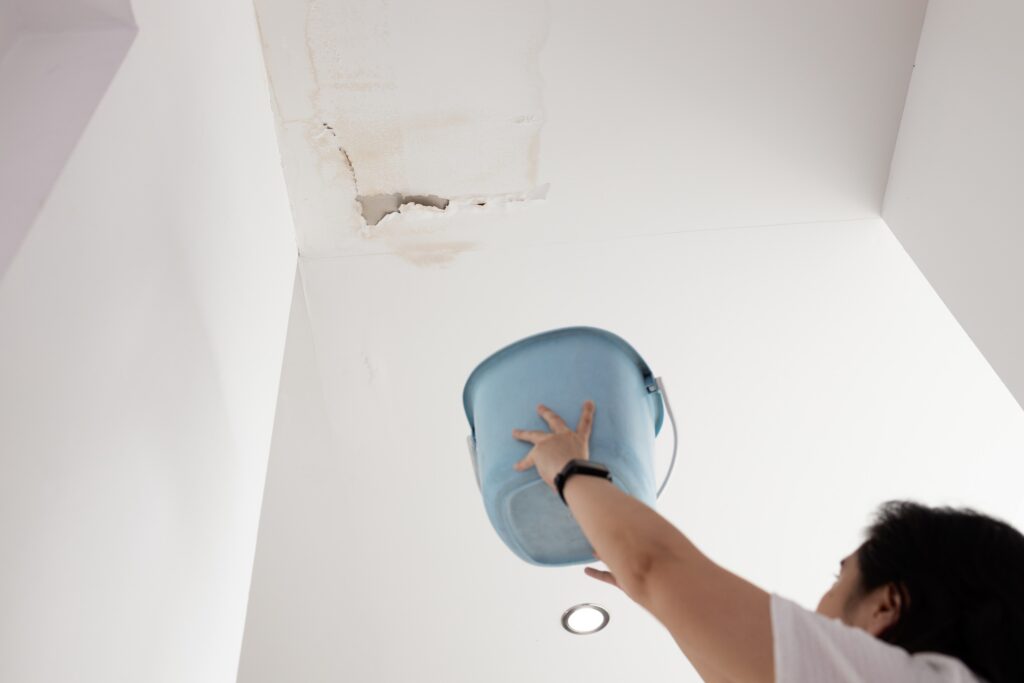
Roof leak repair is one of the most searched home maintenance topics in Southern California for good reason. You notice a brown stain on your ceiling during the first real rain of the season. You thought your roof was fine. Now you are wondering how bad it is, what caused it, and how much it will cost to fix.
That scenario plays out in thousands of homes every year. The frustrating part is that the leak probably did not start the day you noticed it. Most roof leaks develop over months or even years of slow, invisible deterioration.
Southern California’s climate is uniquely hard on roofing systems, though it rarely gets credit for that. Most homeowners associate roof damage with heavy storms, but the real culprits here are different.
- Year-round UV exposure degrades roofing materials at the molecular level, drying out asphalt shingles, cracking clay tiles, and breaking down sealants.
- Daily thermal cycling causes expansion and contraction in metal flashing, underlayment, and fasteners. Over years, this loosens connections.
- Santa Ana winds can exceed 60 mph and lift tiles, peel back shingle edges, and drive debris into vulnerable areas.
- Coastal marine layer moisture in areas closer to the ocean creates condensation cycles that accelerate corrosion on metal components.
Rain is the test, not the cause. When the first heavy storm arrives, it exposes weaknesses that sun and wind created months earlier. By the time water appears inside your home, the roof system has usually been compromised at a point far from where the stain shows up.
Q: Why do roof leaks seem to appear suddenly during the first rain?
A: Because rain reveals damage that already existed. UV exposure, wind, and thermal cycling gradually weaken roofing materials, and rain simply finds those weak points.
What Actually Causes Roof Leaks
A roof is a system, not a single layer. Leaks almost always originate where different components meet or where penetrations create openings in the surface. Understanding these failure points helps homeowners make better repair decisions.
1. Flashing: The Number One Leak Source
Flashing is the thin metal material that seals transitions and penetrations on your roof. It surrounds chimneys, skylights, plumbing vents, and valleys where two roof planes meet.
Flashing fails more often than any other roof component because it is subjected to the most stress. It expands and contracts with temperature changes, sits at junctions where water naturally concentrates, and relies on sealant that degrades over time.
When flashing separates, corrodes, or lifts, water bypasses otherwise intact roofing materials and enters the structure underneath.
Q: Can flashing be repaired without replacing the whole roof?
A: Yes. Flashing repair or replacement is one of the most common and cost-effective roof leak repair solutions. A qualified roofer can reseal or replace flashing at specific penetration points without disturbing the surrounding roof surface.
2. Roofing Surface Materials
The visible layer of your roof, whether asphalt shingles, concrete tiles, clay tiles, or a flat roof membrane, serves as the first line of defense against water. As these materials age, they become brittle, cracked, or displaced.
Common surface failures include:
- Cracked or broken tiles that expose the underlayment beneath
- Lifted or curling shingle edges that allow wind-driven rain underneath
- Worn granule coatings on asphalt shingles that reduce waterproofing
- Punctured or blistered flat roof membranes
One broken tile can absolutely cause a leak if the underlayment below has also aged past its useful life.
3. Underlayment: The Hidden Waterproof Barrier
Underlayment is the waterproof sheet installed directly on the roof deck, beneath shingles or tiles. It acts as a secondary barrier. When the surface material fails, underlayment is supposed to prevent water from reaching the wood structure.
The problem is that underlayment also degrades with time and heat exposure. In Southern California, older underlayment made of organic felt can deteriorate in as few as 15 years. When both the surface material and underlayment fail, water enters the roof deck directly.
4. Drainage Systems
Gutters, downspouts, and roof valleys are designed to move water off the roof efficiently. When these systems are clogged, damaged, or improperly pitched, water backs up and finds alternative paths, often into the structure.
Clogged gutters are a surprisingly common contributor to roof leaks. Backed-up water can overflow at roof edges and seep behind fascia boards, causing hidden rot.
Q: Can clogged gutters really cause a roof leak?
A: Yes. When gutters overflow, water backs up under the roof edge and can penetrate behind fascia boards, leading to leaks that appear inside along exterior walls.
Is This a Serious Roof Leak or a Simple Repair?
Not every leak requires a major investment. The distinction between a localized repair and a systemic problem is one of the most important assessments a homeowner can understand.
Signs It Is Likely a Localized Repair
- The leak appears in a single, isolated spot
- Surrounding roof materials are in good condition
- The leak started after a specific weather event
- There is no history of recurring leaks in the area
Signs the Problem May Be Structural or Systemic
- Multiple leak locations appearing at the same time
- Repeated leaks in the same area despite previous repairs
- Spreading or darkening ceiling stains
- Sagging drywall, soft spots, or visible wood rot
- The roof is more than 20 to 30 years old with original materials
A single leak does not mean the entire roof is failing. However, repeated leaks in the same area often indicate a deeper system issue, such as failed underlayment or improperly installed flashing, that surface repairs alone will not solve.
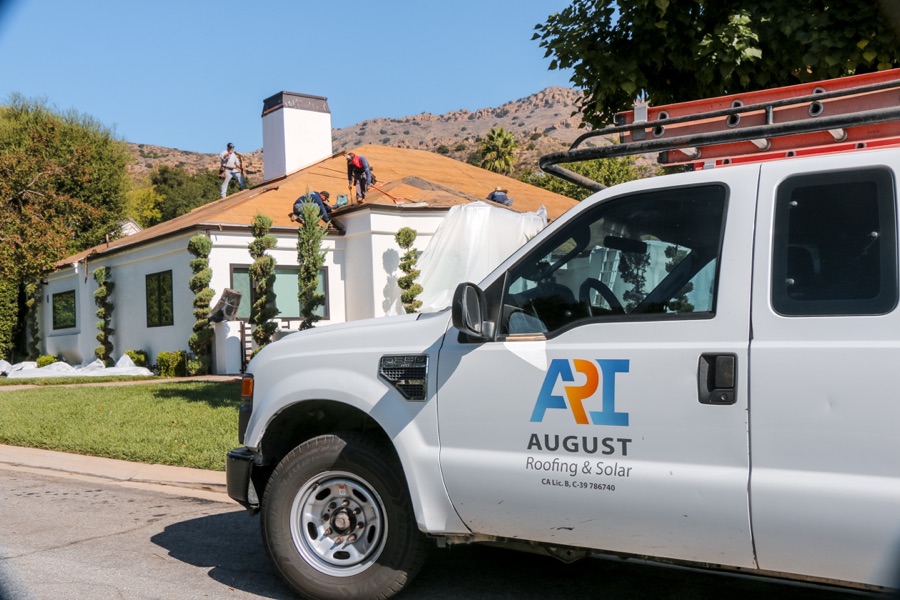
This is where professional diagnosis matters. At August Roofing and Solar, our team draws on 30 years of experience to distinguish between a straightforward repair and a problem that requires a more comprehensive solution. Getting this diagnosis right prevents homeowners from either overspending on unnecessary replacements or underspending on patches that will fail again.
How a Professional Roof Leak Diagnostic Works
A proper roof leak diagnostic follows a methodical process. Reputable roofing companies do not guess at the source. They trace it.
Step-by-Step Leak Diagnostic Process
- Interior inspection: The technician examines water stains, checks insulation moisture levels, and traces airflow patterns to identify where water is entering the living space.
- Roof surface evaluation: Every section of the roof surface is checked for cracked tiles, lifted shingles, damaged membrane sections, or missing materials.
- Flashing and penetration review: All roof penetrations, including vents, chimneys, skylights, and pipe boots, are examined for sealant failure, corrosion, or separation.
- Drainage assessment: Valleys, gutters, and downspouts are checked for proper pitch, blockages, and signs of water pooling.
- Photo documentation and explanation: A professional roofer provides photographic evidence of findings and explains the repair options in plain language.
One critical detail homeowners should understand: the visible water stain inside your home is almost never directly below the actual leak source on the roof. Water travels along rafters, sheathing, and framing members before it drips down to a visible surface. The entry point is often several feet higher or to one side of where the stain appears.
This is why DIY leak detection is often unreliable. Without accessing the roof and understanding how water moves through the structure, homeowners frequently patch the wrong spot.
If you suspect a leak, scheduling a professional roof inspection is the most reliable path to an accurate diagnosis.
Q: Why is the source of a roof leak often far from the ceiling stain?
A: Water follows the path of least resistance along roof decking, rafters, and framing. It may travel several feet horizontally before finding a gap to drip through to the ceiling below.
Roof Leak Repair Cost in 2025: What Southern California Homeowners Should Expect
Roof leak cost is one of the first things homeowners search for, and the honest answer is that it depends on several variables. Here is a realistic breakdown based on current Southern California pricing.
Typical Roof Leak Repair Cost Ranges
- Minor localized repair (single tile replacement, small sealant fix): $300 to $800
- Flashing repair or replacement (chimney, skylight, or vent flashing): $800 to $1,500
- Multiple leak areas or partial section repair: $1,500 to $3,500 or more
Several factors influence where your repair falls on this spectrum:
- Roof type: Tile roofs require more labor-intensive repairs than asphalt shingle roofs. Flat roofs have their own specialized repair methods.
- Accessibility: Steep slopes, multi-story homes, and roofs with limited access points increase labor time and cost.
- Hidden damage: If water has compromised the underlayment, decking, or structural framing, repair costs increase because those layers must be addressed before the surface is restored.
- Previous failed repairs: Improper past patches can complicate the work and add cost. Layered sealant, mismatched materials, and concealed damage from prior attempts all require additional time to correct.
The most expensive roof leak repair is the one you delay. Water damage compounds over time. What starts as a $500 flashing repair can become a $5,000 problem involving rotted decking, mold remediation, and interior drywall replacement if left unaddressed through a rainy season.
August Roofing and Solar requires no deposit to begin repair work, which removes one of the common barriers homeowners face when deciding to act quickly.
Q: Why do roof repair quotes vary so much between companies?
A: Quotes vary because some companies only price the visible issue while others account for underlying damage, proper materials, and warranty-backed workmanship. A lower quote is not always a better value if it leads to a repeat failure.
How to Reduce the Risk of Future Roof Leaks
Prevention is significantly less expensive than emergency roof leak repair. These steps help Southern California homeowners protect their investment between professional service visits.
- Schedule periodic roof inspections. A professional inspection every one to two years catches small issues before they become active leaks. Post-storm inspections are also wise after significant wind events.
- Keep gutters and valleys clear. Debris accumulation in drainage pathways is one of the most preventable causes of water intrusion.
- Address small repairs immediately. A cracked tile or a lifted shingle tab is inexpensive to fix in isolation. Left alone, it becomes an entry point for water.
- Avoid temporary patch fixes. Roofing caulk and tar applied by non-professionals often mask problems and make future professional repairs more difficult.
- Work with a licensed local roofer familiar with your roof type. Southern California has a wide variety of roofing materials, from Spanish clay tile to cool roof membranes. Each requires specific repair techniques and materials.
The National Roofing Contractors Association (NRCA) recommends biannual inspections as a baseline for residential roofs. In climates with high UV exposure like Southern California, this schedule is especially important because material degradation happens faster than in milder environments.
California’s CAL FIRE regulations also require ember-resistant roofing materials in designated wildfire zones. If your home is in one of these areas, confirming that your roof materials meet current requirements during an inspection adds an extra layer of protection and compliance.
For homeowners considering long-term upgrades, combining a roof replacement with a solar panel installation can be a cost-effective approach. Addressing both systems at once avoids the need to remove panels later when the roof reaches end of life.
People Also Ask
Is a roof leak considered an emergency?
An active roof leak should be addressed as soon as possible. While not every leak is a structural emergency, standing water and ongoing moisture intrusion can cause mold growth, wood rot, and electrical hazards within days. Prompt action limits secondary damage and reduces total repair costs.
Can roof leaks cause mold in your home?
Yes. Persistent moisture from a roof leak creates ideal conditions for mold growth, particularly in attic spaces, insulation, and behind drywall. Mold can develop within 24 to 48 hours of sustained moisture exposure. Fixing the leak and drying the affected area promptly is critical.
Will homeowners insurance cover roof leak repair?
Coverage depends on the cause and your specific policy. Most insurers cover sudden damage from storms or fallen trees but exclude damage from gradual wear, deferred maintenance, or aging materials. Review your policy and document the damage with photos before filing a claim.
How long does a roof leak repair take?
Most localized roof leak repairs can be completed in a few hours to one full day. More extensive repairs involving decking replacement or multiple leak points may take two to three days. Your roofer should provide a timeline after the diagnostic assessment.
Frequently Asked Questions
How much does roof leak repair cost in Southern California?
Roof leak repair typically costs between $300 and $3,500 in Southern California, depending on severity. A minor single-point fix may run $300 to $800, while multi-area repairs involving flashing replacement and decking work can reach $3,500 or more. Getting a professional diagnostic before committing to any repair ensures you understand the full scope.
Can I fix a roof leak myself?
Temporary measures like placing a tarp or bucket can limit immediate water damage, but permanent roof leak repair should be handled by a licensed professional. Improper DIY patches frequently trap moisture, conceal the real entry point, and make the next repair more expensive. Safety on a roof is also a serious concern for untrained individuals.
What is the most common cause of roof leak repair calls?
Failed flashing is the most common reason homeowners need roof leak repair. Flashing around chimneys, skylights, vents, and roof valleys is subjected to more thermal stress and water exposure than flat roofing surfaces. Over time, sealant breaks down and metal separates, creating direct paths for water entry.
How do I know if I need a roof repair or a full replacement?
If the leak is isolated, the surrounding materials are in good condition, and the roof is less than 20 years old, a repair is usually sufficient. If you have multiple active leaks, widespread material deterioration, or your roof is approaching the end of its expected lifespan, a replacement may be more cost-effective than repeated repairs. A professional inspection provides the clearest answer.
How often should I have my roof inspected to prevent leaks?
Most roofing professionals recommend inspections every one to two years and after any major storm. In Southern California, where UV degradation and Santa Ana wind events accelerate wear, annual inspections are a sound investment. Early detection through routine inspections is the most reliable way to avoid costly emergency roof leak repair.
Ready to Find and Fix the Leak?
If you have noticed a water stain, a musty smell in the attic, or suspect your roof may be compromised, the next step is a professional diagnosis. August Roofing and Solar provides thorough roof leak inspections across Southern California with clear photo documentation, honest recommendations, and no deposit required to begin work.
Schedule your free roof leak diagnosis by calling (805) 519-8099 or requesting an appointment online. New customers receive 10% off their first repair service when mentioning this guide.