
Key Takeaways
- Pipe sealant roof leaks are one of the most common and overlooked sources of water damage on tile roofs in Southern California, often appearing as stains on bathroom or kitchen ceilings.
- UV exposure from Southern California’s high sun index breaks down pipe sealant (also called pipe boot flashing) in as few as 8 to 12 years, creating gaps where rainwater enters your roof system.
- Cracked, broken, or slipped lightweight concrete tiles compound the problem by exposing the underlayment beneath, but they do not always require a full roof replacement.
- A professional roof tune-up that includes resealing pipes, replacing broken tiles, and resecuring slipped tiles can resolve most early-stage leaks at a fraction of the cost of a full re-roof.
- Regular roof inspections every 2 to 3 years catch pipe sealant failure and tile damage before they escalate into structural repairs.
Quick Links
- Why Pipe Sealant Roof Leaks Matter for Your Home
- How Pipe Sealant Fails on Southern California Roofs
- The Risk in Lightweight Concrete Roof Tiles
- How Your Underlayment Determines the Repair Scope
- Why Proper Roof Venting Protects Against Moisture
- Identifying a Roof Leak From Pipe Boot Sealant
- The Solution: A Roof Tune-Up Instead of a Full Replacement
- What a Professional Roof Tune-Up Includes
- When to Act on Pipe Sealant Roof Leaks
- People Also Ask
- Frequently Asked Questions
Why Pipe Sealant Roof Leaks Matter for Your Home
You notice a brownish water stain spreading across your bathroom ceiling. The roof looks fine from the street. There are no missing tiles, no visible holes, and no obvious storm damage. Yet water is finding its way inside, and it has been doing so for weeks or even months before you ever noticed.
This scenario plays out in thousands of Southern California homes each year. The cause is rarely dramatic. In many cases, the source is something small and easy to miss during a casual glance: failing sealant around the pipes that penetrate your roof. Pipe sealant roof leaks account for a significant share of residential water intrusion cases, yet most homeowners do not realize these seals degrade over time.
In this guide, we walk through a real roof inspection performed by August Roofing and Solar on a home where the owner suspected a bathroom leak. The findings reveal how cracked tiles, degraded pipe sealant, and overlooked maintenance items connect to form a larger problem. Understanding these components helps you make informed decisions about your roof before minor issues become expensive repairs.
How Pipe Sealant Fails on Southern California Roofs
Pipe sealant roof leaks begin with a material called pipe boot flashing, sometimes referred to as a pipe jack or roof boot. This is the rubber or neoprene collar that wraps around plumbing vent pipes where they exit the roof surface. Its job is straightforward: create a watertight seal so rain cannot follow the pipe down into the attic or ceiling cavity.
In Southern California, this seal faces an especially harsh environment. The region’s high UV index, which ranks among the most intense in the continental United States, accelerates the breakdown of rubber and neoprene compounds. On inland properties where summer temperatures regularly exceed 100 degrees, sealant materials expand and contract with daily thermal cycling. Coastal homes contend with salt-laden marine layer moisture that corrodes metal flashing components.
The result is predictable. After 8 to 12 years of sun exposure, the sealant around roof pipes dries out, cracks, and pulls away from the pipe surface. Even a hairline gap is enough for water to enter during a rainstorm. Because the leak follows the pipe downward, it often shows up on the ceiling directly below the pipe, typically in a bathroom or kitchen.
Q: Can I see pipe sealant damage from the ground?
A: Usually not. Pipe boots sit on the roof surface behind tiles and are not visible from ground level. A roof-level inspection is the only reliable way to check their condition.
Q: How long does pipe sealant last in Southern California?
A: Standard neoprene pipe boots last 8 to 12 years before UV degradation causes cracking. High-quality elastomeric sealants or TPO boots can extend this to 15 to 20 years, depending on exposure.
The Risk in Lightweight Concrete Roof Tiles
Pipe sealant is rarely the only issue found during a roof inspection. Tile condition plays a direct role in whether water reaches the underlayment and, eventually, your living space.
Lightweight concrete roof tiles are common across Southern California subdivisions built from the 1980s through the 2000s. They offer good fire resistance, which matters in a region prone to wildfire risk and where CAL FIRE ember-resistant roofing requirements apply. However, lightweight concrete is more brittle than standard-weight concrete or clay tile.
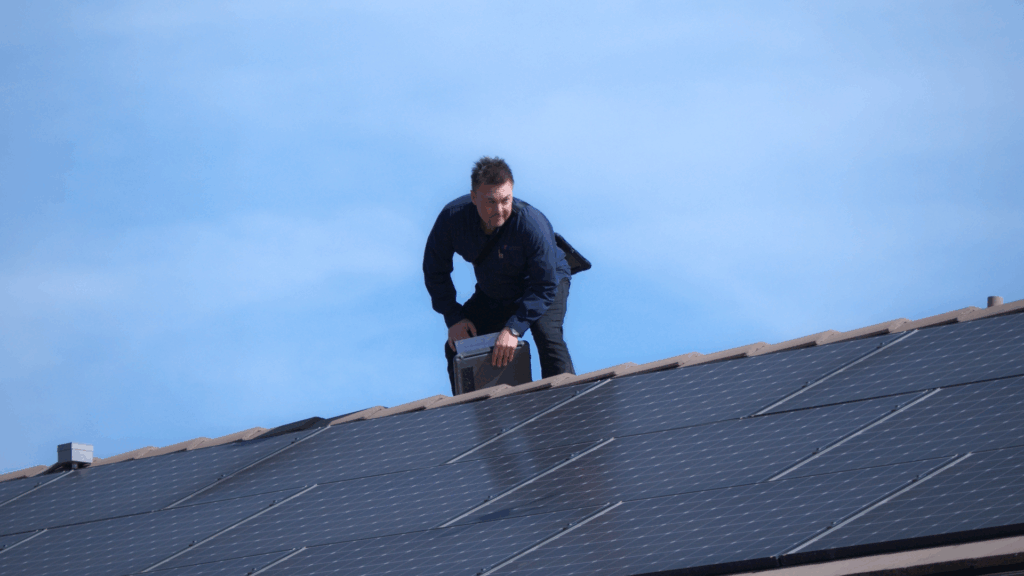
Walking on lightweight tiles without proper technique can crack them. Fallen tree branches, accumulated debris, and even thermal stress from years of hot-cold cycling contribute to fractures. During the inspection shown in the video above, our project consultant found several tiles that were cracked, broken, or slipped out of position.
A cracked tile by itself may look minor. But each crack is an opening. Water passes through the crack, contacts the underlayment, and begins to degrade the waterproof barrier that protects your roof deck. The sun also enters through these gaps, heating and drying the underlayment from above. Over time, this dual assault from water and UV shortens the underlayment’s functional life considerably.
How Your Underlayment Determines the Repair Scope
The underlayment is the waterproof membrane installed directly on top of the roof deck (plywood sheathing) and beneath the tiles. It is your roof’s last line of defense against water intrusion. When a tile cracks or pipe sealant fails, the underlayment is what stands between rainwater and your ceiling.
Underlayment condition is the single most important factor in determining whether you need a localized repair or a full roof replacement. If the underlayment has dried out, become brittle, or lost its asphalt waterproofing compound, no amount of tile repair will stop leaks.
In the inspection featured here, the underlayment was still black and pliable, meaning its asphalt waterproofing layer was intact. This is a positive finding. It indicates the underlayment has remaining useful life, and a full re-roof is not yet necessary. The homeowner was able to address the problem with targeted repairs, saving significant cost.
A general guideline: if your underlayment is still dark, flexible, and shows no signs of crumbling or dry rot, localized repairs can extend your roof’s service life by years. If the underlayment is gray, brittle, or tearing when touched, a full roof replacement is likely the more cost-effective path forward.
Q: How can I tell if my underlayment needs replacement?
A: A qualified roofer will lift a few tiles to inspect the underlayment visually and by touch. Black, flexible material with intact asphalt content is healthy. Gray, brittle, or crumbling material indicates end-of-life and the need for a full re-roof.
Why Proper Roof Venting Protects Against Moisture
Attic ventilation is a component many homeowners overlook when diagnosing a roof leak from pipe boot failure or tile damage. Proper venting reduces moisture accumulation inside the attic space, which in turn protects the underside of the roof deck and the underlayment from condensation-related deterioration.
The home in this inspection featured O’Hagan vents, which are a low-profile ventilation option. Low-profile vents sit close to the roof surface, which makes them compatible with solar panel installations. If you plan to add solar in the future, having flush or low-profile venting already in place avoids the need to modify your ventilation system during the solar installation.
In Southern California’s climate, attic temperatures can exceed 150 degrees during summer, particularly in inland valleys. Without adequate exhaust venting, that trapped heat accelerates the aging of both the underlayment and the roof deck. Proper ventilation allows hot air to exit the attic through ridge or roof vents while cooler air enters through soffit or eave vents, creating a continuous air exchange cycle.
Good ventilation also helps reduce cooling costs. When attic temperatures are lower, your air conditioning system works less to maintain comfortable indoor temperatures. This matters in a region where Southern California Edison electricity rates continue to climb, especially during summer peak pricing windows.
Identifying a Roof Leak From Pipe Boot Sealant
A roof leak from pipe boot failure has a distinct signature. Because the leak follows the plumbing vent pipe downward, the water stain on your ceiling typically appears near a bathroom or kitchen. The stain is often circular or semi-circular. It may grow slowly over several rainy seasons before becoming large enough to notice.
During the inspection, Garrett identified failing sealant around a pipe positioned directly above the homeowner’s bathroom. The sealant had cracked and pulled away from the pipe surface, creating a visible gap. Even a gap of a few millimeters is sufficient for water to enter during moderate rainfall.
Here is what to watch for as a homeowner:
- Water stains on the ceiling near a bathroom, kitchen, or laundry room (rooms with plumbing vent pipes)
- Musty odors in rooms below the roofline, which can indicate hidden moisture
- Peeling paint or bubbling drywall on the ceiling, especially after rain
- Visible mold growth on the ceiling or in the attic near pipe penetrations
If you notice any of these signs, schedule a professional roof inspection to confirm whether pipe sealant failure is the source.
The Solution: A Roof Tune-Up Instead of a Full Replacement
When pipe sealant roof leaks are caught early and the underlayment is still in good condition, the most practical repair is a roof tune-up. This is a targeted maintenance service that addresses specific failure points without the cost, disruption, or time commitment of a full roof replacement.
A roof tune-up is not a patch job. It is a systematic repair of every compromised component identified during the inspection. For the home in this case study, the tune-up resolved the active leak, restored tile coverage, and extended the roof’s service life, all in a single visit.
At August Roofing and Solar, our project consultants perform tune-ups based on a detailed, component-by-component inspection. With over 30 years of experience working on Southern California roofs, our team understands how local climate conditions affect tile, sealant, and underlayment materials differently across coastal, valley, and inland zones.
What a Professional Roof Tune-Up Includes
A roof tune-up is tailored to the specific findings of your inspection. Here are the most common repair items when pipe sealant roof leaks and tile damage are involved:
Replacing Broken and Cracked Tiles
All compromised tiles are removed and replaced with matching tiles. Color and profile matching ensures the repair blends visually with the existing roof. Each replacement tile restores the waterproof barrier over the underlayment in that section.
Resealing Pipe Penetrations
The old, cracked sealant is removed completely. A new application of high-quality elastomeric sealant is applied around each pipe penetration. Elastomeric sealants are flexible, UV-resistant, and designed to maintain a watertight bond through years of thermal expansion and contraction. This directly addresses the roof leak from pipe boot failure.
Resecuring Slipped Tiles
Tiles that have shifted out of position are reset and fastened to prevent future movement. Slipped tiles expose the underlayment to direct sunlight and rain, both of which accelerate deterioration. Resecuring these tiles is a preventive measure that protects the underlayment’s remaining useful life.
Inspecting and Clearing Vents and Flashing
All roof vents, valley flashing, and edge flashing are inspected for corrosion, lifting, or sealant failure. Any compromised flashing is repaired or replaced to maintain the roof’s overall water management system.
When to Act on Pipe Sealant Roof Leaks
The best time to address pipe sealant roof leaks is before you see a water stain. A routine roof inspection every 2 to 3 years allows a qualified roofer to identify sealant degradation, cracked tiles, and early underlayment wear before they produce active leaks.
In Southern California, timing your inspection to coincide with the end of summer or early fall is ideal. This positions your roof for the winter rain season, which typically runs from November through March. Santa Ana wind events in fall can also displace tiles and stress flashing, making a pre-rain-season inspection especially valuable.
August Roofing and Solar provides no-cost roof inspections with no deposit required. Our team walks you through every finding during the visit, explains what needs attention now versus what can be monitored, and provides a written scope of work for any recommended repairs. We are fully licensed and insured for all roofing services across Southern California.
If you have noticed a ceiling stain, musty smell, or cracked tiles on your roof, a professional inspection is the first step toward a clear answer. Contact August Roofing and Solar to schedule your inspection and find out whether a targeted repair can resolve the issue before it grows.
People Also Ask
Can a pipe cause a roof leak?
Yes. Plumbing vent pipes that pass through the roof require a watertight seal, usually a rubber boot and sealant. When that seal degrades from UV exposure and thermal cycling, water enters around the pipe and causes ceiling leaks below. This is one of the most common sources of roof leaks on tile roofs.
How much does it cost to reseal a pipe on a roof?
Resealing a single pipe penetration typically costs between $150 and $400 depending on accessibility and the type of sealant used. When combined with a broader roof tune-up that includes tile replacement and flashing repairs, the total cost is still significantly less than a full roof replacement.
How often should roof pipe boots be replaced?
Standard neoprene pipe boots should be inspected every 2 to 3 years and typically need replacement after 10 to 15 years. In Southern California, where UV exposure is intense year-round, replacement may be needed closer to the 8 to 10 year mark.
What is a roof tune-up?
A roof tune-up is a targeted maintenance service that repairs specific issues found during a professional inspection. It typically includes replacing cracked tiles, resealing pipe penetrations, resecuring slipped tiles, and repairing compromised flashing. It is a cost-effective alternative to a full roof replacement when the underlayment is still in good condition.
Frequently Asked Questions
What causes pipe sealant roof leaks?
Pipe sealant roof leaks are caused by the degradation of the rubber or neoprene boot that seals plumbing vent pipes where they pass through the roof surface. UV radiation, heat cycling, and age cause the sealant to crack and separate from the pipe, allowing rainwater to enter. In Southern California, the high UV index accelerates this process significantly.
How do I know if my roof leak is from a pipe?
A roof leak from pipe boot failure typically shows as a circular water stain on the ceiling of a room with plumbing, such as a bathroom or kitchen. The stain appears directly below where a vent pipe exits the roof. A professional roof inspection can confirm the source by examining the sealant condition around each pipe penetration.
Can pipe sealant roof leaks be fixed without replacing the whole roof?
Yes. If the underlayment beneath the tiles is still in good condition, pipe sealant roof leaks can be resolved with a roof tune-up. This involves removing the failed sealant, applying new elastomeric sealant, and replacing any damaged tiles. A full replacement is only necessary when the underlayment has reached end of life.
How often should I have my roof inspected for pipe sealant failure?
Roof inspections every 2 to 3 years are recommended for tile roofs in Southern California. Pipe sealant should be specifically checked during each inspection since it degrades faster than most other roof components due to constant UV exposure. Early detection prevents active leaks and costly interior damage.
What type of sealant is best for roof pipe penetrations?
High-quality elastomeric sealant is the preferred choice for roof pipe penetrations because it remains flexible through temperature changes and resists UV breakdown longer than standard caulk or silicone. Some roofers also use TPO or EPDM pipe boots for longer service life. Your roofer should select materials rated for the specific pipe diameter and roof type on your home.