
Key Takeaways
- The most common leaky roof causes include damaged shingles, clogged gutters, improper skylight installation, deteriorated flashing, and cracked roof vents.
- Southern California homeowners face unique leak risks from Santa Ana winds, UV degradation, and rare but intense rainstorms that expose hidden vulnerabilities.
- A roof leak should be addressed within 24 to 48 hours to prevent mold growth, structural rot, and interior damage that can multiply repair costs.
- Annual roof inspections are the single most effective way to catch early-stage problems before they become active leaks.
- Roof leak repair costs far less when the issue is detected early, and most fixes can be completed without a full roof replacement.
Quick Links
- Why Understanding Leaky Roof Causes Matters
- Common Leaky Roof Causes in Southern California
- Damaged or Missing Shingles
- Clogged or Damaged Gutters
- Skylight Installation Issues
- Deteriorated Flashing
- Cracked Roof Vents and Pipe Boots
- How Southern California Climate Accelerates Roof Leaks
- Warning Signs of a Roof Leak
- What to Do When You Find a Leak
- How Roof Inspections Prevent Leaks
- Roof Leak Repair vs. Full Replacement
- People Also Ask
- Frequently Asked Questions
Why Understanding Leaky Roof Causes Matters Before the Next Storm
You notice a small brown stain on the ceiling. It was not there last month. Maybe it appeared after a recent rain, or maybe it has been growing slowly and you are only now seeing it. Either way, that stain is telling you something important: water is getting through your roof, and the damage is already underway beneath the surface.
Understanding leaky roof causes gives you the ability to act before a minor issue escalates into structural damage, mold remediation, or an emergency tarping situation. In Southern California, where months of dry weather can hide developing problems, homeowners often discover leaks only when the first significant rainstorm hits. By then, underlying damage may have been progressing for weeks or months.
This guide walks through each of the most common causes, explains how Southern California’s climate creates unique risks, and outlines the steps you should take the moment you spot a leak. The goal is straightforward: help you protect your home and make informed decisions about roof maintenance and repair.
Common Leaky Roof Causes in Southern California
Roof leaks rarely appear without warning. In most cases, they result from gradual material degradation, installation errors, or deferred maintenance. The five most frequent leaky roof causes are damaged shingles, gutter problems, skylight issues, flashing failure, and cracked vents or pipe boots.
Each of these components plays a specific role in your roof’s water management system. When any single component fails, water finds a path of least resistance into the underlayment, decking, and eventually your living space. Understanding how each one works helps you recognize problems early.
Damaged or Missing Shingles
Broken, curling, or missing shingles are the most visible cause of roof leaks. Shingles serve as the outermost barrier against rain, and when they are compromised, water reaches the underlayment layer beneath them. If the underlayment is also aged or damaged, water passes through to the roof deck and into the attic.
Shingle damage in Southern California most commonly results from prolonged UV exposure and Santa Ana wind events. The high UV index throughout the region causes asphalt shingles to lose their protective granules over time, making them brittle and prone to cracking. Santa Ana winds, which can exceed 60 mph in some areas, lift and tear shingles that have already been weakened by sun exposure.
Curling shingles are a warning sign that the material has reached the end of its effective lifespan. If you notice shingle granules accumulating in your gutters, that is another indicator of advanced wear.
Q: Can I replace just a few damaged shingles, or do I need a full roof?
A: In most cases, isolated shingle damage can be repaired by replacing the affected shingles and inspecting the underlayment beneath them. A full replacement is typically only necessary when damage is widespread or the roof system has reached the end of its serviceable life, usually 20 to 30 years for asphalt shingles.
Clogged or Damaged Gutters
Gutters are a critical part of your roof’s drainage system. Their job is to channel rainwater from the roof surface to downspouts and away from your home’s foundation. When gutters become clogged with debris or develop cracks and separations at seams, water backs up along the roofline.
This backed-up water saturates the fascia board, which is the wooden board running along the edge of your roof behind the gutter. Once the fascia absorbs moisture, rot begins. Water can then wick into the roof decking and drip into exterior walls or attic spaces.
In Southern California, gutter clogs frequently result from dried leaves, pine needles, and debris carried by Santa Ana winds. Homes near hillsides or in areas with heavy tree cover are especially vulnerable. Even homes in urban areas accumulate enough airborne debris to cause blockages during peak wind season.
Clean your gutters at least twice a year: once before the rainy season begins in late fall and again in spring. Have a professional inspect the gutter system annually for sagging sections, separated joints, and proper slope toward downspouts.
Q: Can damaged gutters actually cause a roof leak?
A: Yes. When gutters overflow or pull away from the fascia, water pools along the roof edge instead of draining properly. Over time, this causes water intrusion at the roofline, leading to leaks in exterior walls and along the ceiling perimeter.
Skylight Installation Issues
Skylights add natural light and ventilation, but they also create a penetration in the roof surface that must be sealed precisely. Leaks around skylights are almost always caused by improper installation, deteriorated flashing around the skylight frame, or age-related seal failure.
A properly installed skylight includes a curb, which is a raised frame that lifts the skylight above the roof plane, along with step flashing and a waterproof membrane around the perimeter. If any of these components are missing, undersized, or poorly integrated with the surrounding roofing material, water will find its way in.
Condensation can also mimic a skylight leak. In Southern California, the temperature difference between warm interior air and the cooler glass surface, especially during coastal marine layer mornings, can cause moisture to form on the inside of the skylight. This drips down and appears to be a leak when it is actually a ventilation issue.
If you notice moisture around your skylight, have a qualified roofer inspect both the exterior flashing and the interior conditions before assuming the roof itself is compromised.
Deteriorated Flashing
Flashing consists of thin metal strips, typically aluminum or galvanized steel, installed at transition points on your roof. These transition points include the areas where the roof meets a wall, around chimneys, in roof valleys, and along vent pipes. Flashing redirects water that would otherwise pool or seep into joints.
Flashing deteriorates over time due to thermal expansion and contraction. In Southern California, where daytime temperatures can swing 30 to 40 degrees between morning marine layer and afternoon sun, metal flashing expands and contracts repeatedly. This loosens fasteners and breaks the sealant bonds at the edges.
Corroded or lifted flashing is one of the most common leaky roof causes that homeowners overlook because flashing is not easily visible from ground level. It typically requires a rooftop inspection to identify. According to the National Roofing Contractors Association (NRCA), flashing failure is among the top three causes of residential roof leaks nationwide.
Q: How long does roof flashing typically last?
A: Standard galvanized steel flashing lasts 15 to 25 years depending on climate exposure. In Southern California’s high-UV environment, flashing may degrade faster, especially if it was not properly sealed during installation. Copper flashing can last 50 years or more but is less common in residential applications.
Cracked Roof Vents and Pipe Boots
Roof vents and plumbing vent pipes penetrate the roof deck to allow air circulation and sewer gas exhaust. Each penetration is sealed with a rubber boot, sometimes called a pipe collar, that fits snugly around the pipe and is secured to the surrounding shingles or tiles.
These rubber boots degrade under UV exposure. In Southern California’s intense sun, a standard neoprene pipe boot may crack and split within 8 to 12 years, even if the rest of the roof is in good condition. Once the boot cracks, rainwater runs directly down the pipe into the attic or interior wall cavity.
Plastic or metal roof vents can also crack from thermal stress or impact damage. A cracked vent housing allows water entry during any rain event, and because these vents are often located near the ridge of the roof, the resulting leak can travel a significant distance along rafters before it becomes visible on a ceiling below.
Replacing pipe boots and vent housings is a relatively low-cost repair. It is one of the most effective preventive measures during a routine roof inspection.

How Southern California Climate Accelerates Roof Leaks
Southern California’s climate creates a deceptive combination for roofing systems. Extended dry periods give the impression that a roof is performing well, while UV radiation, heat cycles, and occasional extreme wind events quietly degrade materials beneath the surface.
Several climate-specific factors accelerate leaky roof causes in this region:
- High UV index: Southern California receives some of the highest UV exposure in the continental United States. UV radiation breaks down the chemical binders in asphalt shingles and degrades rubber seals around penetrations.
- Santa Ana winds: These seasonal offshore wind events bring hot, dry air and sustained gusts that can exceed 50 to 70 mph. They lift shingles, strip granules, and deposit debris into gutters and valleys.
- Intense but infrequent rain: When rain does arrive, it often comes in heavy, concentrated bursts. A roof with minor underlying damage may handle light drizzle but fail under a heavy downpour.
- Wildfire risk and ember exposure: Homes in wildfire-prone areas must meet CAL FIRE ember-resistant roofing requirements. Roofs that do not meet these standards may use materials more susceptible to heat degradation and, by extension, leak vulnerability.
- Marine layer moisture: Coastal areas experience regular morning fog that deposits moisture on roof surfaces. While this does not typically cause leaks directly, it accelerates moss growth, fastener corrosion, and seal deterioration over time.
This combination means that roofs in Southern California require more vigilant maintenance than homes in milder, more temperate climates. A roof that appears fine from the ground may have significant hidden wear at the component level.
Warning Signs of a Roof Leak
Roof leaks do not always present as an active drip. Many leaks develop slowly and leave subtle clues that are easy to miss if you are not looking for them. Recognizing these warning signs early is the most effective way to minimize repair costs and prevent secondary damage.
Common indicators include:
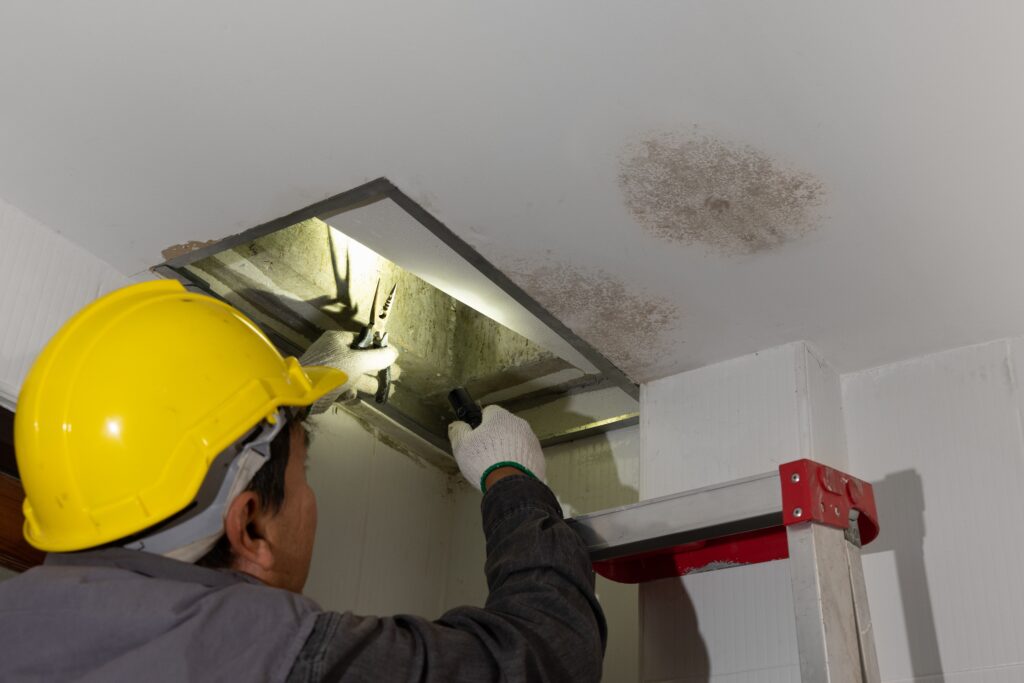
- Ceiling stains: Brown or yellowish discoloration on ceilings, often circular or spreading, indicates water has reached the drywall from above.
- Peeling paint or bubbling drywall: Moisture behind walls or ceilings causes paint to lose adhesion and drywall to soften and deform.
- Musty odor: A persistent musty smell in the attic or upper rooms suggests mold or mildew growth from trapped moisture.
- Daylight visible through the roof deck: If you can see sunlight through gaps in the attic roof boards, water can enter through those same gaps.
- Granules in gutters: An accumulation of small, sand-like granules in your gutters or at downspout outlets indicates shingle surface erosion.
- Sagging roof sections: Any visible dip or sag in the roofline suggests the decking beneath has absorbed water and weakened structurally.
If you observe any of these signs, do not wait for the next rainstorm to confirm. Schedule an inspection promptly. At August Roofing, our team has over 30 years of experience identifying early-stage damage during inspections, and we require no deposit to begin work.
What to Do When You Find a Roof Leak
When you discover an active leak, taking the right steps in the first few hours can significantly reduce damage. Here is a clear sequence to follow:
Step 1: Contain the water. Place a large bucket, bin, or plastic container directly under the drip. If water is running along a ceiling before dripping, follow the trail to find the lowest point and position your container there.
Step 2: Protect your belongings. Move furniture, electronics, and valuables away from the affected area. Lay plastic sheeting or tarps over items you cannot move.
Step 3: Relieve ceiling pressure if needed. If you see a bulge forming in the ceiling, it means water is pooling above the drywall. Place a container beneath it and carefully puncture the center of the bulge with a screwdriver to allow controlled drainage. This prevents a larger ceiling collapse.
Step 4: Document the damage. Take photos and video of the leak location, any visible water damage, and the condition of the ceiling and walls. This documentation is important for insurance claims.
Step 5: Call a licensed roofing contractor. A qualified contractor can install an emergency tarp to stop further water entry and then perform a full assessment once conditions allow. Contact August Roofing for prompt emergency response across Southern California.
Do not attempt to climb onto a wet roof yourself. Wet roofing surfaces are extremely slippery, and identifying the leak source requires training and experience. The point where water appears on your ceiling is rarely directly below the actual roof penetration point, as water travels along rafters and sheathing before dripping down.
How Roof Inspections Prevent Leaks
Professional roof inspections are the most reliable way to identify leaky roof causes before they result in interior damage. A thorough inspection evaluates every component of the roof system: shingles or tiles, underlayment condition, flashing integrity, gutter function, vent and pipe boot condition, and overall structural soundness.
The NRCA recommends inspecting residential roofs at least twice per year: once in the spring and once in the fall. In Southern California, the fall inspection is particularly important because it occurs before the rainy season and after the peak of Santa Ana wind activity, when wind damage is most likely to have occurred.
During an inspection, a qualified roofer will:
- Walk the entire roof surface to check for cracked, loose, or missing shingles and tiles
- Examine all flashing at walls, chimneys, valleys, and penetrations
- Inspect rubber pipe boots and vent housings for UV cracking
- Check gutters and downspouts for clogs, sagging, and proper water flow
- Evaluate the attic from the interior for signs of moisture, daylight penetration, or insulation displacement
An inspection typically takes one to two hours for a standard residential roof. The cost of an inspection is minimal compared to the expense of repairing water damage to ceilings, walls, insulation, and framing.
August Roofing provides comprehensive roof inspection services throughout Southern California. As a licensed and certified contractor with over three decades of local experience, we understand the specific wear patterns that this region’s climate produces.
Roof Leak Repair vs. Full Replacement
Not every leak means you need a new roof. In many cases, roof leak repair is straightforward and cost-effective. The decision between repair and replacement depends on three primary factors: the age of the roof, the extent of the damage, and the condition of the underlying deck and underlayment.
Repair is typically appropriate when:
- The roof is less than 15 years old and damage is isolated to a small area
- Only a few shingles or tiles need replacement
- Flashing around a single penetration has failed but surrounding materials are sound
- A pipe boot or vent housing has cracked but the surrounding roof is intact
Replacement is typically recommended when:
- The roof is approaching or past its expected lifespan (20 to 30 years for asphalt, 40 to 50 years for tile)
- Multiple leaks have occurred in different areas
- The roof deck shows signs of rot or structural compromise
- Repair costs are approaching 30 to 50 percent of the cost of a new roof
A reputable roofing contractor will present both options honestly and explain the expected remaining lifespan of a repaired roof versus a replaced one. Explore the full range of roofing services available to determine what fits your situation.
People Also Ask
What is the most common cause of a leaky roof?
Damaged or deteriorated flashing is the most common cause of residential roof leaks, according to the NRCA. In Southern California specifically, UV-degraded shingles and cracked pipe boots are also leading causes due to the region’s intense sun exposure.
How much does it cost to fix a roof leak?
Minor roof leak repairs typically cost between $300 and $1,200 depending on the source and accessibility. More extensive repairs involving decking replacement or large sections of flashing can range from $1,500 to $4,000. Getting a professional inspection first ensures you understand the full scope before committing.
Can a small roof leak cause major damage?
Yes. Even a small, slow leak can lead to mold growth within 24 to 48 hours in warm conditions. Over weeks and months, it can cause wood rot in rafters and decking, compromise insulation, and damage drywall and electrical wiring inside wall cavities.
How do I find where my roof is leaking?
Start inside by tracing water stains or drips back toward the highest point of moisture. In the attic, look for wet insulation, water trails on rafters, or daylight coming through the roof deck. A professional roofer can perform a water test on the exterior to pinpoint the exact entry point.
Frequently Asked Questions
What are the most common leaky roof causes in Southern California?
The most common leaky roof causes in this region are UV-damaged shingles, cracked pipe boots, deteriorated flashing, clogged gutters, and improperly sealed skylights. The combination of intense sun exposure and seasonal Santa Ana winds accelerates material degradation faster than in many other parts of the country.
How often should I have my roof inspected to prevent leaks?
You should have your roof professionally inspected at least twice per year, ideally in spring and fall. The fall inspection is especially important in Southern California because it catches wind damage from Santa Ana season before the winter rains begin.
Can I fix a leaky roof myself?
Minor issues like replacing a single cracked shingle may be within a homeowner’s ability, but most roof leak repair work should be handled by a licensed contractor. Incorrectly applied patches can trap moisture and cause more damage than the original leak. Working on a roof also poses significant safety risks.
Does homeowners insurance cover leaky roof causes?
Most homeowners insurance policies cover sudden and accidental damage, such as a leak caused by a fallen tree branch or a storm. However, leaks resulting from deferred maintenance or normal wear and tear are typically not covered. Documenting your maintenance history and regular inspections strengthens your position if you need to file a claim.
How quickly should I address a roof leak?
You should address a roof leak within 24 hours of discovery. Even if the leak appears minor, moisture can cause mold growth in 24 to 48 hours in warm conditions. Prompt roof leak repair prevents secondary damage to insulation, framing, drywall, and electrical systems that can multiply the total cost significantly.
Protect Your Home by Understanding What Causes Roof Leaks
Leaky roof causes are preventable when you understand how your roof system works and commit to regular maintenance. From damaged shingles and failing flashing to cracked pipe boots and clogged gutters, each component plays a role in keeping water out of your home. Southern California’s unique climate demands that homeowners pay closer attention to these details than many realize.
If you have noticed any warning signs, or if it has been more than a year since your last inspection, now is the right time to take action. August Roofing provides thorough inspections, honest assessments, and professional roof leak repair throughout Southern California, backed by over 30 years of experience and no deposit required to start.
Schedule a free roof inspection or call (805) 519-8099 to speak with our team.