
Key Takeaways
- Hanging holiday lights without damaging your roof requires using the right clips, such as all-in-one clips for shingles and gutters or specialized tile hooks for clay tile roofs, instead of nails, screws, or staples.
- Always inspect your roof for loose tiles, damaged shingles, and deteriorated flashing before installing any lights or decorations to avoid worsening existing problems.
- LED light strings are the safest and most energy-efficient choice, allowing you to connect 8 to 10 times more strands per outlet while drawing significantly less electricity than incandescent bulbs.
- Southern California conditions like Santa Ana winds, high UV exposure, and coastal marine layer moisture make it critical to choose outdoor-rated, UV-resistant lighting and to secure all connections firmly.
- Never puncture your roofing material with fasteners. A single nail hole through a shingle or tile can create an entry point for water, leading to leaks, mold, and structural damage.
Quick Links
- Why Protecting Your Roof During Holiday Decorating Matters
- Choosing the Right Lights and Clips for Your Roof Type
- Inspect Your Roof Before Hanging Holiday Lights
- How to Hang Holiday Lights Without Damaging Your Roof Step by Step
- Southern California Weather Considerations for Roof-Mounted Lights
- Common Mistakes That Damage Your Roof During Light Installation
- When to Call a Professional for Roof Inspection
- People Also Ask
- Frequently Asked Questions
Why Protecting Your Roof During Holiday Decorating Matters
You have spent thousands of dollars on your roof, and the last thing you want is for a weekend of holiday decorating to create a leak that costs hundreds more to repair. Yet every year, roofing contractors across Southern California see damage caused by nails punched through shingles, cracked clay tiles from foot traffic, and gutter brackets pulled loose by the weight of lights and extension cords.
Hanging holiday lights without damaging your roof is entirely possible when you use the right tools and techniques. The key is understanding your roof material, selecting appropriate clips, and following a careful installation process. This guide walks you through each step so you can create a festive display that looks great without compromising your home’s first line of defense against the elements.
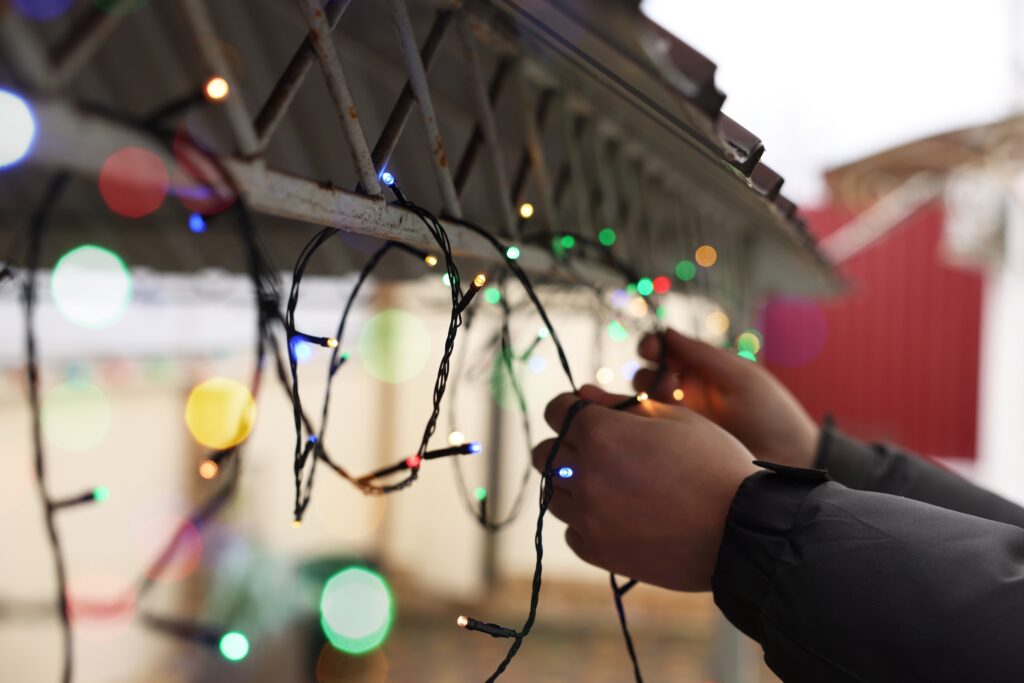
Choosing the Right Lights and Clips for Your Roof Type
The type of lights and mounting hardware you select has the biggest impact on whether your roof survives the season unscathed. Not all clips work on all roof types, and not all lights are rated for outdoor use in a Southern California climate.
LED vs. Incandescent Lights
LED light strings are the preferred choice for roof-mounted holiday displays. They generate very little heat, which reduces the risk of melting plastic connectors or damaging roofing materials. A standard LED string allows you to connect 8 to 10 strands end to end on a single outlet. Traditional incandescent mini-lights typically max out at three connected strands before overloading a 15-amp household circuit.
LED bulbs also draw roughly 80% less electricity than incandescent bulbs. For homeowners who leave lights on throughout the holiday season, this translates to noticeably lower energy bills from Southern California Edison. They last longer too, often rated for 25,000 hours or more compared to roughly 1,000 hours for traditional bulbs.
Matching Clips to Your Roof Material
Using the correct clip type is essential for hanging holiday lights without damaging your roof. Here is a breakdown by roof material:
- Asphalt shingle roofs: All-in-one clips slide under the bottom edge of a shingle and grip without puncturing the material. They also attach to gutter lips, giving you flexibility to run lights along either surface.
- Clay or concrete tile roofs: Specialized tile hooks feature teeth that slide between the grooves of overlapping tiles. A hole on the opposite end holds the light string. These hooks grip by friction without cracking or chipping the tile surface.
- Metal roofs: Magnetic clips or adhesive-backed hooks work well on standing-seam and corrugated metal panels. Avoid any clip that requires drilling.
- Flat roofs: Weighted bases or parapet-edge clips keep lights in place without any penetration.
All clips should be removed after the season to prevent UV degradation from turning plastic clips brittle, which can leave sharp fragments embedded in your roofing material.
Q: Can I use staples or nails to attach lights to my roof?
A: No. Staples and nails puncture roofing materials and create entry points for water. Even a single hole through a shingle can wick moisture into the underlayment, leading to leaks, wood rot, and mold growth over time. Always use non-penetrating clips designed for your specific roof type.
Q: Do all-in-one clips work on every roof?
A: All-in-one clips work well on asphalt shingle roofs and standard gutters. They are not suitable for clay tile, concrete tile, or metal roofs. For those materials, use clips engineered for that specific surface.
Inspect Your Roof Before Hanging Holiday Lights
Before you climb a ladder with a box of lights, take time to assess the condition of your roof. Installing lights on a compromised roof can worsen existing damage and create safety hazards.
What to Look For
Start from the ground with binoculars, then use a ladder for a closer look at the roofline. Check for these issues:
- Loose or cracked tiles and shingles: Any material that is already lifting, cracking, or missing creates an unstable attachment point and a potential leak path.
- Damaged flashing: Flashing around vents, chimneys, and roof-to-wall transitions should be flat and sealed. Bent or rusted flashing indicates existing vulnerability.
- Gutter condition: Gutters should be firmly attached to the fascia board. Sagging or detached gutters cannot support the weight of light strings and clips.
- Eave and soffit rot: Soft or discolored wood along the eaves signals moisture damage. Adding weight or clips to rotted wood can cause structural failure.
If you find any of these problems, address them before installing decorations. A professional roof inspection can identify issues that are not visible from the ground.
Structural Soundness for Heavier Decorations
Rooftop decorations like inflatable figures, wooden cutouts, or weighted displays add significant load to your roof structure. Most residential roofs in Southern California are designed to support 20 pounds per square foot of live load. A large inflatable Santa with a blower motor can weigh 15 to 30 pounds concentrated in a small area, plus wind uplift forces.
Before placing heavy decorations on your roof, confirm that the area beneath is supported by rafters or trusses, not just sheathing. Secure all decorations with straps or sandbags rather than screws or bolts driven into the roof deck.
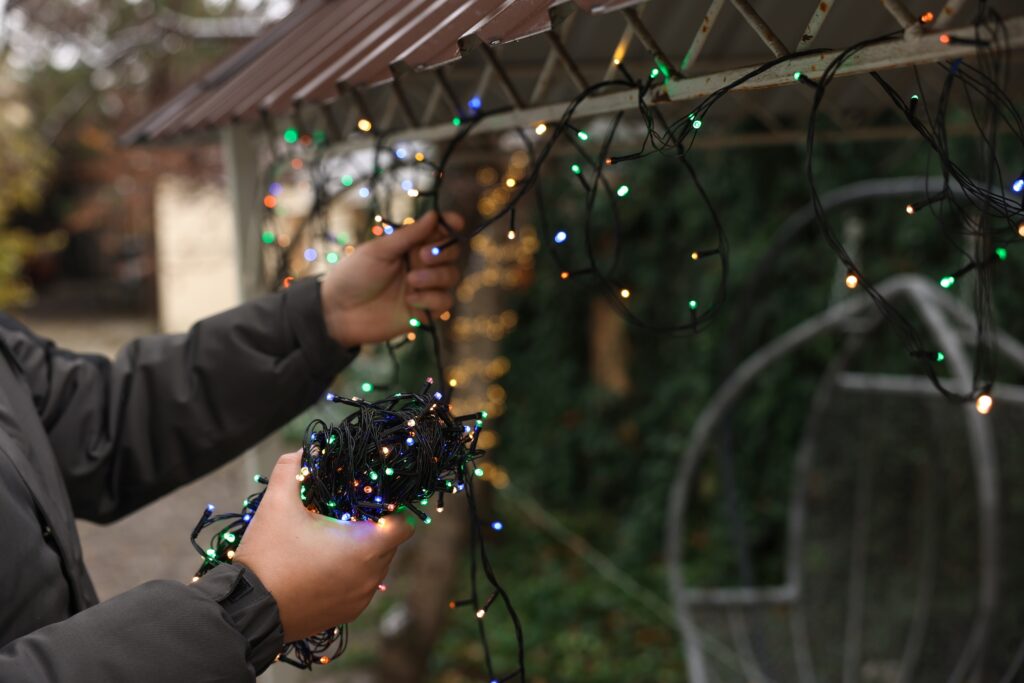
How to Hang Holiday Lights Without Damaging Your Roof Step by Step
Following a methodical process reduces the risk of both roof damage and personal injury. Here is how to hang Christmas lights on your roof safely and efficiently.
Step 1: Measure and Plan Your Layout
Calculate the total linear footage of the roofline, eaves, and any peaks or gables you want to outline. Purchase 10% to 15% extra light string length to account for corners, draping, and connections. Sketch a simple plan showing where each strand starts and ends, where extension cords will run, and where they will connect to outdoor outlets.
Step 2: Test All Lights on the Ground
Plug in every strand and check for dead bulbs, frayed wires, and cracked sockets before climbing the ladder. Replacing a defective strand on the ground takes two minutes. Discovering it on the roof means climbing down, troubleshooting, and climbing back up.
Step 3: Attach Clips to Lights Before Climbing
Snap your clips onto the light string at regular intervals, roughly every 12 to 18 inches, while the strand is laid out on the ground. This saves time on the roof and reduces the number of hand movements needed while working at height.
Step 4: Install from the Outlet Outward
Start hanging from the point closest to your power source and work outward. This keeps the connection end accessible and prevents having to reroute the entire strand if you run short. Clip each attachment point firmly to the gutter lip or shingle edge. Avoid stretching the wire taut, as thermal expansion and contraction in Southern California’s temperature swings can stress tight connections.
Step 5: Secure Extension Cords Away from Foot Traffic and Water
Route extension cords along the base of walls and under eaves. Use outdoor-rated cords with a minimum gauge of 16 AWG for runs under 50 feet and 14 AWG for longer runs. Keep all plug connections elevated off the ground and protected from sprinkler spray and rain.
Step 6: Use a Timer
Set your lights on a timer to run 5 to 6 hours per evening. This reduces electrical load, extends bulb life, and minimizes the total hours your roof-mounted hardware is under tension from wind vibration.
Q: Is it safe to walk on my roof to hang lights?
A: Walking on a roof always carries risk, both to you and to the roofing material. If you must walk on an asphalt shingle roof, wear soft-soled shoes and step carefully. For clay tile roofs, step only on the peaked crowns of tiles, never in the valleys between them, to avoid cracking. When possible, work from a ladder positioned at the roof edge rather than walking on the surface.
Southern California Weather Considerations for Roof-Mounted Lights
Southern California’s climate presents specific challenges for outdoor lighting installations that homeowners in other regions do not face.
Santa Ana Winds
Santa Ana wind events can produce gusts exceeding 60 miles per hour in foothill and canyon areas. Loosely attached light strings act as sails, and wind can rip clips from gutters, tear shingles, or pull entire strands off the roofline. Double-check every clip connection before a forecasted wind event, and consider temporarily removing lights if sustained winds above 40 mph are expected.
UV Exposure
Southern California’s high UV index degrades plastic components faster than in cloudier climates. Plastic light cords, clip housings, and connector plugs can become brittle within a single season if left exposed. This increases the risk of electrical shorts and fire. Remove all lights and clips promptly after the holiday season and store them in a cool, dark location.
Coastal Marine Layer Moisture
Homeowners near the coast deal with nightly marine layer moisture that condenses on roof surfaces and electrical connections. Use lights and extension cords rated for wet locations, marked “W” on the UL tag. Ensure all plug connections are elevated and shielded from direct moisture contact.
Wildfire Risk
In wildfire-prone areas, CAL FIRE recommends maintaining defensible space around your home. Light strings draped into dry vegetation, across wood fences, or near accumulated leaf litter on roofs create ignition points. Clear all debris from your roof and gutters before installing lights, and keep all lighting away from combustible landscaping.
Common Mistakes That Damage Your Roof During Light Installation
Even well-intentioned homeowners make errors that lead to costly roof repairs. Here are the most frequent mistakes and how to avoid them.
Puncturing roofing material with fasteners. Nails, screws, and staples create permanent holes in shingles, tiles, and metal panels. Each penetration is a potential leak point. Use clip-on or friction-based hardware exclusively.
Overloading gutters. Hanging heavy icicle light sets, extension cords, and multiple clip-on decorations from gutters can pull them away from the fascia. Distribute weight evenly and avoid concentrating multiple strands on a single gutter section.
Leaving lights up year-round. Extended UV exposure breaks down wiring insulation and clip materials. The longer lights stay on the roof, the higher the risk of electrical failure and the more difficult removal becomes as clips fuse to surfaces.
Ignoring damaged areas. Hanging clips on cracked shingles or loose tiles worsens existing damage. Always repair problem areas first.
Walking on the roof unnecessarily. Every step on a shingle roof scuffs protective granules. Every step on a tile roof risks cracking. Minimize roof walking by working from ladders and using extension poles where possible.
At August Roofing, our team has spent over 30 years helping Southern California homeowners maintain and protect their roofs. We have seen firsthand the kind of damage that a few misplaced nails or a season of neglect can cause. If you are unsure about the condition of your roof heading into the holiday season, a quick inspection can save you from expensive surprises.
When to Call a Professional for Roof Inspection
Some situations call for professional evaluation before you begin any decorating project. Schedule an inspection if your roof is older than 15 years, if you have noticed interior water stains, or if previous light installations left visible marks or holes.
A qualified roofing contractor can identify weakened areas, recommend repairs, and advise on the safest attachment methods for your specific roof type. August Roofing offers free roof inspections with no deposit required, so you can get a clear picture of your roof’s condition before the holiday season.
If you discover damage after removing lights, address it promptly. Southern California’s winter rain season, while mild compared to other regions, delivers enough moisture to exploit even small openings in your roofing system. A proactive approach to roof maintenance keeps repair costs low and extends the life of your roof.
People Also Ask
Do holiday lights damage roof shingles?
Holiday lights themselves do not typically damage roof shingles if installed with proper non-penetrating clips. Damage occurs when homeowners use nails, staples, or screws to attach lights, or when clips are left on for extended periods and bond to the shingle surface under heat and UV exposure.
What is the best way to hang Christmas lights without a ladder?
Light-hanging poles, sometimes called extension wands, allow you to clip light strings to gutter edges from ground level. These poles typically extend 6 to 12 feet and feature a clip-release mechanism at the tip. They work best on single-story homes or on the lower roofline of two-story homes.
Can you hang lights on a tile roof without breaking tiles?
Yes. Use tile-specific light hooks that slide between overlapping tile grooves. These hooks grip by friction and do not require any drilling or adhesive. Avoid walking on the tiles during installation. Work from a ladder placed at the roof edge and reach across with an extension pole when possible.
How do you hang holiday lights on gutters?
Gutter clips snap over the front lip of standard K-style and half-round gutters. They hold one light bulb per clip and do not require tools. Space clips every 12 inches for a uniform look. Make sure your gutters are securely fastened to the fascia before adding the weight of light strings.
Frequently Asked Questions
What clips should I use for hanging holiday lights without damaging your roof?
All-in-one clips are the best general-purpose option for asphalt shingle and gutter installations. For clay or concrete tile roofs, use hooks with teeth designed to grip between tile grooves. For metal roofs, magnetic clips provide a secure hold without any penetration. Always match the clip type to your specific roofing material.
How many LED light strings can I connect together safely?
Most LED light strings allow you to connect 8 to 10 strands end to end on a single 15-amp household outlet. Check the manufacturer’s label for the specific maximum. Exceeding that number risks tripping the circuit breaker or overheating the first strand’s wiring.
Can hanging holiday lights without damaging your roof also prevent fire hazards?
Yes. Using non-penetrating clips, outdoor-rated LED lights, and properly gauged extension cords significantly reduces fire risk. LED lights produce minimal heat, and avoiding nail or staple penetrations means no exposed wood or insulation near electrical wiring. Removing lights after the season prevents UV-degraded wiring from becoming a hazard.
Should I remove holiday lights from my roof after the season ends?
You should remove lights and all mounting hardware within a few weeks after the holiday season. Prolonged exposure to Southern California’s intense UV radiation breaks down plastic insulation and clip materials, increasing the risk of electrical faults and making removal more difficult as components bond to the roof surface.
How do I know if my roof can handle holiday decorations?
Inspect your roof for cracked or missing shingles, loose tiles, sagging gutters, and deteriorated flashing before installing any decorations. If your roof is older than 15 years or you notice any signs of damage, schedule a professional roof inspection before adding weight or attachments to the structure.
Protect Your Roof While Celebrating the Season
Hanging holiday lights without damaging your roof comes down to preparation, proper hardware, and respect for your roofing material. Take the time to inspect your roof, choose the right clips for your shingle or tile surface, and remove everything promptly once the season ends. These simple steps protect your investment and keep your home safe through the holidays and beyond.
If you are unsure about the condition of your roof or want peace of mind before decorating, contact August Roofing to schedule a free inspection. Our licensed team has over 30 years of experience serving Southern California homeowners, and we are happy to help you identify any concerns before they become costly repairs. Call us at (805) 519-8099 or visit our website to get started.