
Key Takeaways
- Fire-resistant roofing uses Class A-rated materials that can withstand embers, radiant heat, and direct flame contact, making it the single most important upgrade for wildfire-prone homes in Southern California.
- Home hardening for wildfire protection goes beyond the roof surface. It includes ember-resistant vents, non-combustible eave and gutter materials, and compliant flashing systems that eliminate ember entry points.
- Approximately 90% of homes ignited during wildfires catch fire from windborne embers landing on vulnerable surfaces, not from direct flame contact.
- California Wildland Urban Interface (WUI) codes and Chapter 7A building standards set minimum requirements for fire-resistant roofing materials, vent protection, and exterior construction in fire-hazard zones.
- A professional fire-safety inspection can identify specific vulnerabilities in your roof system and prioritize upgrades based on your home’s exposure level and current condition.
Quick Links
- Why Fire-Resistant Roofing Matters for Southern California Homeowners
- How Embers Ignite Homes During Wildfires
- Class A Fire-Resistant Roofing Materials Explained
- Ember-Resistant Vent Upgrades
- Securing Eaves, Gutters, and Flashing
- WUI Compliance and California Building Codes
- Vulcan Vent Retrofits for Attic Protection
- What to Expect from a Home Hardening Inspection
- People Also Ask
- Frequently Asked Questions
Why Fire-Resistant Roofing Matters for Southern California Homeowners
Fire-resistant roofing is the most critical upgrade a homeowner can make before wildfire season. If you live anywhere in Southern California, you already know that dry Santa Ana winds, low humidity, and dense chaparral create conditions where a wildfire can move from hillside to neighborhood in minutes. The question most homeowners wrestle with is not whether a fire could reach them, but whether their home is ready when it does.
In January 2025, thousands of Southern California residents watched entire neighborhoods reduced to ash. Many of those homes had no meaningful fire protection at the roof level. Yet studies consistently show that the roof is the largest and most vulnerable surface on any structure during a wildfire event. That vulnerability is not hypothetical. It is a documented, predictable risk that homeowners can address before the next fire season arrives.
This guide explains how fire-resistant roofing systems work at a component level, what California codes require, and how home hardening for wildfire protection addresses the specific entry points that embers exploit. The goal is to give you enough information to make a confident, well-informed decision about protecting your home.
How Embers Ignite Homes During Wildfires
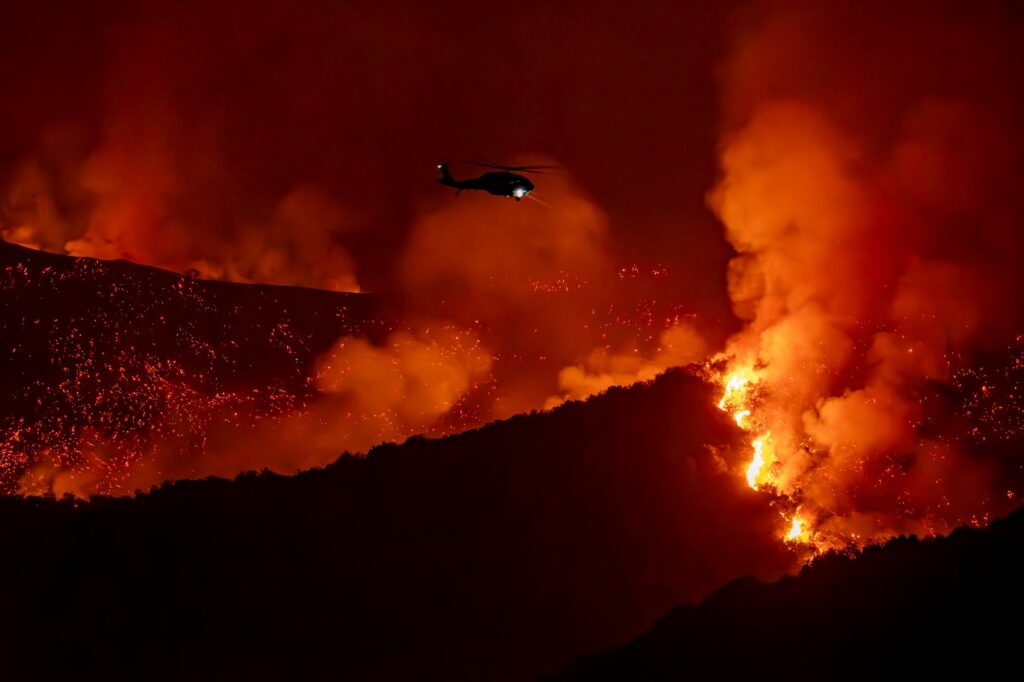
Approximately 90% of homes destroyed in wildfires are first ignited by windborne embers, not by direct flame contact. Embers are small, burning fragments of vegetation or structural material that can travel more than a mile ahead of the fire front. When these embers land on combustible surfaces or enter openings in a home’s exterior, they start secondary fires that grow undetected.
The roof is especially vulnerable because it presents the largest horizontal surface area exposed to falling embers. Embers accumulate in roof valleys, along ridgelines, in gutters, and against vent openings. If any of these areas contain combustible material or provide an entry point into the attic, the risk of ignition increases dramatically.
Understanding this mechanism is important because it changes how homeowners should think about fire protection. The threat is not a wall of flames reaching your house. It is a shower of small burning particles finding the weakest point in your roof system. Home hardening for wildfire protection focuses specifically on eliminating those weak points.
Q: How far can wildfire embers travel?
A: Research from CAL FIRE and other agencies has documented embers traveling more than one mile ahead of the main fire front. In strong Santa Ana wind events common to Southern California, embers can travel even farther, which is why homes well outside the visible fire perimeter still face ignition risk.
Q: Can a fire-resistant roof alone prevent my home from burning?
A: A fire-resistant roof significantly reduces the risk of ignition from embers landing on the roof surface. However, comprehensive protection requires addressing all exterior vulnerabilities, including vents, eaves, gutters, and siding. The roof is the starting point because it represents the largest exposed surface.
Class A Fire-Resistant Roofing Materials Explained
Fire-resistant roofing materials are tested and rated by independent laboratories under standards set by organizations like ASTM International and Underwriters Laboratories (UL). The rating system uses three classes: A, B, and C. Class A provides the highest level of fire resistance.
A Class A rating means the roofing assembly has been tested to withstand severe fire exposure. This includes resistance to a burning brand (a larger ember-like test object), sustained wind-driven flame spread, and intermittent flame application. Materials that earn this rating do not ignite easily, do not spread flame across their surface, and do not produce burning debris that could ignite other materials below.
Common Class A-rated roofing materials include:
- Concrete and clay tile, which are inherently non-combustible and perform well in Southern California’s high-UV, high-heat climate
- Metal roofing panels, which resist embers and radiant heat and are lightweight enough for most residential structures
- Asphalt composition shingles rated Class A, which use fiberglass mat and fire-resistant granules to meet testing standards
- Synthetic slate and shake products, which replicate the look of natural materials without the combustibility
It is important to understand that the fire rating applies to the entire roofing assembly, not just the surface material. The underlayment, deck material, and attachment method all contribute to the assembly’s overall fire resistance. A Class A shingle installed over a combustible wood deck with no fire-rated underlayment may not deliver the protection homeowners expect.
At August Roofing, every fire-resistant roofing installation uses the complete assembly approach, matching Class A surface materials with appropriate underlayments and attachment methods. With more than 30 years of experience in Southern California, our crews understand how local conditions like Santa Ana winds, coastal salt air, and extreme UV exposure affect material performance over time.
Ember-Resistant Vent Upgrades
Roof vents are one of the most common entry points for embers during a wildfire. Standard attic vents, ridge vents, and soffit vents are designed to promote airflow, which means they have openings large enough for embers to pass through. Once an ember enters the attic space, it lands on dry wood framing, insulation, or stored materials. The result is often a fire that spreads through the structure before anyone detects it.
Ember-resistant vent upgrades replace or retrofit existing vents with products specifically engineered to block ember intrusion while maintaining adequate attic ventilation. Two categories of products address this problem in different ways.
CRS Fire and Ice Retrofit Kits
CRS Fire and Ice retrofit kits are designed to upgrade existing vents without requiring a full roof replacement. These kits include corrosion-resistant wire mesh screens and Class A sealant materials that attach over or inside current vent openings. The mesh blocks embers while still allowing air to move through the attic. These kits are engineered to meet California’s current wildfire building codes, making them a practical option for homeowners who want to improve fire resistance without replacing a roof that is otherwise in good condition.
O’Hagin Ember-Resistant Vents
For new roof installations or comprehensive retrofits, O’Hagin vents offer an integrated solution. These vents are built directly into the roofing profile, sitting flush with the roof surface and incorporating baffle systems and fine-mesh screens that prevent ember entry. They are available in profiles that match tile, shingle, and metal roofing systems.
Q: Do ember-resistant vents reduce attic ventilation?
A: Well-designed ember-resistant vents maintain adequate net free area (NFA) for attic ventilation while blocking embers. The key is selecting products tested to meet both ventilation and fire-resistance standards. Poorly designed aftermarket screens can restrict airflow and cause moisture buildup, so product selection matters.
Securing Eaves, Gutters, and Flashing Against Ember Intrusion
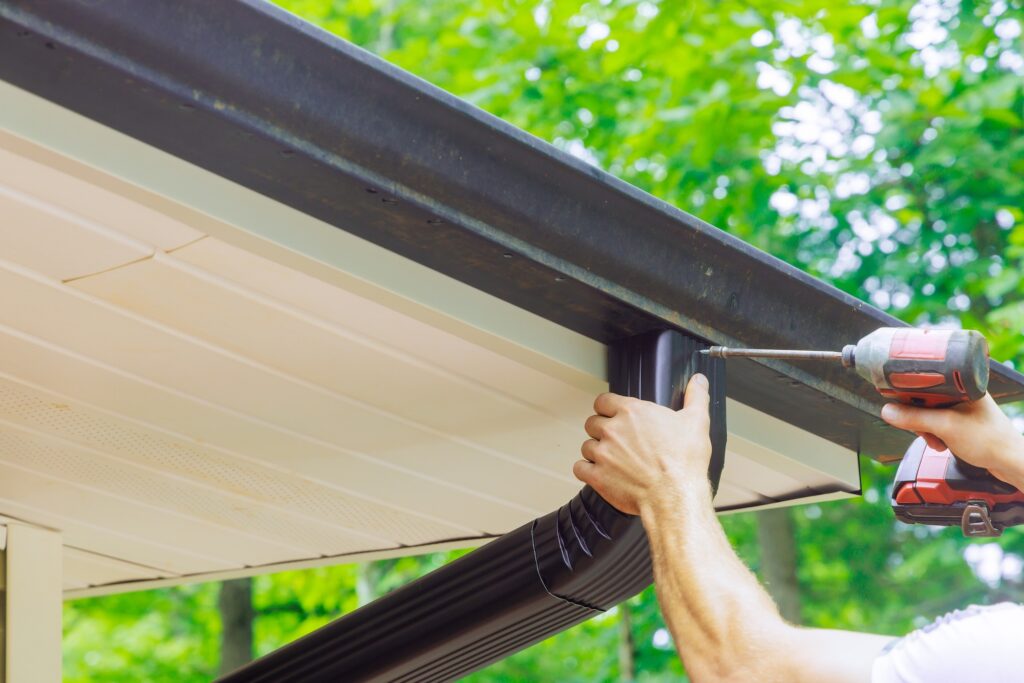
The underside of roof eaves is a critical vulnerability that many homeowners overlook. Open eaves expose the rafter tails and roof deck to embers blowing horizontally in high winds. Boxed-in (enclosed) eaves with non-combustible soffits eliminate this exposure by sealing the underside of the roof overhang.
Gutters collect debris over time, including dry leaves, pine needles, and small branches. During a wildfire, embers landing in a debris-filled gutter can ignite that material, which then burns against the fascia board and roof edge. Two upgrades address this problem effectively.
- Non-combustible gutter covers or screens prevent debris accumulation and block embers from entering the gutter channel.
- Metal drip-edge flashing installed along the roof edge creates a non-combustible barrier between the roofing material and the fascia board, reducing the chance of fire spreading from the gutter area into the roof assembly.
These components work together as a system. Upgrading only one element while leaving others exposed can still allow embers to find an entry point. A thorough home hardening for wildfire approach addresses eaves, gutters, vents, and flashing as an integrated perimeter defense.
WUI Compliance and California Fire-Resistant Roofing Codes
California’s Wildland Urban Interface (WUI) building codes set minimum construction standards for homes in fire-hazard severity zones. These codes are found primarily in Chapter 7A of the California Building Code, which governs exterior construction materials and methods for new buildings and substantial remodels in designated WUI areas.
Key requirements relevant to fire-resistant roofing include:
- All roofing materials must be Class A rated in Very High Fire Hazard Severity Zones (VHFHSZ)
- Attic ventilation openings must be protected against ember intrusion using approved vent products or corrosion-resistant mesh with openings no larger than 1/8 inch
- Roof valleys, edges, and penetrations must be flashed and sealed with non-combustible materials
- Eave construction must be enclosed with non-combustible or ignition-resistant materials
The 2022 California Building Code (effective January 2023) updated several provisions related to vent protection and exterior wall assemblies. Additional amendments addressing ember-resistant construction continue to evolve as fire science research advances. Homeowners should be aware that meeting code is a minimum standard, not a guarantee of survival. Code-compliant homes perform significantly better than non-compliant homes, but additional hardening measures beyond minimum code can further reduce risk.
For homeowners considering re-roofing or any exterior renovation, current code requires that the new work meet the latest fire-resistance standards, even if the original structure was built to older codes. This means a re-roofing project is often an opportunity to bring the entire roof system up to current WUI standards.
More information about California fire-hazard zone maps and building requirements is available through CAL FIRE’s Office of the State Fire Marshal.
Vulcan Vent Retrofits for Attic Protection
Vulcan vents are a specialized ember-resistant vent product designed for gable, soffit, and eave openings. They use a dual-defense system that sets them apart from standard mesh-screen solutions.
The first layer is a stainless-steel ember screen that physically blocks burning particles from passing through the vent opening. The second layer is an intumescent matrix, a material that expands when exposed to high temperatures. When radiant heat from a nearby fire reaches the vent, the intumescent material swells to seal the opening entirely, cutting off the pathway for embers and hot gases to enter the attic.
This two-stage approach is valuable because standard mesh alone has limitations. Fine mesh can block embers under normal conditions, but sustained radiant heat can cause materials behind the mesh to ignite even without direct ember contact. The intumescent layer addresses that scenario by closing the opening when heat reaches dangerous levels.
Vulcan vents are tested and listed to meet the requirements of California’s WUI building codes. They are available in sizes compatible with most residential gable and soffit openings, making them a practical retrofit option for existing homes that were built before current ember-resistant vent standards existed.
Q: How long do Vulcan vents last?
A: Vulcan vents are built with stainless-steel components and weather-resistant housings designed for long-term exterior exposure. Under normal conditions, they do not require replacement on a set schedule. The intumescent matrix is a one-time-use component. If it activates during a fire event, the vent should be replaced afterward.
What to Expect from a Home Hardening Inspection
A home hardening inspection evaluates your property’s exterior for wildfire vulnerabilities. The inspection covers the roof system, vents, eaves, gutters, exterior walls, windows, decking, and the immediate landscape zone around the structure. Each component is assessed against current WUI standards and best practices for ember resistance.
After the inspection, you receive a fire safety report that identifies specific vulnerabilities, ranks them by risk level, and recommends upgrades. This report gives you a clear plan for prioritizing improvements based on your budget and your home’s exposure level.
At August Roofing and Solar, we offer free home hardening inspections for homeowners throughout Southern California. Our inspectors are licensed and certified, and we require no deposit to begin work. With over 30 years of experience working on homes in fire-prone areas across the region, we understand the specific construction details that make the difference between a home that survives and one that does not.
Three Steps to Get Started
- Schedule your free inspection. Book online or call (805) 519-8099.
- Review your fire safety report. Our team walks you through every finding and recommendation.
- Implement upgrades at your pace. We help you prioritize the most impactful improvements first.
People Also Ask
What is the best roofing material for wildfire protection?
Class A-rated materials provide the highest level of fire resistance. Concrete tile, clay tile, metal panels, and Class A-rated asphalt shingles are the most common options. The best choice depends on your home’s structure, aesthetic preferences, and budget.
Is home hardening required by law in California?
California requires homes in designated Very High Fire Hazard Severity Zones to meet Chapter 7A building code standards for new construction and substantial remodels. Existing homes are not always required to retrofit, but any re-roofing or renovation work must meet current code.
How much does fire-resistant roofing cost?
The cost of fire-resistant roofing varies based on material type, roof size, and the scope of additional hardening work needed. Class A asphalt shingles are typically the most affordable, while concrete tile and metal roofing carry higher material costs but offer longer lifespans and superior durability in Southern California’s climate.
Do I need to harden my home if I am not in a fire zone?
Embers can travel more than a mile from a fire’s edge, so homes outside officially designated fire zones can still be at risk. Home hardening for wildfire protection is a practical investment for any Southern California homeowner living near wildland areas, hillsides, or open brush.
Frequently Asked Questions
What makes fire-resistant roofing different from standard roofing?
Fire-resistant roofing uses Class A-rated assemblies tested to withstand embers, radiant heat, and sustained flame exposure. Standard roofing materials may carry lower fire ratings (Class B or C) or no fire rating at all, leaving the roof surface and underlying structure vulnerable to ignition during a wildfire.
Can I retrofit my existing roof for fire resistance without a full replacement?
Yes. Several retrofit options exist, including ember-resistant vent kits, non-combustible gutter covers, metal flashing, and intumescent vent products like Vulcan vents. These upgrades can significantly improve your home’s fire resistance without requiring a complete re-roof, though a full replacement provides the most comprehensive protection.
How does fire-resistant roofing perform in Southern California’s climate?
Class A materials are engineered to handle extreme heat, high UV exposure, and temperature swings common across Southern California. Concrete tile, clay tile, and metal roofing are especially well suited to the region because they resist both fire and the long-term weathering effects of sun and coastal air.
Does fire-resistant roofing affect my homeowner’s insurance?
Many insurance carriers offer premium discounts or improved coverage terms for homes with Class A roofing and documented home hardening for wildfire improvements. Contact your insurer to ask about specific discounts. A fire safety inspection report can serve as documentation of your upgrades.
How do I know if my home meets current WUI fire codes?
A professional home hardening inspection compares your roof system and exterior components against current California WUI building codes. If your home was built or last re-roofed before the most recent code updates, it likely has gaps that a qualified inspector can identify and help you address.
Fire-resistant roofing is one of the most impactful investments a Southern California homeowner can make before the next fire season. If you are unsure about your roof’s current condition or want to understand your options, schedule a free home hardening inspection with August Roofing and Solar. We will assess your home, explain what we find, and help you decide on the right next steps for your property and your family.