
Key Takeaways
- Solar panels do not inherently cause roof leaks. Leaks result from poor installation practices, inadequate flashing, or installing panels on an aging roof without proper assessment.
- Every roof penetration made during solar mounting must be sealed with code-compliant flashing and sealant to remain watertight through Southern California’s seasonal storms and high winds.
- A thorough pre-installation roof inspection is the single most important step to prevent solar panel roof damage and costly repairs years later.
- If your roof is already leaking due to a bad solar installation, a qualified solar removal and reinstallation (Solar R&R) service can correct the problem at the source rather than just patching the symptom.
- Choosing an installer that holds both roofing and solar certifications significantly reduces the risk of improper penetration sealing and long-term water intrusion.
Quick Links
- Why This Question Matters for Southern California Homeowners
- Do Solar Panels Actually Cause Roof Leaks?
- Common Installation Mistakes That Lead to Solar Panel Roof Damage
- How Roof Penetrations Work in a Solar Installation
- Why a Pre-Installation Roof Inspection Prevents Future Leaks
- Solar Removal and Reinstallation: Fixing Leaks at the Source
- How to Prevent Roof Leaks from Solar Panels
- Southern California Climate Factors That Increase Leak Risk
- People Also Ask
- Frequently Asked Questions
Why This Question Matters for Southern California Homeowners
You have spent years maintaining your roof, and now you are considering solar to lower your electricity bill. Then a neighbor mentions their panels leaked during the last rainstorm, and suddenly the whole idea feels risky. That concern is valid. Your roof is the primary barrier between your family and the elements, and any modification to it deserves careful scrutiny.
The good news is that whether solar panels cause roof leaks is not a matter of chance. It is almost entirely a matter of installation quality. Understanding the mechanics behind how panels attach to your roof, what can go wrong, and what a proper installation looks like will help you make a confident, informed decision.

Do Solar Panels Actually Cause Roof Leaks?
Solar panels themselves do not cause roof leaks. The panels sit above the roof surface on a racking system and never make direct contact with the roofing material in a way that would create water intrusion. Leaks occur when the mounting hardware is improperly attached to the roof deck, when flashing is incorrectly installed, or when sealant degrades without adequate backup waterproofing.
According to the U.S. Department of Energy, residential solar energy systems are designed to be installed without compromising roof integrity when proper methods are followed. The critical variable is not the panels. It is the installer’s roofing knowledge.
A properly installed solar array can actually extend the lifespan of the roofing material beneath it by shielding it from direct UV exposure and thermal cycling. However, this benefit only applies when the installation itself is done correctly from the start.
Q: Can solar panels protect my roof instead of damaging it?
A: Yes. Panels shade the roofing material underneath, reducing UV degradation and thermal stress. This can slow the aging of shingles or tiles directly beneath the array, provided the mounting system is properly sealed and flashed.
Common Installation Mistakes That Lead to Solar Panel Roof Damage
Solar panel roof damage typically traces back to a handful of recurring mistakes. Understanding these helps you ask the right questions before hiring an installer.
Inadequate or Missing Flashing
Every lag bolt that penetrates the roof deck needs a piece of flashing, which is a shaped metal piece that diverts water away from the hole. Some installers rely on sealant alone, skipping flashing entirely. Sealant degrades over time, especially under Southern California’s intense UV index. Without flashing as the primary waterproofing layer, a leak becomes a matter of when, not if.
Improper Lag Bolt Placement
Lag bolts must anchor into the roof rafters, not just the plywood sheathing. Bolts that miss the rafter have reduced holding strength and create an unsealed hole in the deck. A qualified installer uses a rafter finder or measurement template to verify every bolt location before drilling.
Installing on a Deteriorated Roof
Placing solar panels on a roof that is nearing the end of its useful life creates compounding problems. The existing roofing material may already have compromised waterproofing layers. Once panels are mounted, accessing the roof for repairs becomes expensive because the array must be removed first.
Skipping the Roof Assessment
Solar-only companies sometimes prioritize speed over due diligence. A thorough roof assessment before panel installation identifies cracked tiles, worn shingles, deteriorated underlayment, or structural issues that need correction first. Skipping this step is the most common origin of solar panel roof damage complaints.
Q: How do I know if my installer skipped proper flashing?
A: Request photos of completed roof penetrations before the panels are placed over them. Each penetration should show a metal flashing piece integrated beneath the surrounding shingles or tiles, not just a blob of sealant around the bolt.
How Roof Penetrations Work in a Solar Installation
Understanding the anatomy of a roof penetration helps clarify why installation technique matters so much. Here is how the process works when done correctly on a standard composition shingle roof.
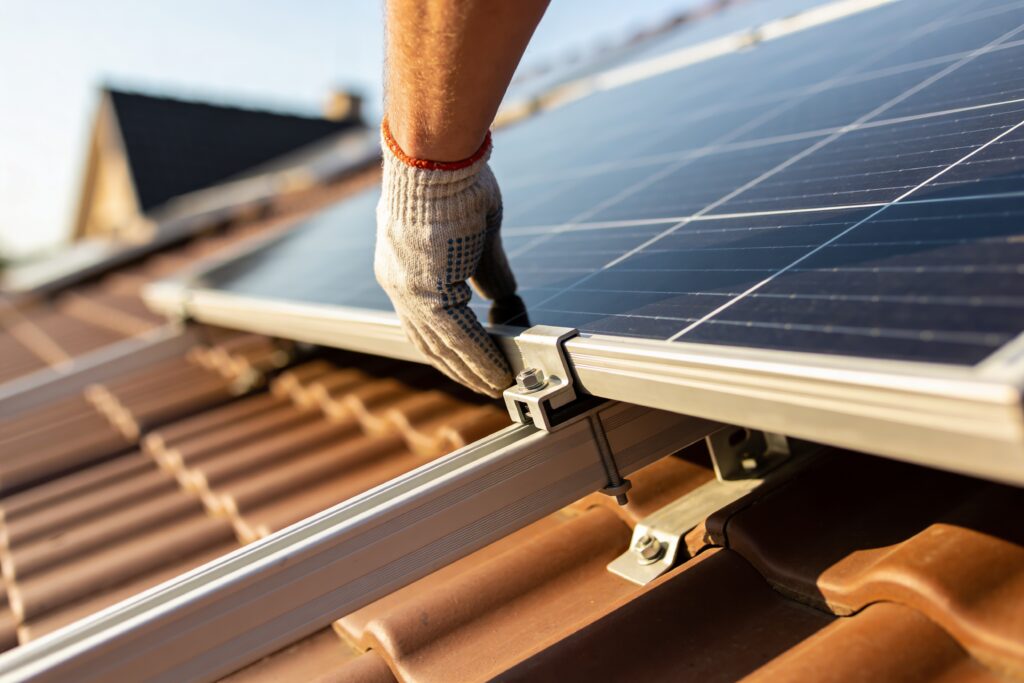
First, the installer identifies the rafter location and marks the drill point. A pilot hole is drilled through the roofing material and into the rafter. Next, a stainless steel lag bolt is driven into the rafter, and a mounting foot (called a standoff or L-foot) is secured to the bolt.
Before the bolt is tightened, a piece of aluminum or galvanized steel flashing is slid beneath the shingle course above the penetration point. This flashing overlaps the shingle below, creating a shingle-over-flashing-over-shingle layering that directs water around the bolt rather than into the hole. A bead of roofing-grade sealant is applied beneath the flashing and around the bolt as a secondary barrier.
On tile roofs, the process requires additional steps. Tiles are brittle and cannot be drilled through. Instead, the installer removes the tile at the penetration location, installs a flashed standoff on the underlayment and deck, and then replaces the tile with a notch cut to fit around the mount. Some systems use specialized tile hooks that eliminate the need for deck penetration altogether.
The key principle is the same regardless of roof type: water must always flow over and around any penetration, never into it. When installers understand roofing hydrology (how water moves across a roof surface) they make penetrations that stay watertight for decades.
Why a Pre-Installation Roof Inspection Prevents Future Leaks
A pre-installation roof inspection is the single most effective way to prevent solar panels from causing roof leaks. This inspection should evaluate the roof’s current condition, remaining useful life, structural integrity, and compatibility with the proposed solar system design.
At August Roofing and Solar, every solar project begins with a detailed roof assessment conducted by licensed roofing professionals with over 30 years of experience. If the inspection reveals issues such as aging underlayment, cracked tiles, or soft decking, those problems are addressed before any solar hardware touches the roof. This approach prevents the costly cycle of installing panels, discovering leaks, removing panels for repair, and reinstalling.
Here is what a thorough pre-installation roof inspection should cover:
- Age and remaining lifespan of the existing roofing material
- Condition of the underlayment (the waterproof membrane beneath shingles or tiles)
- Structural integrity of the roof deck and rafters
- Existing flashing condition around vents, chimneys, and skylights
- Drainage patterns and areas where water tends to pool or flow heavily
- Attic ventilation adequacy, which affects moisture buildup and shingle longevity
If your roof has fewer than 10 years of useful life remaining, most roofing professionals recommend replacing the roof before installing solar. This saves you from paying for a full solar removal and reinstallation just a few years later when the roof needs replacement anyway.
Q: What if my roof only needs minor repairs before solar installation?
A: Minor repairs such as replacing a few cracked tiles or resealing existing flashing can typically be completed quickly and affordably before panels go on. The important thing is that these issues are identified and resolved beforehand rather than hidden under an array.
Solar Removal and Reinstallation: Fixing Leaks at the Source
Solar removal and reinstallation, commonly called Solar R&R, is a service that addresses roof problems caused by poor original solar installations. The process involves carefully detaching the panels and racking system, making all necessary roof repairs, and then remounting the solar array using proper techniques.
The demand for Solar R&R has grown significantly across Southern California in recent years. Many homeowners who installed solar panels five to ten years ago are now discovering leaks that trace back to the original installation. In some cases, the solar company that did the original work is no longer in business, leaving the homeowner without warranty support.
A proper Solar R&R involves more than just pulling panels off and patching holes. The process should include:
- Systematic removal of all panels, wiring, and racking hardware
- Full inspection of every original penetration point for signs of water damage
- Removal and replacement of damaged decking, underlayment, or roofing material
- Reinstallation of the solar array with code-compliant flashing at every penetration
- Electrical reconnection and system testing to verify full solar production
Simply sealing over an existing leak without removing the panels to inspect the underlying damage is not a lasting solution. The leak source is often not directly where the water appears inside the home because water travels along rafters and sheathing before dripping through a visible point.
How to Prevent Roof Leaks from Solar Panels
Preventing solar panels from causing roof leaks comes down to a series of deliberate choices before and during installation. Here are the most important steps for Southern California homeowners.
Choose a Dual-Certified Installer
Select a company that holds both roofing and solar licenses. A solar-only installer may understand electrical systems and panel layout but lack the roofing expertise to properly flash and seal penetrations. August Roofing and Solar is one of the few Southern California companies whose installation crews are trained in both disciplines, and we require no deposit to begin work.
Insist on a Roof Inspection First
Do not allow any installer to skip the roof assessment. If a company is unwilling to inspect your roof before proposing a solar design, that is a significant red flag. A professional roof inspection takes a few hours and can save you thousands in future repair costs.
Verify Flashing at Every Penetration
Ask your installer to confirm that every lag bolt penetration will receive individual flashing, not just sealant. Request documentation or photos of completed penetrations during the install. The National Roofing Contractors Association (NRCA) recommends flashing as the primary waterproofing method for any roof penetration.
Review Warranty Coverage Carefully
Make sure your warranty covers both the solar system and the roof beneath it. Many solar warranties only cover the panels and inverter, not the roof penetrations. A comprehensive warranty should cover workmanship on the roof, including leak repair related to the installation, for at least 10 to 25 years.
Schedule Periodic Maintenance
After installation, have your roof and solar system inspected every two to three years. Southern California conditions including high UV exposure, Santa Ana winds, and seasonal rainstorms can accelerate wear on sealants and flashing. Catching a small issue early prevents it from becoming a major leak.
Southern California Climate Factors That Increase Leak Risk
Southern California’s climate creates specific challenges for rooftop solar installations that homeowners in other regions may not face. Understanding these factors helps explain why installation quality matters even more here.
Intense UV Exposure
The region receives some of the highest UV index readings in the country. While this is excellent for solar energy production, UV radiation degrades sealants and roofing materials faster than in less sunny climates. Sealant-only waterproofing around penetrations can crack and shrink within a few years, which is why mechanical flashing is not optional in this environment.
Santa Ana Winds
These hot, dry winds can exceed 60 mph and create uplift forces on solar panels. If the racking system is not properly anchored into rafters, wind can loosen mounts and compromise the seal around penetration points. Proper engineering calculations should account for local wind load requirements as specified by California building code.
Seasonal Rain Concentration
Southern California receives the majority of its annual rainfall in a few intense months. A small gap in flashing that might go unnoticed in a drier climate can channel significant water volume into the roof structure during a winter storm. This concentrated rainfall pattern means every penetration must be watertight from day one.
Wildfire and Ember Risk
In designated wildfire zones, roofing materials must meet CAL FIRE ember-resistant standards. Solar installations in these areas must not create gaps or exposed areas where embers could accumulate or ignite underlayment. This adds another layer of importance to proper flashing and sealing techniques.
People Also Ask
How common are roof leaks from solar panels?
Roof leaks from solar panels are not common when the installation is performed by a qualified contractor who uses proper flashing at every penetration. Most documented leak cases trace back to installation shortcuts such as missing flashing, bolts that missed the rafter, or panels installed on roofs that were already deteriorating.
Should I replace my roof before installing solar panels?
If your roof has fewer than 10 years of expected life remaining, replacing it before solar installation is strongly recommended. This avoids the expense of removing and reinstalling the solar array when the roof eventually needs replacement. A pre-installation inspection will determine your roof’s remaining lifespan.
Can I install solar panels without drilling into my roof?
Yes. Ballasted racking systems use weighted frames instead of roof penetrations and are common on flat or low-slope roofs. Some tile roof systems use specialized hooks that attach beneath tiles without penetrating the deck. However, penetrating mount systems remain the most common and are completely safe when properly flashed.
Who is responsible if my solar panels cause a roof leak?
Responsibility depends on your warranty terms. If the leak is caused by the solar installation workmanship, the installing company’s warranty should cover repairs. If the installer is no longer in business, you may need to hire an independent roofing and solar contractor to perform a Solar R&R and correct the problem.
Frequently Asked Questions
Do solar panels cause roof leaks on tile roofs?
Solar panels do not inherently cause roof leaks on tile roofs. However, tile roofs require specialized installation techniques including tile removal, notching, and flashing beneath the tiles. Installers without tile roof experience are more likely to crack tiles or improperly flash penetrations, which can lead to leaks over time.
How long does it take for a solar panel roof leak to appear?
A leak caused by poor installation can appear within the first rainy season or take several years to become noticeable. Sealant-only waterproofing may hold for two to five years before UV degradation causes it to fail. Properly flashed penetrations should remain watertight for the full life of the roof.
Can solar panels cause roof leaks during the installation process?
It is unlikely for solar panels to cause roof leaks during installation if the work is completed in a single day and penetrations are flashed immediately after drilling. Reputable installers monitor weather forecasts and avoid beginning installations when rain is expected before the work can be fully sealed.
What should I do if I notice a roof leak after solar panel installation?
Contact your solar installer immediately and document the leak with photos. If the installer is unresponsive or no longer in business, contact a licensed roofing and solar company that offers Solar R&R services. Do not attempt to seal the leak yourself from inside the attic, as this can trap moisture and cause mold or structural damage.
Does homeowners insurance cover roof leaks caused by solar panels?
Most homeowners insurance policies cover sudden and accidental water damage but may not cover damage resulting from poor workmanship or lack of maintenance. If the leak is attributed to an installation defect, you may need to pursue a claim against the installer’s warranty or liability insurance. Review your policy and your solar installation contract for specific coverage terms.
Understanding whether solar panels cause roof leaks is an important part of making a smart solar investment for your home. The answer, in nearly every case, is that leaks are preventable through proper installation practices, thorough pre-installation inspections, and choosing a contractor with genuine roofing expertise. If you are a Southern California homeowner considering solar or dealing with a leak from an existing system, schedule a free roof inspection with our team to get a clear assessment and a plan that protects both your roof and your energy savings.