Key Takeaways
- Zero-down solar roofing means installing a solar energy system with no upfront payment, typically through a solar loan, lease, or power purchase agreement, each with different ownership and cost structures.
- Under California’s Net Billing Tariff, pairing battery storage with solar panels is critical for maximizing bill savings because grid export credits are significantly lower than peak electricity rates.
- The federal Residential Clean Energy Credit (Section 25D) expired December 31, 2025, for cash and loan purchases, but financing companies can still pass through roughly 30% value via the commercial Section 48E credit on leases and PPAs.
- Verifying a contractor’s CSLB license classification, NABCEP certification, and insurance status is the single most effective way to avoid solar scams in California.
- Bundling roof replacement and solar installation under one contractor eliminates gaps in warranty coverage and prevents the costly disruption of removing panels for a future reroof.
Quick Links
- What Zero-Down Solar Roofing Actually Means
- How Solar Loans Work for Homeowners
- How Solar Leases and PPAs Differ from Loans
- Why Roof Condition Matters Before Going Solar
- How to Verify a Solar Installer’s Credentials
- What to Look for in a Solar Warranty
- How California’s Net Billing Tariff Affects Savings
- How to Compare Zero-Down Solar Offers Side by Side
- The Role of Battery Storage in Zero-Down Solar
- California Solar Incentives Still Available in 2026
- Step-by-Step: Evaluating a Zero-Down Solar Roofing Program
- People Also Ask
- Frequently Asked Questions
Why Understanding Solar Financing Matters Before You Commit
If you have been researching zero-down solar roofing programs in Southern California, you have probably noticed how quickly the details blur together. One company advertises “free solar.” Another quotes a monthly payment that seems too low. A third promises savings projections that feel optimistic but offers no documentation to back them up.
The confusion is not accidental. Solar financing involves multiple contract types, changing incentive timelines, and warranty structures that vary by provider. Making the wrong choice can cost thousands of dollars over a 20- to 25-year agreement. Making the right one can reduce your electricity costs for decades while protecting your roof and your home’s resale value.
This guide breaks down every element of solar financing Southern California homeowners need to evaluate. It covers how each financing model works at a structural level, what credentials to verify before signing anything, and how California’s current rate structure affects your real-world savings.
What Zero-Down Solar Roofing Actually Means
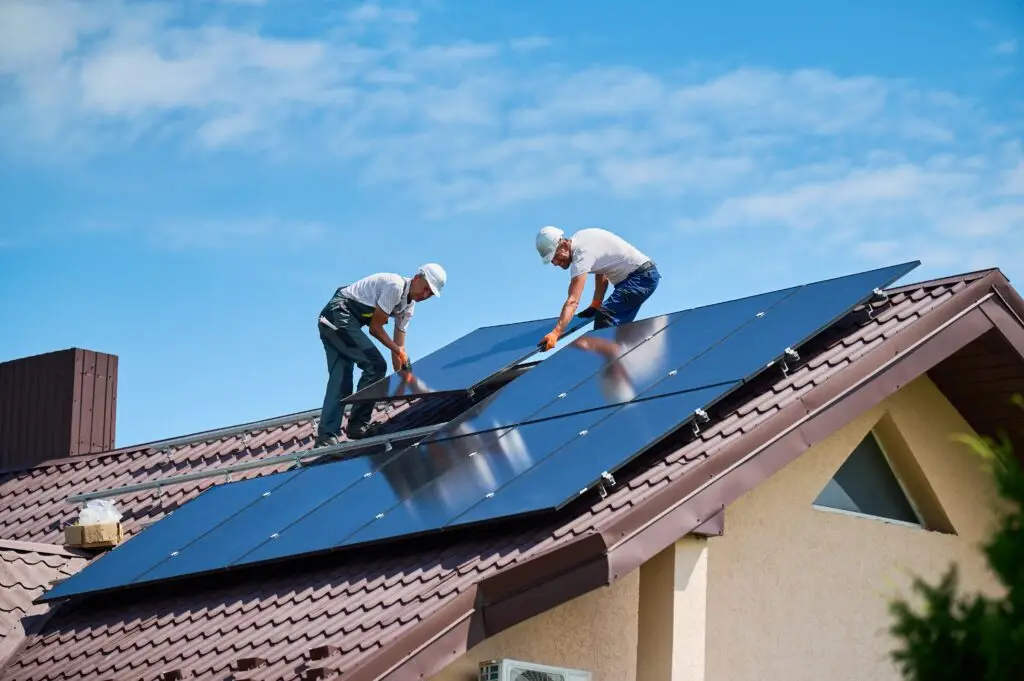
Zero-down solar roofing refers to any installation program that eliminates the upfront cash requirement. You do not pay for panels, inverters, mounting hardware, or labor on the day of installation. Instead, you pay over time through one of three financing structures: a solar loan, a solar lease, or a power purchase agreement (PPA).
Each structure handles ownership differently. With a loan, you own the system from day one. With a lease or PPA, a financing company owns the equipment and you pay for access to the energy it produces.
The California Public Utilities Commission recommends that every homeowner read the state’s Solar Consumer Protection Guide before signing any contract. That document explains your cancellation rights, required disclosures, and how to identify inflated savings estimates.
Q: Does “zero down” mean solar is free?
A: No. Zero down means no upfront payment is required, but you still pay for the system or its energy output over time through monthly loan payments, lease fees, or per-kilowatt-hour PPA charges.
How Solar Loans Work for Southern California Homeowners
A solar loan lets you borrow money to purchase a solar system outright. You own the panels, inverter, and mounting hardware from the day they are installed. Monthly payments go toward the loan balance, and once the loan is paid off, the electricity your system generates costs you nothing beyond minor maintenance.
Ownership determines three things: who claims available incentives, who is responsible for repairs, and what happens when you sell your home. With a loan, the solar system becomes part of your property. Research consistently shows that owned solar systems add measurable resale value to homes.
One critical update for 2026: the federal Residential Clean Energy Credit under Section 25D expired on December 31, 2025. If you purchase a system with cash or a loan this year, that 30% federal tax credit is no longer available to individual homeowners.
What to Ask a Lender Before Signing
Request the total cost of the loan over its full term, including all interest charges. Get the annual percentage rate (APR) in writing. Confirm whether the loan places a lien (a legal claim) on your property, and ask what happens if you sell before the balance is paid.
The Contractors State License Board recommends getting all savings claims documented. Verbal promises about energy production or bill reductions are difficult to enforce once you have signed the contract.
How Solar Leases and PPAs Differ from Loans
With a solar lease, a financing company installs panels on your roof and charges a fixed monthly fee for 20 to 25 years. You do not own the system. The leasing company handles monitoring, maintenance, and repairs throughout the contract term.
A power purchase agreement works similarly, except you pay per kilowatt-hour of electricity the system produces rather than a flat monthly rate. Both leases and PPAs often include an escalator clause that increases your payment by 1% to 3% each year.
The key advantage of leases and PPAs in 2026 is that the financing company can still claim the commercial Section 48E credit and pass roughly 30% of that federal value through to you as a lower rate. This is not a tax credit you file for. It appears as a reduced price built into your agreement. This pathway closes for systems not placed in service by December 31, 2027.
Selling Your Home with an Active Lease or PPA
Selling a home with an active lease or PPA adds a step to the transaction. The new buyer must agree to assume the remaining contract, or you must buy out the balance, which can cost thousands of dollars. Some buyers may hesitate to take on a long-term energy agreement they did not choose.
If you plan to stay in your home for the full contract term, a lease or PPA can reduce monthly energy costs with minimal maintenance responsibility. If you may move within five to ten years, ask for the buyout schedule in writing before signing.
Q: Which is better for solar financing Southern California homeowners, a loan or a lease?
A: It depends on your priorities. A loan gives you ownership, equity, and control over repairs. A lease or PPA gives you lower maintenance responsibility and access to the Section 48E pass-through value while that incentive remains available.
Why Roof Condition Matters Before Going Solar
Solar panels are engineered to last 25 to 30 years. If your roof has only five to ten years of useful life remaining, mounting panels on it creates a predictable and expensive problem. You will eventually need to pay for panel removal, a full roof replacement, and panel reinstallation as three separate projects.
A south-facing roof with minimal shade and solid structural integrity is the ideal candidate for solar. Southern California’s high UV index and occasional Santa Ana wind events mean your roofing materials face significant weathering over time, so an honest assessment of remaining life is important before any solar work begins.
August Roofing and Solar addresses this directly through its SolaRoof program, which bundles a new roof and solar installation into a single project. One contractor, one warranty, one timeline. This approach ensures the mounting system, flashing, and waterproofing are engineered together rather than layered as separate retrofits.
How to Verify a Solar Installer’s Credentials in California
California requires solar contractors to hold a valid license from the Contractors State License Board (CSLB). The license must be active and classified as C-46 (Solar Contractor), C-10 (Electrical Contractor), or B (General Building Contractor). You can verify any contractor’s license at cslb.ca.gov.
Beyond the CSLB license, look for NABCEP certification. The North American Board of Certified Energy Practitioners sets a high standard for solar installation quality. Companies employing NABCEP-certified installers demonstrate a measurable commitment to industry best practices.
August Roofing and Solar holds an Owens Corning Platinum Preferred Contractor designation, TRI certification for roofing, NABCEP certification for solar, and California Contractor License #786740 with B, C-39, and C-10 classifications. These are verifiable credentials you can check independently.
Red Flags When Choosing a Solar Contractor
Be cautious of any contractor who pressures you to sign on the same day. California law gives you at least three business days to cancel a home improvement contract, or five days if you are 65 or older. A reputable installer will never rush that timeline.
Watch for claims that “solar is free.” Solar energy is rarely free. An honest provider will explain all costs over time, including escalators, maintenance responsibilities, and end-of-term conditions. The CSLB received over 2,200 solar-related complaints in a recent reporting period, with workmanship issues and misrepresentation topping the list.
Q: What CSLB license classification should a solar installer hold?
A: A solar contractor in California should hold a C-46 (Solar Contractor), C-10 (Electrical Contractor), or B (General Building Contractor) license. Verify the classification is active at cslb.ca.gov before signing any contract.
What to Look for in a Zero-Down Solar Roofing Warranty
Solar warranties come in layers. Panel manufacturers typically offer a 25-year production warranty guaranteeing minimum energy output, measured as a percentage of the panel’s original rating. Inverters, which convert the direct current (DC) your panels produce into alternating current (AC) your home uses, often carry a 10- to 15-year warranty. Your installer may offer a separate workmanship warranty covering the physical installation and roof penetrations.
When comparing zero-down solar roofing programs, pay attention to who is responsible for what. Under a loan, you own the system, so you file warranty claims directly with the manufacturer if equipment fails. Under a lease or PPA, the financing company typically handles maintenance and repairs, but confirm this in your contract before signing.
When your roof and solar system are installed by the same contractor, there is a single point of accountability. No dispute about where the roof warranty ends and the solar warranty begins. This is one of the practical reasons bundled installations exist.
How California’s Net Billing Tariff Affects Your Savings
Since April 2023, new solar customers in California connect under the Net Billing Tariff, sometimes called NEM 3.0 or the Solar Billing Plan. Under this structure, the compensation you receive for excess electricity sent back to the grid is significantly lower than what you pay to buy electricity during peak evening hours.
This means the financial case for solar now depends heavily on pairing panels with battery storage. By storing daytime solar production and using it during the expensive 4:00 to 9:00 PM peak window, you maximize bill savings. CPUC data shows that nearly 70% of net billing customers had paired batteries with their solar systems by the end of 2024.
When evaluating any zero-down solar roofing program, ask whether battery storage is included or priced separately. A system without a battery under the current rate structure may produce less savings than the proposal projects.
Time-of-Use Pricing and Why It Matters
Time-of-use (TOU) pricing charges different rates depending on when you use electricity. Southern California Edison, SDG&E, and PG&E all require solar customers on the Net Billing Tariff to use specific “electrification” rate plans with lower off-peak prices and higher on-peak prices.
For solar homeowners, this pricing structure creates a clear incentive: use your own stored solar energy during peak hours and avoid buying expensive grid electricity. A correctly sized solar-plus-battery system shifts your energy usage pattern to align with these rate windows, which is where the real savings occur.
How to Compare Zero-Down Solar Offers Side by Side
The CPUC recommends getting bids from at least three qualified solar providers. When comparing, look beyond the monthly payment. Review the total cost over the full contract term, any escalators that increase your payments annually, and the assumptions used to calculate projected savings.
Ask each provider the same set of questions:
- What is the total cost of the system or energy over the full contract term?
- Will my payments increase over time, and by how much per year?
- What happens if I sell my home before the agreement ends?
- Who handles monitoring, maintenance, and repairs?
- Is battery storage included in the proposal?
- What CSLB license classification do you hold?
California’s Solar Energy System Disclosure Document provides a standardized format for comparing total costs and projected bill savings. If a provider cannot produce this document, that is a reason to continue looking.
The Role of Battery Storage in a Zero-Down Solar System
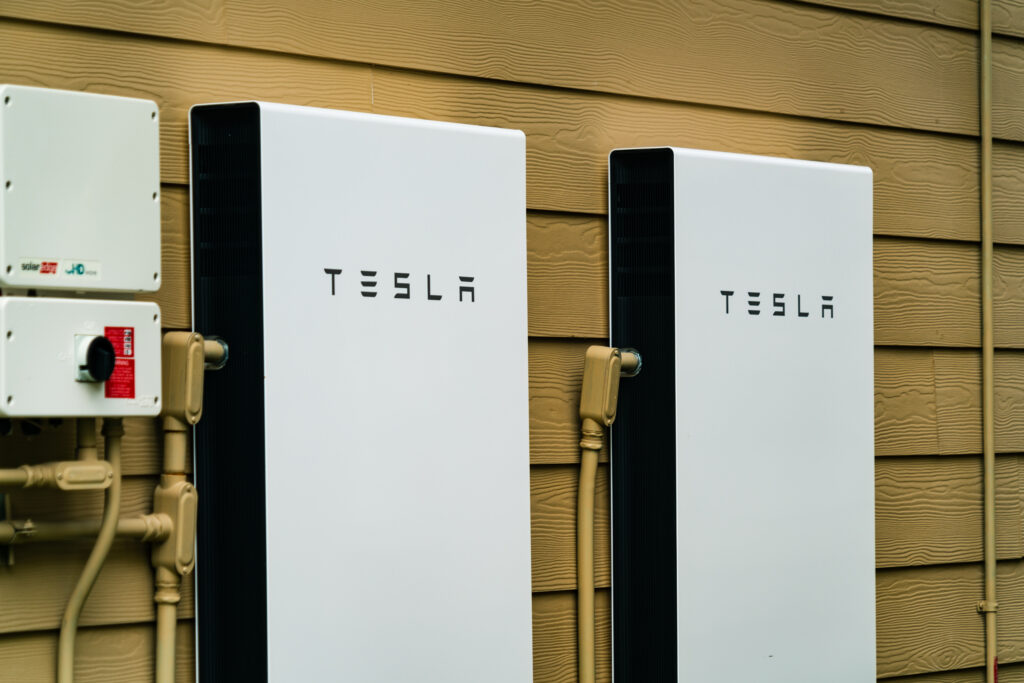
Battery storage has shifted from a nice-to-have upgrade to a financial necessity under California’s current rate structure. A battery lets you store excess solar energy generated during the day and deploy it during peak evening hours when grid electricity costs the most.
Without a battery, your system exports daytime energy to the grid at lower Net Billing Tariff rates, and then you buy back electricity at higher peak rates in the evening. The math works against you. With a battery, you keep and use your own energy when it holds the most value.
When reviewing zero-down proposals, confirm whether the battery is included in the financing package. Some programs bundle panels and storage together under one monthly payment. Others list the battery as an optional add-on with separate pricing and a separate warranty. August Roofing and Solar’s solar installations integrate battery storage so the entire system operates as one coordinated unit.
Q: What battery capacity do I need for a typical Southern California home?
A: Most homes benefit from at least one 10-to-13.5 kWh battery to cover peak evening usage. Homes with higher electricity consumption, electric vehicles, or pool equipment may need two batteries or a larger-capacity unit. Your installer should size the battery based on your actual utility usage data.
California Solar Incentives Still Available in 2026
The incentive landscape has changed significantly for solar financing Southern California homeowners need to understand.
The federal Residential Clean Energy Credit under Section 25D expired at the end of 2025 for systems purchased with cash or a loan. No California state solar income-tax credit exists, and never has.
What remains:
- Commercial Section 48E Credit: Financing companies claim this on lease, PPA, and prepaid plans and pass it through as a lower rate. Eligible systems must be placed in service by December 31, 2027.
- Property Tax Exclusion: Under SB 710, the added home value from your solar system is excluded from property tax reassessment for systems that qualify before January 1, 2027.
- Self-Generation Incentive Program (SGIP): An income-qualified Residential Solar and Storage Equity budget remains available, with posted rates of $1,100 per kWh for battery storage and $3,100 per kW for paired solar, though some utility territories have waitlists.
Step-by-Step: How to Evaluate a Zero-Down Solar Roofing Program
Step 1: Assess Your Roof’s Condition
Before talking to any solar provider, get an independent assessment of your roof. If it needs replacement within the next ten years, plan to bundle both projects. A professional roof health evaluation identifies remaining useful life, structural issues, and shade obstructions that affect solar performance.
Step 2: Determine Your Financing Preference
Decide whether ownership or simplicity matters more to you. A loan gives you ownership and long-term equity. A lease or PPA gives you lower maintenance responsibility and access to the Section 48E pass-through value while it remains available in 2026 and 2027.
Step 3: Collect at Least Three Written Bids
Request bids from three or more CSLB-licensed providers. Compare the total cost over the full contract term, not just the monthly payment. Ask for the Solar Energy System Disclosure Document from each provider.
Step 4: Verify Every Contractor’s Credentials
Check each contractor’s CSLB license at cslb.ca.gov. Confirm the license is active and in the correct classification. Look for NABCEP certification. Ask whether the installers are employees or subcontractors.
Step 5: Read the Warranty Terms in Full
Review panel, inverter, and workmanship warranties. Note who is responsible for filing claims, how long coverage lasts, and what happens if the installer or manufacturer goes out of business during the coverage period.
Step 6: Evaluate Battery Storage Options
Under California’s Net Billing Tariff, battery storage is essential for maximizing savings. Confirm whether each proposal includes a battery, what brand and capacity it offers, and whether the battery warranty is separate from the panel warranty.
Step 7: Take Your Time
California law protects your right to cancel within three business days, or five days if you are 65 or older. Do not let any provider rush you into signing. A qualified contractor will answer every question clearly and give you the time you need.
People Also Ask
Is zero-down solar worth it in California?
Zero-down solar can be worth it if you choose the right financing structure for your situation. Homeowners who stay in their home for the full contract term and pair their system with battery storage typically see meaningful bill reductions under California’s Net Billing Tariff.
Can I get solar panels with no money down and no credit check?
Most zero-down solar programs require a credit check. Some lease and PPA providers have lower credit thresholds than traditional loan programs, but a credit evaluation is standard. Be cautious of any company that advertises “no credit check” solar, as this may indicate non-standard contract terms.
How much does a solar system cost in Southern California without incentives?
A typical residential solar system in Southern California costs between $15,000 and $30,000 before incentives, depending on system size, panel brand, and whether battery storage is included. Zero-down programs spread this cost across monthly payments over 20 to 25 years.
Do solar panels increase home value in Southern California?
Owned solar systems generally increase home value. Leased systems can complicate a sale because the buyer must agree to assume the lease. California’s SB 710 property tax exclusion ensures that the added value from a qualifying solar system is not subject to property tax reassessment.
Frequently Asked Questions
What is the difference between a solar lease and a PPA?
A solar lease charges a fixed monthly fee to rent the panels on your roof. A power purchase agreement charges you per kilowatt-hour of electricity the system produces. In both cases, the financing company owns the system and handles maintenance. Both structures typically include annual escalator clauses of 1% to 3%.
Can I still get a 30% federal tax credit for zero-down solar roofing in 2026?
Not directly. The federal residential credit under Section 25D expired December 31, 2025, for cash and loan purchases. The 30% value now lives in lease and PPA structures, where the financing company claims the commercial Section 48E credit and passes it through as a lower rate. This pathway requires systems to be placed in service by December 31, 2027.
How do I check if a solar installer is properly licensed in California?
Visit cslb.ca.gov and use the license lookup tool. Enter the contractor’s name or license number. Confirm the license is active and classified as C-46, C-10, or B. NABCEP certification is an additional credential that indicates higher installation standards.
Is battery storage necessary with a zero-down solar roofing system?
Under California’s Net Billing Tariff, battery storage is strongly recommended. Without a battery, excess daytime solar is exported at low compensation rates, and you buy back expensive evening electricity at peak prices. A battery lets you store and use your own energy when it is worth the most.
What should I do if my roof needs replacement before installing solar?
Bundle both projects into one. Installing a new roof and solar system as a single coordinated project avoids double labor costs, ensures the mounting system is engineered into the new roof structure, and covers everything under one warranty. August Roofing and Solar’s SolaRoof program, with no deposit required and 30-plus years of Southern California experience, handles this as a single scope of work.
Comparing zero-down solar roofing programs comes down to asking the right questions and verifying the answers independently. Know the difference between a loan, a lease, and a PPA. Check every installer’s CSLB license and certifications. Read your warranties carefully. Factor in battery storage, because under California’s current rate structure, it determines whether your long-term savings projections hold up.
If you are ready to evaluate your options, schedule a free Roof Health Evaluation with August Roofing and Solar. Compare your options side by side, and make the decision that fits your home and your goals. No pressure, no deposit, no guesswork.