
Key Takeaways
- Roofing scams typically begin with unsolicited visits after storms or Santa Ana wind events and rely on false urgency to pressure homeowners into quick, uninformed decisions.
- A legitimate roofing contractor will never demand full payment upfront, will carry a valid California CSLB license with a C-39 classification, and will always provide a written itemized estimate before starting any work.
- You can verify any roofer by checking their license on the California Contractors State License Board website, requesting proof of general liability and workers’ compensation insurance, and asking for local references.
- Common scam tactics include fabricating or exaggerating roof damage, showing fake inspection photos from other properties, and even causing damage during a so-called free inspection.
- California law limits contractor deposits to $1,000 or 10 percent of the contract price, whichever is less. Any contractor requesting more is violating state law.
Quick Links
- Why Roofing Scams Target Southern California Homeowners
- Common Roofing Scams and How They Work
- False Urgency and Storm Chasers
- Upfront Payment Demands
- Fabricated or Exaggerated Roof Damage
- How to Spot a Roofing Scam Before You Sign Anything
- How to Verify a Roofing Contractor
- What a Legitimate Roofer Looks Like
- Protecting Yourself After a Storm
- People Also Ask
- Frequently Asked Questions
Why Roofing Scams Target Southern California Homeowners
Roofing scams cost Southern California homeowners thousands of dollars every year, and the problem accelerates after every major storm. You hear a loud bang during a windstorm, or a stranger appears at your door claiming they noticed missing shingles while driving by. Your stomach tightens. You are not sure whether to trust them or send them away.
This moment of uncertainty is exactly what dishonest contractors exploit. Southern California’s weather patterns create ideal conditions for roofing fraud. Santa Ana winds that can exceed 60 mph displace shingles and tiles. Heavy winter rains from atmospheric river events expose weaknesses in flashing and underlayment. Year-round high UV exposure degrades asphalt shingles faster than in cooler, cloudier climates.
Scammers know these conditions make homeowners anxious about their roofs, and they use that anxiety as leverage. The region’s wide variety of roofing systems, from clay tile on Spanish Revival homes to composite shingle on newer construction to flat modified bitumen on commercial-style builds, gives dishonest contractors room to fabricate problems that most homeowners cannot evaluate on their own.
Understanding how to spot roofing scams is the single most effective way to protect your investment. The following sections break down the most common tactics, the specific red flags to watch for, and the steps you can take to verify any roofing contractor before agreeing to work.
Common Roofing Scams and How They Work
Most roofing scams follow a predictable pattern. They rely on information asymmetry, meaning the scammer knows you probably cannot see or evaluate your own roof from the ground. They also rely on emotional pressure, targeting homeowners who are worried about water damage, structural failure, or insurance deadlines.
There are three primary categories of roofing scams that affect homeowners most frequently: false urgency schemes, upfront payment demands, and fabricated damage claims. Each one works differently, but they all share a common goal of separating you from your money before you have time to think clearly or get a second opinion.
Recognizing these patterns before a high-pressure conversation begins puts you in a much stronger position to protect yourself.
False Urgency and Storm Chasers
A storm chaser is a contractor, or someone posing as a contractor, who appears in residential neighborhoods immediately after a weather event. In Southern California, this often happens after Santa Ana wind events in the fall and winter or after heavy rainfall from Pacific storm systems. Properties near foothill areas and wildland-urban interface zones are especially targeted because wind-driven debris and ember exposure create legitimate roofing concerns that scammers exploit.
Storm chasers typically go door to door offering free roof inspections. Their goal is to convince you that your roof sustained serious damage requiring immediate repair. They may tell you that your insurance will cover everything, that they can handle the claim for you, or that waiting even a few days could lead to catastrophic water intrusion.
A reputable roofing company will never pressure you to make a decision on the spot. A credible contractor presents findings, explains your options, provides a written estimate, and gives you time to evaluate. If someone tells you that you must sign today or lose coverage, that is a clear red flag.
Q: Are storm chasers illegal in California?
A: Storm chasing itself is not illegal, but operating without a valid California CSLB license is. Many storm chasers are unlicensed or use a borrowed license number. You can verify any contractor’s license at cslb.ca.gov.
Q: What should I do if a storm chaser knocks on my door?
A: Ask for their California CSLB license number, a business card, and proof of insurance. Do not sign anything during the initial visit. Tell them you will verify their credentials and contact them if you want to proceed.
Upfront Payment Demands: A Critical Warning Sign
One of the clearest indicators of roofing scams is a demand for full payment before work begins. In California, contractors are legally prohibited from requesting a down payment that exceeds $1,000 or 10 percent of the contract price, whichever is less, according to the California Contractors State License Board. Any contractor who asks for more than this amount upfront is either uninformed about the law or deliberately breaking it.
Scammers who collect large upfront payments often disappear entirely. In some cases, they begin demolition work, such as tearing off existing shingles, and then abandon the project. This leaves the homeowner with an exposed roof deck and no recourse, especially if the contractor was unlicensed or uninsured.
A trustworthy roofing company structures payment around project milestones. For example, a portion may be due when materials are delivered, another portion at the midpoint of installation, and the final balance upon completion and inspection. August Roofing and Solar, with over 30 years of experience serving Southern California, requires no deposit at all, which eliminates this risk entirely for homeowners.
Q: Is it normal for a roofer to ask for a deposit?
A: Small deposits within the legal limit are common in the industry, but they are not universal. Some established contractors operate with no deposit required. If a contractor demands a large sum before starting, treat it as a warning sign.
Fabricated or Exaggerated Roof Damage
Because most homeowners rarely climb onto their roofs, scammers have an easy opportunity to lie about conditions. This is one of the most insidious forms of roofing fraud because it can be difficult to disprove without a second inspection from a trusted professional.
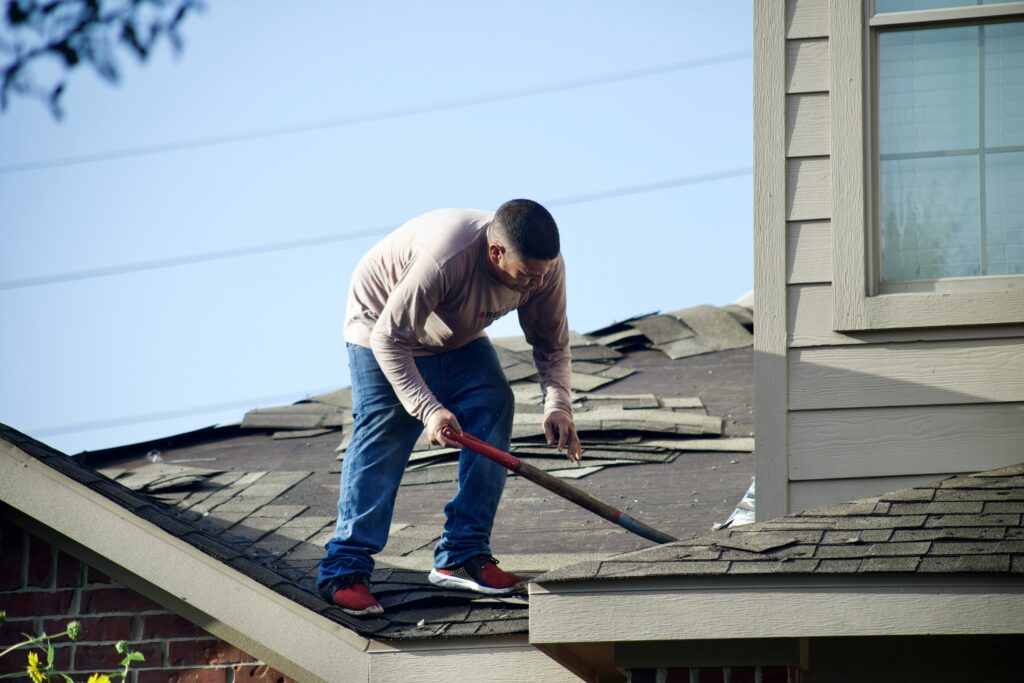
There are several ways dishonest contractors fabricate damage. Some carry photos of damaged roofs from other properties and present them as images of your roof. Others physically create damage during a so-called free inspection. Lifting shingles, cracking tiles, or puncturing flashing are all documented tactics reported by consumer protection agencies, including the National Roofing Contractors Association (NRCA).
Tile roofs are particularly common across Southern California, and clay or concrete tiles can be cracked relatively easily if someone steps on them incorrectly. A legitimate inspector knows how to walk a tile roof without causing damage by stepping on the lower third of each tile where it is supported by the batten below. If a roofer claims to have found cracked tiles after their visit, and those cracks were not there before, you may be dealing with a scammer.
To protect yourself, always request that the contractor document their findings with timestamped photos or video taken in your presence if possible. Better yet, get a second opinion from an established local company before agreeing to any repairs.
How to Spot a Roofing Scam Before You Sign Anything
Learning how to spot roofing scams comes down to recognizing a handful of consistent warning signs. Here is a practical checklist you can use any time a contractor approaches you or you are evaluating a bid.
Warning signs that suggest a scam:
- The contractor arrived unsolicited, especially right after a storm or wind event.
- They pressure you to sign a contract immediately.
- They cannot provide a valid California CSLB license number when asked.
- They request full payment or a large deposit before starting work.
- They offer a price that seems significantly lower than other bids.
- They refuse to provide a written, itemized estimate.
- They claim your insurance will cover everything and offer to handle the claim on your behalf.
- They cannot provide references from homeowners in your area.
- They suggest starting work before you have reviewed and signed a contract.
Any one of these signs is reason enough to pause. If you encounter two or more, walk away and contact a contractor you trust or reach out to the CSLB directly.
How to Verify a Roofing Contractor in Southern California
Knowing how to verify a roofing contractor is the most reliable defense against fraud. California has one of the most robust contractor licensing systems in the country, and homeowners can use it to confirm whether a roofer is who they claim to be.
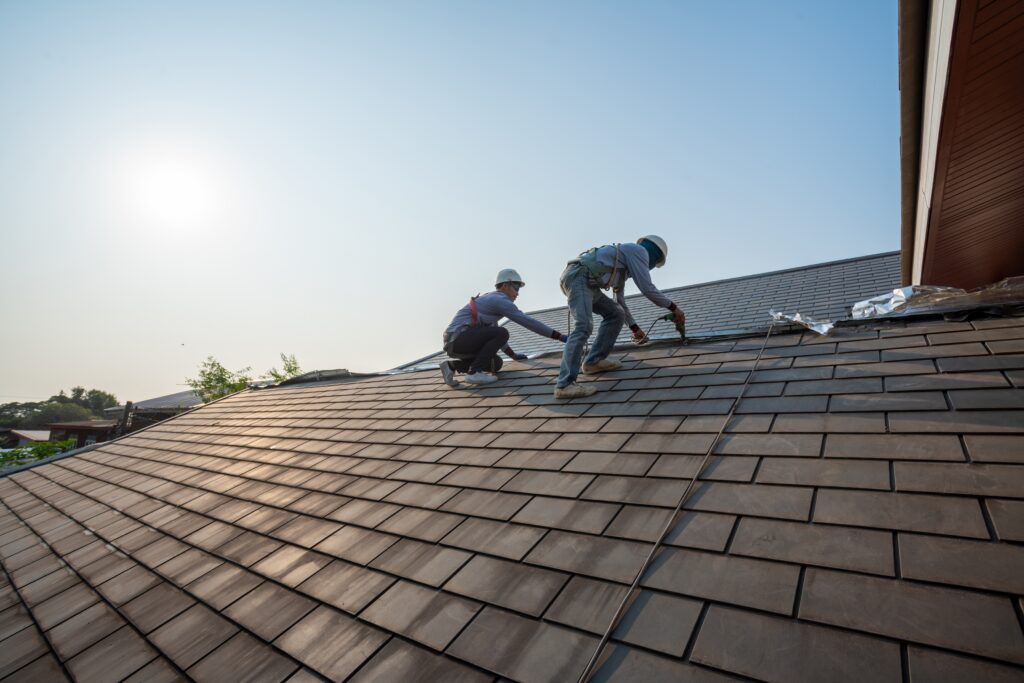
Step 1: Check the CSLB license. Visit the California Contractors State License Board website and enter the contractor’s license number. The database will show the license status, classification, bond information, and any complaints or disciplinary actions. A legitimate roofer will hold a C-39 Roofing classification.
Step 2: Verify insurance. Ask for a certificate of insurance that includes both general liability and workers’ compensation coverage. Call the insurance carrier directly to confirm the policy is active. If a worker is injured on your property and the contractor lacks workers’ compensation coverage, you could be held liable.
Step 3: Check for local reviews. Look for reviews on Google, Yelp, and the Better Business Bureau. Pay attention to how the company responds to negative reviews. A pattern of unresolved complaints is a red flag.
Step 4: Request references. Ask for contact information of homeowners in your area who have had similar work completed. A company with decades of experience should have no difficulty providing references.
Step 5: Get multiple bids. Obtain at least three written estimates for the same scope of work. This helps you understand the fair market price and makes it easier to identify outliers, whether suspiciously high or dangerously low.
Q: How long does it take to verify a roofing contractor’s license in California?
A: The CSLB online database returns results instantly. You can search by license number, business name, or individual name at no cost. The entire verification process, including calling the insurance carrier, typically takes less than 30 minutes.
What a Legitimate Roofer Looks Like
It helps to know what honest, professional roofing contractors actually do so you have a clear benchmark for comparison. A legitimate roofer will schedule an inspection at your convenience rather than showing up unannounced. During the inspection, they will explain what they are checking and why, including components like the roof deck, underlayment, flashing around penetrations such as vents and skylights, and the condition of the primary roofing material.
After the inspection, they will provide a written estimate that itemizes the cost of materials, labor, permits, and disposal. They will explain the timeline and what to expect during each phase of the project. They will not pressure you to make a decision quickly.
They will carry active insurance and a valid CSLB license. They will pull any required building permits through the local building and safety division. Permit compliance matters because work done without permits can create problems during a home sale or insurance claim.
For Southern California homeowners, it is also worth confirming that the contractor understands regional requirements. California’s Title 24 energy standards affect roofing material choices, particularly cool roof requirements that help reduce heat absorption. In areas near wildland-urban interface zones, CAL FIRE ember-resistant roofing requirements may also apply. A knowledgeable contractor will be familiar with these regulations and factor them into their recommendation.
Q: Does a roofer need to pull a permit for a roof replacement in California?
A: Yes. Most jurisdictions in California require a building permit for roof replacements. The contractor should handle the permit application and ensure the work passes a final inspection. If a roofer suggests skipping the permit, consider it a serious red flag.
Protecting Yourself After a Storm in Southern California
Southern California’s climate creates specific vulnerabilities that homeowners should understand. Santa Ana winds can lift and displace roofing materials, particularly on older homes where fasteners may have loosened over time. Heavy rains from atmospheric river events can expose weaknesses in flashing and underlayment. High UV exposure throughout the year degrades asphalt shingles faster than in cooler climates.
After a major weather event, it is reasonable to want your roof inspected. The key is to contact a contractor you already trust rather than responding to someone who contacts you first. If you do not have an existing relationship with a roofer, ask neighbors for referrals. Local community groups and online forums can also be helpful resources.
If you suspect damage, document what you can see from the ground with your own photos before any contractor visits. This creates a baseline that makes it harder for a dishonest inspector to fabricate new damage. Note the date, time, and weather conditions in your documentation.
Contact your homeowners insurance company to report potential damage. Your insurer will send an adjuster to assess the claim independently. Be cautious of any contractor who insists on being present during the adjuster’s visit or who asks you to sign an assignment of benefits form, which transfers your insurance rights to the contractor.
For a reliable roof inspection, working with an established local company removes much of the uncertainty. A trusted contractor will coordinate with your insurance adjuster and provide documentation that supports an honest claim.
People Also Ask
How do I report a roofing scam in California?
You can file a complaint with the California Contractors State License Board online or by calling their hotline. You should also report the incident to your local police department and the Better Business Bureau. If money was lost, consult with a consumer protection attorney.
How much should a roof replacement cost in Southern California?
Roof replacement costs in Southern California typically range from $8,000 to $25,000 or more depending on roof size, pitch, material, and access difficulty. Always get at least three written estimates from licensed contractors to understand the fair price for your specific project.
Can I check if a roofer is licensed in California?
Yes. The California Contractors State License Board maintains a free online database where you can search by license number, business name, or individual name. A legitimate roofer will hold a C-39 Roofing license classification and have an active status with no unresolved complaints.
What is the best time of year to replace a roof in Southern California?
Late spring through early fall is generally ideal for roof replacement because of consistently dry weather and moderate temperatures. Scheduling outside of peak Santa Ana wind season reduces the risk of installation complications from high winds.
Frequently Asked Questions
What are the most common roofing scams in Southern California?
The most common roofing scams include storm chasing, where contractors appear after weather events to fabricate urgency; upfront payment fraud, where large sums are collected before work begins; and fake damage claims, where inspectors lie about or create roof damage. These tactics exploit the fact that most homeowners cannot easily inspect their own roofs.
How can I tell if a roofing contractor is legitimate?
Verify their California CSLB license number online, confirm they carry general liability and workers’ compensation insurance, and ask for local references. A legitimate contractor will provide a written itemized estimate, pull required permits, and never pressure you into signing immediately.
Should I pay a roofer upfront for a roofing project?
California law limits down payments to $1,000 or 10 percent of the contract price, whichever is less. Any contractor requesting more than this legal limit is violating state law. Some reputable companies, such as August Roofing and Solar, require no deposit at all, which provides additional protection for homeowners.
What should I do if I think I was a victim of roofing scams?
File a complaint with the CSLB immediately and document everything, including contracts, communications, photos, and payment records. Contact your bank or credit card company to dispute charges if applicable. Report the incident to local law enforcement and the Better Business Bureau to help protect other homeowners.
How do roofing scams differ in Southern California compared to other regions?
Roofing scams in Southern California often exploit the region’s specific weather patterns, particularly Santa Ana winds and heavy rain events, to create urgency. Scammers also take advantage of the variety of roofing materials common in the area, including clay tile and composite shingle, to fabricate damage claims that homeowners may not be equipped to evaluate on their own.
Protect Your Home by Staying Informed
Roofing scams are preventable when homeowners know what to look for. The patterns are consistent: unsolicited contact, false urgency, upfront payment demands, and fabricated damage. By learning how to verify a roofing contractor, getting multiple estimates, and working with established companies, you can make confident decisions about your roof without falling victim to fraud.
If you have concerns about your roof or want a professional evaluation you can trust, contact August Roofing and Solar to schedule a free inspection. With over 30 years of experience serving Southern California, our team provides honest assessments, transparent pricing, and no deposit is ever required. You can also explore our roofing services to learn more about how we work.