
Key Takeaways
- Going solar replaces a recurring utility expense with an investment that builds home equity and reduces long-term energy costs for Southern California homeowners.
- Current federal tax credits allow homeowners to claim 30% of solar installation costs, and pairing a roof replacement with home solar panels can extend that credit to a portion of roofing expenses.
- Southern California’s high UV index and over 280 sunny days per year make the region one of the most productive for residential solar energy in the country.
- Solar panel efficiency has plateaued at a high level, so waiting for “better technology” is unlikely to outweigh the savings lost during each month without solar.
- Net Energy Metering (NEM) through utilities like Southern California Edison still allows homeowners to receive bill credits for excess energy exported to the grid.
Quick Links
- Why Going Solar Matters for Southern California Homeowners
- Is Going Solar Actually Worth It?
- The Best Time to Go Solar
- How Home Solar Panels Work at a System Level
- Tax Credits and California-Specific Incentives
- Roof Condition and Going Solar
- The Environmental Impact of Going Solar
- People Also Ask
- Frequently Asked Questions
Why Going Solar Matters for Southern California Homeowners
Going solar is a decision that affects your monthly budget, the value of your home, and the way your household consumes energy for the next 25 years or more. For many Southern California homeowners, this is not a small consideration.
You have probably noticed your electricity bills climbing year after year. Southern California Edison has implemented multiple rate increases over the past decade, and tiered pricing structures mean that higher usage during hot inland summers can push your bill into expensive territory quickly. That pattern is unlikely to reverse.
Maybe you have looked into home solar panels before and walked away uncertain. Questions like “Are my bills high enough to justify the cost?” and “Should I wait for prices to drop or efficiency to improve?” are common. This guide addresses each of those concerns with straightforward information so you can make a confident, well-informed decision.
Is Going Solar Actually Worth It?
Yes. For most Southern California homeowners with a suitable roof and monthly electricity bills above $100, going solar reduces lifetime energy costs and increases property value. The financial math is straightforward once you understand the comparison.
Think of the difference between renting and owning a home. When you rent, every payment you make builds someone else’s equity. When you own, those payments contribute to an asset you can sell or leverage later. Utility bills work the same way. Every dollar you send to your utility company is a dollar you never see again, and the rate you pay for that electricity increases over time.
When you install home solar panels, you are converting that recurring expense into an asset. Even if you finance the installation, the monthly loan payment typically replaces a significant portion of your electric bill. Once the system is paid off, the electricity it produces is essentially free for the remaining life of the panels, which is typically 25 to 30 years.
Home Value Impact
Studies from the Lawrence Berkeley National Laboratory have found that homes with owned solar panel systems sell for a premium. In California, that premium averages roughly $4 per watt of installed capacity. For a typical 7-kilowatt residential system, that translates to approximately $28,000 in added property value.
This is not a speculative number. Buyers in Southern California are increasingly aware of energy costs and actively seek homes with existing solar installations. The value is real and measurable at the point of sale.
Q: Do I need to have high electricity bills to benefit from going solar?
A: Not necessarily. Homeowners with monthly bills as low as $80 to $100 can still see net savings over the life of a solar system, especially when factoring in annual utility rate increases and available tax credits. The higher your current bill, the faster the payback period.
The Best Time to Go Solar
The best time to go solar is as early as your roof condition and finances allow. Delaying the decision costs money every month because you continue paying retail electricity rates instead of generating your own power.
Immediate Savings Begin on Day One
The moment your solar system is connected to the grid and activated, it begins producing electricity. Every kilowatt-hour your panels generate is a kilowatt-hour you do not purchase from the utility at their retail rate. In Southern California, where the average residential electricity rate through Southern California Edison exceeds $0.30 per kilowatt-hour, those savings add up quickly.
Utility Rates Continue Rising
California utility rates have increased by an average of 3% to 5% per year over the past two decades. That trend is driven by infrastructure upgrades, wildfire mitigation costs, and increasing demand on the grid during extreme heat events. A solar system locks in your cost of electricity at today’s prices while utility rates continue to climb around you.
Technology Has Plateaued at a High Level
Modern monocrystalline solar panels operate at 20% to 22% efficiency, which is near the theoretical limit for silicon-based cells. While incremental improvements will continue, the leap from 15% to 20% efficiency that occurred over the past decade is not going to repeat itself in the near future. Waiting another year or two for “better panels” is unlikely to yield a meaningful improvement, but it will certainly mean 12 to 24 months of lost savings.
Q: Will solar panel prices drop if I wait?
A: Panel hardware costs have largely stabilized after significant declines over the past decade. Any future price reductions are likely to be modest and could be offset by changes in incentive programs, installation labor costs, or utility rate structures. The net cost of waiting is almost always higher than acting now.
How Home Solar Panels Work at a System Level
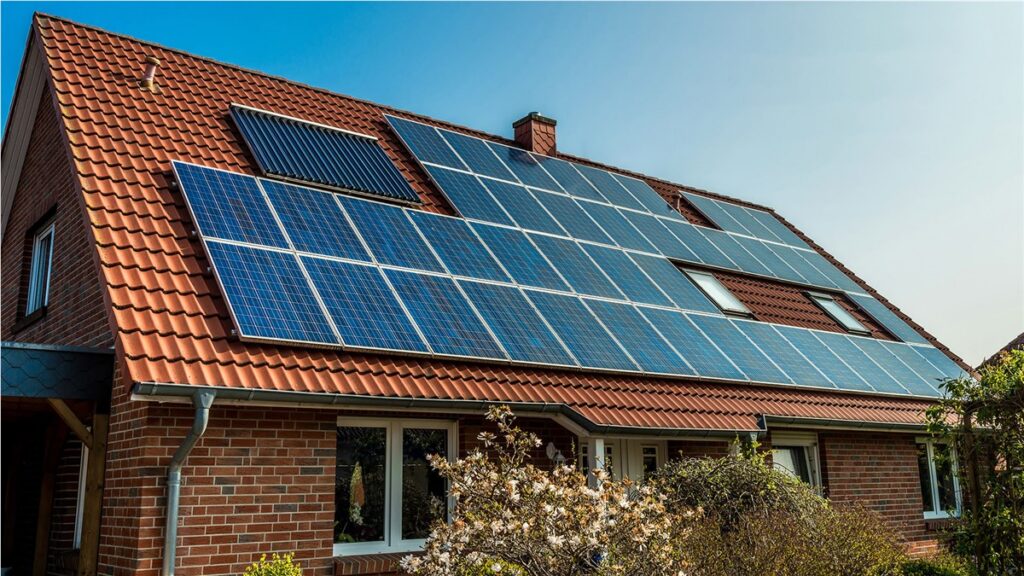
Understanding how a residential solar system operates helps you make better decisions about sizing, placement, and equipment. Here is how the key components work together.
Solar Panels (Photovoltaic Modules)
Solar panels are made up of photovoltaic cells, typically silicon-based, that convert sunlight into direct current (DC) electricity. Each panel contains 60 to 72 individual cells wired together in series. When photons from sunlight strike the silicon, they knock electrons loose, creating an electrical current. Southern California’s high UV index and abundant sunshine mean panels in this region produce more energy per square foot than panels in most other parts of the country.
Inverter
The DC electricity produced by your panels cannot power your home directly. An inverter converts that DC power into alternating current (AC), which is the standard used by your household appliances, lights, and outlets. There are two main types of inverters used in residential systems.
- String inverters connect multiple panels in a series (a “string”) and convert the combined DC output in one central unit. They are cost-effective but can lose efficiency if one panel in the string is shaded.
- Microinverters are installed on each individual panel. They allow each panel to operate independently, which improves performance when partial shading from trees or nearby structures is a factor.
Net Metering and the Grid Connection
In Southern California, most residential solar systems remain connected to the utility grid. When your panels produce more electricity than your home is using, the excess flows back to the grid. Under California’s Net Energy Metering program (currently NEM 3.0 through the California Public Utilities Commission), you receive bill credits for that exported energy. At night or during cloudy periods, you draw electricity from the grid and those credits offset your usage.
This grid connection eliminates the need for battery storage in many cases, though adding a battery system can provide backup power during outages and help you maximize the value of your solar production under newer NEM rate structures.
Monitoring System
Most modern solar installations include a monitoring platform accessible through a smartphone app or web dashboard. This system tracks real-time energy production, consumption patterns, and system health. If a panel or inverter underperforms, the monitoring system alerts you so the issue can be addressed before it significantly impacts your savings.
Tax Credits and California-Specific Incentives for Going Solar
Federal and state incentive programs significantly reduce the upfront cost of going solar. Understanding what is available helps you calculate your true out-of-pocket investment.
Federal Investment Tax Credit (ITC)
The federal solar Investment Tax Credit allows homeowners to deduct 30% of their total solar installation costs from their federal income taxes. This credit applies to the cost of panels, inverters, mounting hardware, wiring, labor, and permitting. For a system that costs $25,000 before the credit, the ITC would reduce your federal tax liability by $7,500. This credit is available through 2032 under the Inflation Reduction Act provisions outlined by the U.S. Department of Energy.
Roof Replacement Tax Credit Benefit
If your roof needs to be replaced before home solar panels can be installed, a portion of the roofing costs may qualify for the 30% tax credit. Specifically, the structural components of the roof that are necessary for and directly support the solar installation can be included. This is a significant financial advantage for homeowners who need both a new roof and a solar system.
California Self-Generation Incentive Program (SGIP)
The SGIP provides rebates for battery energy storage systems paired with solar installations. Homeowners in high fire-risk areas or those who have experienced two or more Public Safety Power Shutoff events may qualify for enhanced rebates that can cover a substantial portion of battery costs. Given Southern California’s exposure to Santa Ana wind-driven wildfires and related grid shutoffs, this program is particularly relevant for homeowners in inland and foothill communities.
Q: Can I claim the solar tax credit if I finance my system with a loan?
A: Yes. The federal Investment Tax Credit applies to the full cost of the solar system regardless of whether you pay cash or finance through a solar loan. Leased systems and power purchase agreements (PPAs) do not qualify because you do not own the system in those arrangements.
Roof Condition and Going Solar
Your roof’s condition is one of the first things a qualified solar installer will assess. Solar panels are designed to last 25 to 30 years. If your roof has only 5 to 10 years of useful life remaining, installing panels on it creates a problem: you will eventually need to remove the panels, replace the roof, and reinstall the panels, which adds unnecessary cost.
When to Replace Your Roof Before Solar Installation
A general guideline is that if your roof has fewer than 10 to 15 years of remaining life, it makes financial sense to replace it before or at the same time as your solar installation. Signs that your roof may be nearing the end of its useful life include curling or cracked shingles, granule loss in gutters and downspouts, visible daylight in the attic, and past leak repairs.
At August Roofing and Solar, our team evaluates roof condition as part of every solar consultation. With over 30 years of roofing experience in Southern California, we can accurately assess whether your roof is ready for panels or whether a replacement should come first. We offer both services, which means a single crew handles the full scope of work. That coordination eliminates scheduling gaps and ensures the roof and solar mounting system are integrated correctly.
You can schedule a free roof inspection to determine your roof’s current condition before making any decisions about solar.
Roofing Materials and Solar Compatibility
Most common roofing materials in Southern California are compatible with solar panel mounting systems. Composite asphalt shingles, concrete tile, clay tile, and standing seam metal roofs can all support solar installations with the appropriate mounting hardware. Flat roofs, common on mid-century and modern-style homes throughout the region, use tilt-mount racking systems to angle panels for optimal sun exposure.

The Environmental Impact of Going Solar
Going solar reduces your household’s reliance on fossil fuel-generated electricity. In California, the grid is increasingly powered by renewable sources, but natural gas still accounts for a significant share of electricity generation, particularly during peak evening hours.
A typical 7-kilowatt residential solar system in Southern California produces approximately 10,000 to 12,000 kilowatt-hours of clean electricity per year. Over a 25-year lifespan, that offsets roughly 150 to 200 metric tons of carbon dioxide emissions compared to grid-sourced power. That is equivalent to taking several cars off the road for the same period.
Reducing Grid Strain During Peak Demand
Southern California’s inland valleys routinely experience temperatures above 100 degrees Fahrenheit during summer months. These heat events drive massive spikes in air conditioning demand, which strain the electrical grid and can trigger rolling blackouts. Home solar panels produce the most electricity during the middle of the day when the sun is strongest, which aligns with the early part of this peak demand window. By generating your own power during these critical hours, you reduce the load on the grid and contribute to regional energy stability.
When paired with a battery storage system, you can further shift your solar production to cover the late afternoon and evening hours when grid demand peaks and electricity rates are highest under time-of-use billing structures. The California Public Utilities Commission’s NEM program page provides details on current rate structures and export compensation.
People Also Ask
How much do solar panels cost in Southern California?
The average cost of a residential solar system in Southern California ranges from $15,000 to $30,000 before the federal tax credit, depending on system size and equipment choices. After the 30% ITC, a typical 7-kilowatt system costs roughly $17,000 to $20,000 out of pocket.
How long do solar panels last?
Most solar panels come with a 25-year manufacturer warranty and continue producing electricity beyond that timeframe at slightly reduced efficiency. Panels typically degrade at a rate of about 0.5% per year, meaning they still produce around 87% of their original output after 25 years.
Do solar panels work on cloudy days in Southern California?
Yes. Solar panels produce electricity from ambient light, not just direct sunlight. On overcast days or during coastal marine layer conditions common in Southern California mornings, panels operate at reduced capacity, typically 10% to 30% of their rated output. Annual production averages account for these cloudy periods.
Is it better to buy or lease solar panels?
Buying solar panels, either with cash or a solar loan, provides the greatest long-term financial benefit because you own the system, claim the tax credit, and keep all energy savings. Leasing requires no upfront cost but transfers the tax credit and a portion of savings to the leasing company. Ownership is generally recommended for homeowners who plan to stay in their home for five or more years.
Frequently Asked Questions
Is going solar worth it for Southern California homeowners?
Yes. Southern California’s abundant sunshine, high utility rates, and available tax incentives make going solar one of the most financially sound home improvements in the region. Most homeowners see a full return on their investment within 6 to 10 years, with 15 to 20 additional years of near-free electricity after that.
What happens to my solar panels during a power outage?
Grid-tied solar systems without battery storage automatically shut down during a power outage for safety reasons. This is required by utility interconnection rules to protect line workers repairing the grid. Adding a battery storage system allows your solar panels to continue powering your home during outages.
How long does it take to install home solar panels?
The physical installation of home solar panels typically takes one to three days for a standard residential system. However, the full process from signed contract to system activation usually takes four to eight weeks, which includes engineering design, permitting, utility approval, and final inspection.
Do I need to replace my roof before going solar?
If your roof has fewer than 10 to 15 years of remaining useful life, it is advisable to replace it before or at the same time as your solar installation. Going solar on an aging roof can lead to costly panel removal and reinstallation when the roof eventually needs replacement. August Roofing and Solar handles both roof replacement and solar installation, which streamlines the process and can qualify a portion of roofing costs for the federal tax credit.
Does going solar eliminate my electric bill entirely?
In most cases, going solar significantly reduces but does not completely eliminate your electric bill. You will still pay a small monthly grid connection fee to your utility, typically $10 to $15. Depending on your system size and energy usage patterns, your net annual electricity cost can drop to near zero. Proper system sizing during the design phase ensures your panels cover as much of your usage as possible.
Take the Next Step Toward Going Solar
Going solar is a long-term investment that reduces your energy costs, increases your home’s value, and lowers your environmental footprint. Southern California’s climate and incentive programs make the region one of the best places in the country for residential solar energy.
If you are ready to explore whether home solar panels are right for your property, August Roofing and Solar can help. With over 30 years of experience serving Southern California homeowners, no deposit required to get started, and full licensure for both roofing and solar work, our team provides honest assessments and straightforward guidance.
Contact us to schedule a free consultation or call (805) 519-8099 to speak with a project consultant. You can also learn more about our solar installation services and our company’s background.