
Key Takeaways
- Solar panel cleaning should be done one to two times per year in Southern California to prevent dust, debris, and bird droppings from reducing energy output by up to 25%.
- Never use abrasive tools, harsh chemicals, or high-pressure washers on solar panels. These can scratch the glass surface and leave residue that blocks sunlight.
- Plain water and a soft squeegee are the safest and most effective tools for cleaning solar panels at home.
- Professional solar panel cleaning is the safest option when panels are on steep or multi-story roofs, especially given Southern California’s varied roof pitches and tile surfaces.
- Regular solar panel maintenance protects your investment and helps sustain peak energy production throughout the year.
Quick Links
- Why Solar Panel Cleaning Matters in Southern California
- How Dirt and Debris Affect Solar Panel Performance
- 3 Do’s of Solar Panel Cleaning
- 3 Don’ts of Solar Panel Cleaning
- DIY vs. Professional Solar Panel Cleaning
- When to Schedule Solar Panel Cleaning
- Solar Panel Maintenance and Long-Term Value
- People Also Ask
- Frequently Asked Questions
Why Solar Panel Cleaning Matters in Southern California
Solar panel cleaning is one of the simplest ways to protect your energy investment, yet many homeowners overlook it until production drops noticeably. If you have noticed your electricity bill creeping upward even though nothing else has changed, dirty panels may be the reason.
Southern California’s climate creates a unique set of challenges for solar panel surfaces. Coastal areas deal with salt spray and marine layer residue. Inland valleys face heavy dust accumulation, especially during Santa Ana wind events. And across the entire region, bird droppings, pollen, and wildfire ash can coat panels for weeks at a time.
The result is a gradual decline in energy output that most homeowners do not notice until it becomes significant. Understanding how to clean your panels correctly, and what mistakes to avoid, can help you maintain consistent performance year-round.
How Dirt and Debris Affect Solar Panel Performance
Solar panels generate electricity by converting sunlight into energy through photovoltaic cells beneath a tempered glass surface. When anything blocks or scatters sunlight before it reaches those cells, energy output decreases.
A thin layer of dust may reduce output by 5% to 10%. Heavier buildup from bird droppings, tree sap, or accumulated grime can reduce production by up to 25%, according to the U.S. Department of Energy. In Southern California, where the high UV index means panels can produce substantial energy year-round, even a small percentage loss translates to real dollars over time.
The issue is not just total coverage. Even partial shading from a streak of dried bird droppings can affect an entire string of cells on a panel, disproportionately reducing output. This is because most residential panels are wired in series, meaning one blocked area can bottleneck the entire panel’s performance.
Q: Can rain clean my solar panels?
A: Light rain can rinse off loose dust, but it often leaves behind mineral spots and water marks that still reduce efficiency. In Southern California’s dry climate, rain is too infrequent and too light to replace proper solar panel cleaning.
3 Do’s of Solar Panel Cleaning
Proper solar panel cleaning does not require expensive products or specialized equipment. The key is using the right technique to remove debris without damaging the glass surface.
1. Use Plain Water and a Soft Squeegee
The most effective cleaning method is also the simplest. Use plain water, ideally filtered or deionized to avoid mineral deposits, and a standard window squeegee with a soft rubber blade. An extendable handle allows you to reach panels from the edge of the roof or from ground level in some installations.
Spray the panels with water first to loosen any debris. Then use the squeegee in smooth, overlapping strokes to wipe the surface clean. This approach mimics what professional cleaners use and avoids any risk of scratching.
2. Clean During Cool Hours
Clean your panels early in the morning or late in the afternoon when the glass surface is cool. Cold water hitting a hot panel can cause thermal stress, potentially leading to micro-cracks in the tempered glass over time. Morning is often ideal because overnight dew has already softened any dried-on debris, making it easier to remove.
3. Inspect While You Clean
Cleaning is a natural opportunity to visually inspect your system. Look for cracked glass, discolored cells, loose wiring, or any gaps in the mounting hardware. Catching these issues early prevents small problems from becoming expensive repairs. If you notice anything unusual, contact a licensed solar contractor for a closer assessment.
Q: What type of water should I use for solar panel cleaning?
A: Deionized or filtered water is best because it does not leave mineral deposits on the glass. If you only have access to hard tap water, dry the panels with a clean squeegee immediately after rinsing to prevent water spots.
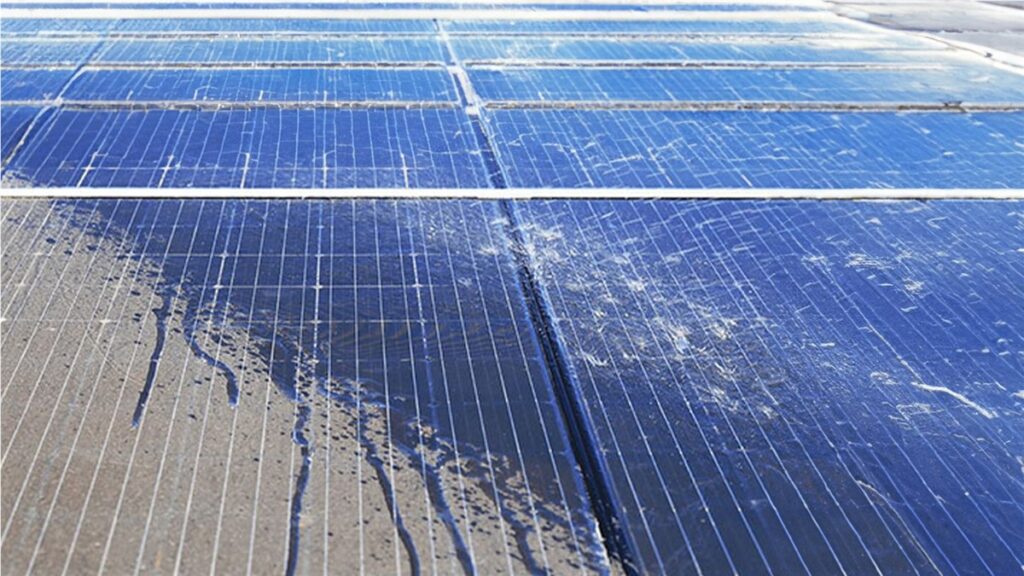
3 Don’ts of Solar Panel Cleaning
Knowing what to avoid is just as important as knowing what to do. The wrong cleaning approach can cause permanent damage to your panels and void manufacturer warranties.
1. Do Not Use Abrasive Tools
Wire brushes, scouring pads, and stiff-bristled brushes can scratch the anti-reflective coating on your panels. This coating is engineered to maximize light absorption. Once it is scratched, even at a micro level, the panel’s ability to capture sunlight is permanently reduced. Stick to soft materials only.
2. Do Not Use Soaps, Detergents, or Chemical Cleaners
Household soaps and chemical cleaners leave a thin film or residue on the glass surface. This residue attracts more dust and creates a cycle of faster re-soiling. Some harsh chemicals can also degrade the panel frame’s sealant or the wiring insulation underneath. Plain water is all you need for routine solar panel cleaning.
3. Do Not Use a Pressure Washer
High-pressure water streams can damage panel seals, force water into electrical connections, and even crack the glass. A standard garden hose with a gentle spray nozzle provides enough pressure to dislodge dust and debris without risking damage. Adjust the nozzle to a firm but moderate stream, never a concentrated jet.
Q: Will using soap void my solar panel warranty?
A: It depends on the manufacturer, but many panel warranties specify that only water and approved cleaning solutions should be used. Using unauthorized chemicals could void your warranty if it causes damage. Always check your panel manufacturer’s cleaning guidelines first.
DIY vs. Professional Solar Panel Cleaning
DIY solar panel cleaning works well for ground-mounted systems or single-story homes with easy roof access. However, professional cleaning is the safer and more thorough option in many situations.
Consider hiring a professional if your panels are on a steep-pitch roof, a multi-story home, or a tile roof surface where footing is unstable. Southern California homes frequently feature Spanish tile and concrete tile roofs, which can be slippery and fragile underfoot. A fall from a roof is a serious safety risk that no amount of energy savings justifies.
Professional solar panel maintenance services use purified water systems, soft-bristle rotating brushes, and safety equipment designed for roof work. They can also identify performance issues or physical damage that a homeowner might miss during a DIY cleaning.
August Roofing and Solar has over 30 years of experience serving Southern California homeowners with both roofing and solar services. Our team handles solar panel maintenance with the same care we bring to every roofing project, and we require no deposit to get started. If your panels are in a hard-to-reach location, we recommend scheduling a professional cleaning rather than putting yourself at risk.
When to Schedule Solar Panel Cleaning
In Southern California, the ideal cleaning schedule is once or twice per year. The best times are late spring, after pollen season has ended, and late fall, after Santa Ana winds have deposited their heaviest dust loads.
If you live near a freeway, construction zone, or agricultural area, you may need to clean more frequently. The same applies if your property has large trees that drop sap, leaves, or attract birds that roost above your panels.
You can also monitor your system’s energy production through your inverter’s app or monitoring portal. A sudden or gradual decline in output, with no change in weather patterns, is a strong indicator that your panels need cleaning. Most modern inverters from brands like Enphase or SolarEdge provide panel-level monitoring, making it easy to spot underperforming panels.
Q: How do I know if dirty panels are reducing my energy production?
A: Compare your current monthly production to the same month in previous years using your inverter’s monitoring app. If production has declined by more than 10% with no change in weather or shading, dirty panels are a likely cause. Cleaning and re-checking production will confirm whether buildup was the issue.
Solar Panel Maintenance and Long-Term Value
Solar panel maintenance extends beyond cleaning. A comprehensive approach includes regular visual inspections, monitoring system output, checking electrical connections, and ensuring that the mounting hardware remains secure.
Southern California’s climate is generally favorable for solar, but environmental factors take a toll over time. Salt air along the coast can corrode exposed metal components. Inland heat can stress wiring insulation. And wildfire ash, even from distant fires, can coat panels with a fine particulate layer that standard rain will not remove.
Under California’s current net energy metering (NEM) structure, every kilowatt-hour your panels produce has value. Panels operating at reduced efficiency due to neglected maintenance are leaving money on the table. With NEM 3.0’s shift toward time-of-use export rates, maximizing your system’s peak production hours is more important than ever.
A well-maintained solar energy system can produce reliable energy for 25 to 30 years. Routine solar panel cleaning is a small investment of time or money that protects a much larger one.
Whether you handle solar panel cleaning yourself or work with a professional team, consistency is what matters most. Keeping your panels free of buildup ensures they continue converting Southern California’s abundant sunlight into savings on your electricity bill. If you are unsure about the condition of your panels or want a professional assessment, reach out to August Roofing and Solar for a free inspection. You can also explore our full range of residential solar services to learn how we help homeowners protect and optimize their systems.
People Also Ask
How often should you clean solar panels in Southern California?
Most Southern California homeowners should clean their solar panels once or twice a year. Late spring and late fall are ideal times because they follow peak pollen and dust seasons. Homes near freeways, agriculture, or heavy tree cover may benefit from more frequent cleaning.
Does cleaning solar panels make a difference?
Yes. Dirty solar panels can lose up to 25% of their energy output. Regular cleaning removes dust, bird droppings, and residue that block sunlight from reaching the photovoltaic cells, restoring panels to their full production capacity.
Can I use Windex to clean my solar panels?
No. Windex and similar glass cleaners contain chemicals that leave a residue on solar panel surfaces. This residue attracts dust and reduces light penetration. Use plain water and a soft squeegee instead.
Is it safe to clean solar panels yourself?
It can be safe for ground-mounted systems or single-story homes with low-pitch roofs. For steep roofs, multi-story homes, or tile roofs, hiring a professional is strongly recommended to avoid fall injuries and potential panel damage.
Frequently Asked Questions
What is the best way to clean solar panels?
The best method for solar panel cleaning is plain water and a soft window squeegee. Spray the panels to loosen debris, then wipe in smooth strokes. Avoid soaps, chemicals, and abrasive tools that can damage the surface or leave residue.
How much does professional solar panel cleaning cost?
Professional solar panel cleaning typically costs between $100 and $300 for a residential system, depending on the number of panels and roof accessibility. This cost is modest compared to the energy production losses caused by dirty panels over time.
Can dirty solar panels damage my system?
Dirty panels do not directly damage your system, but prolonged heavy buildup can create hot spots where blocked cells overheat. Over time, hot spots can degrade individual cells and reduce the panel’s lifespan. Regular solar panel cleaning prevents this issue.
Do solar panel cleaning robots work?
Robotic cleaners are designed primarily for large commercial solar arrays. For most residential rooftop systems in Southern California, they are not practical or cost-effective. Manual cleaning with water and a squeegee, or hiring a professional service, remains the better option for homeowners.
Will solar panel maintenance void my warranty?
Proper solar panel maintenance will not void your warranty. In fact, most manufacturers recommend routine cleaning as part of standard care. However, using unauthorized chemicals, abrasive tools, or pressure washers could void your warranty if they cause damage. Always follow the manufacturer’s recommended cleaning procedures.